
From Mangroves to Heaven
Jakarta (ANTARA) — When one hears the term “underdeveloped region,” what typically comes to mind are limited public facilities, inadequate education and healthcare services, and scarce employment opportunities — as though God Himself were far from His people.
In Asmat Regency, one of the coastal districts of South Papua Province where the land is almost never dry, communities live among swamps and rivers that flow far from the hinterland, remote from the bustle of urban life.
From an outsider’s perspective, the Asmat territory and its inhabitants might be dismissed as a remote backwater with nothing to offer. Yet their culture — their dances, woodcarvings, and way of life in harmony with the natural environment — represents a unique wealth that has captured the attention of Evi Aryati Arbay, an ethnographer who has written numerous books on Indonesian cultures.
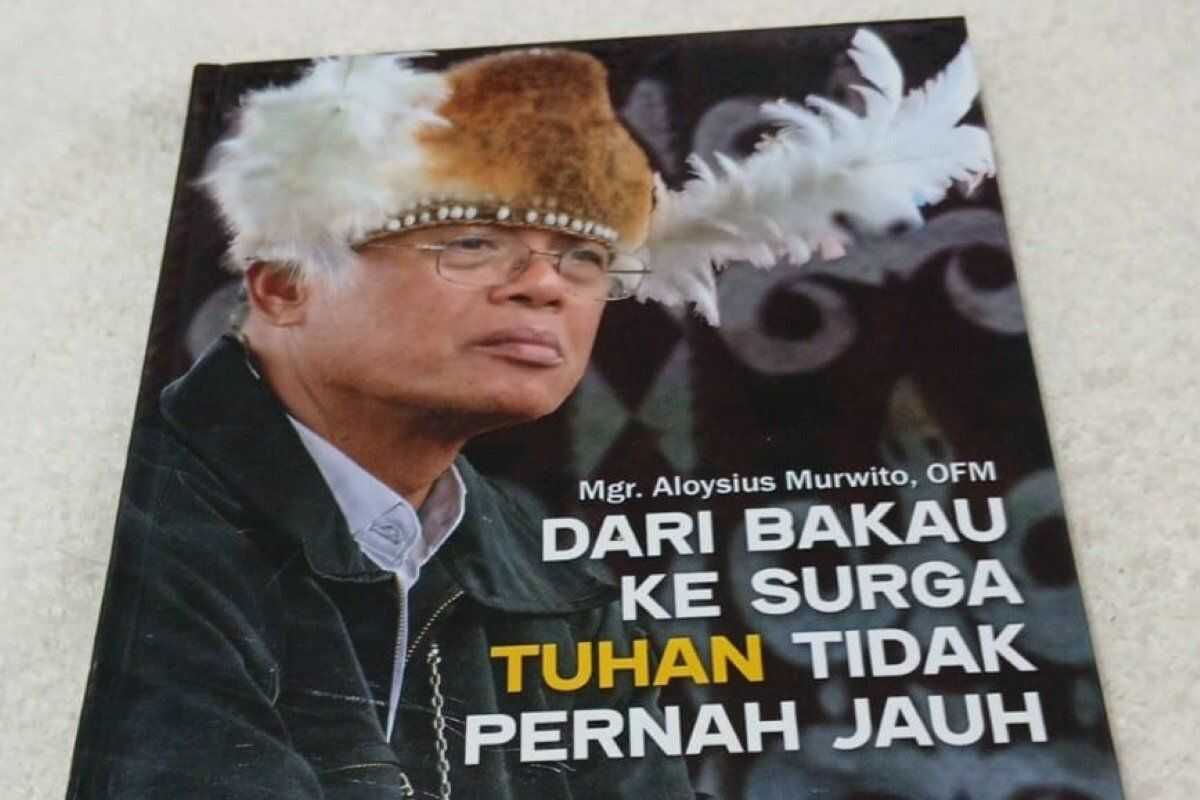
The book entitled “From Mangroves to Heaven: God Is Never Far Away” reveals the reality that God is indeed never far from His people. This is palpable through the writings of Mgr Aloysius Murwito OFM, Bishop of Agats, who serves as the principal contributor of reflections in the volume.
Although it presents a series of pastoral letters from a bishop, the book does not position itself as religious doctrine but rather as the testimony of a shepherd concerning a frontier region and its people.
Evi has previously documented the lives of the Dani people in the Baliem Valley, the residents of Baduy Village in Banten Regency, and the traces of the Pacific War in Biak, demonstrating her consistent commitment to recording events from quiet, overlooked places.
This time, the Betawi-born writer — who also studies leadership communication — has collaborated with John Ohoiwirin, a pastoral officer of the Agats Diocese, to present the Asmat identity as a centre of humanity, in keeping with the meaning of the name Asmat, which derives from the word “Asamat,” meaning “human being.”
In addition to the authors’ own essays, a collection of meditations, homilies, and 18 pastoral letters by Aloysius Murwito enriches the book, which is complemented by numerous photographs of pastoral activities across the Agats Diocese.
The ethnographic approach chosen by the authors positions this book as a space for hearing the voices of people, of nature, and of faith — rather than merely explaining Asmat as an object of knowledge.