
From Madura to Kupang, Junaidi Dedicates Himself to Sekolah Rakyat
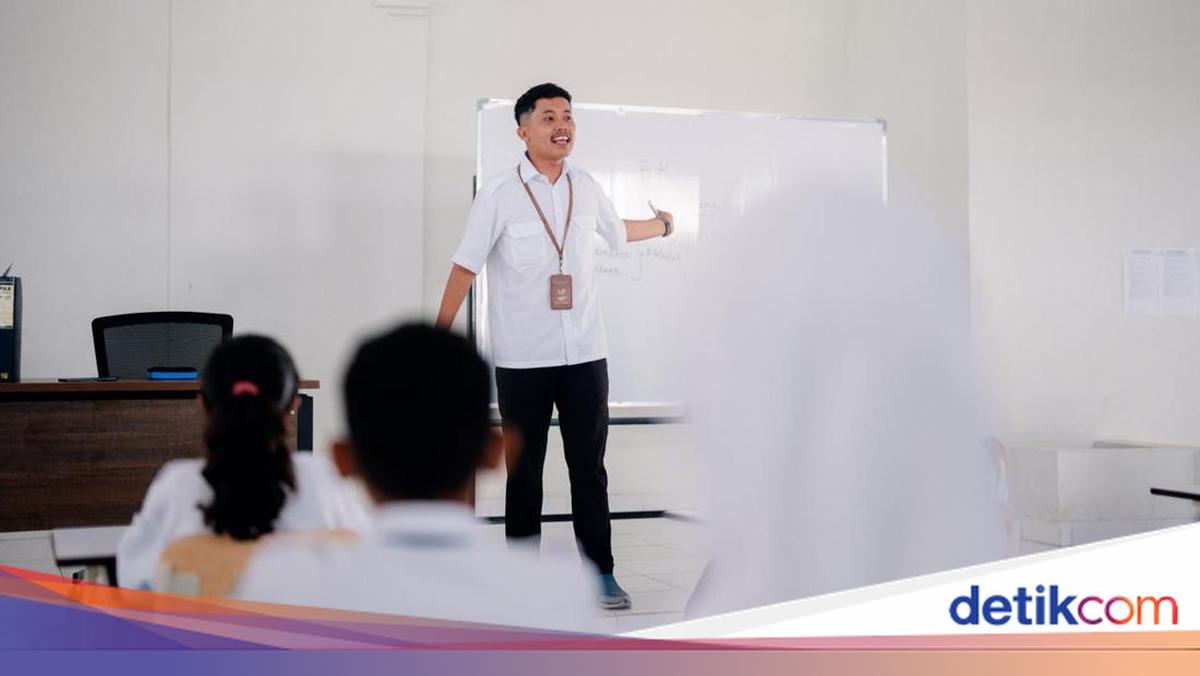
One student even said, ‘The president would not be president if there were no teachers.’ That simple sentence stuck in Junaidi’s mind, a 25-year-old guidance counsellor from Sampang, Madura, who had only just arrived in Kupang.
Junaidi arrived with few ideas about what he would face at Sekolah Rakyat. But he was convinced the Sekolah Rakyat programme would bring him valuable experiences.
As time went by, these experiences slowly changed his view of the teaching profession and the future of children from underprivileged families. ‘My self-esteem as a teacher is highly valued here. By students and the community,’ Junaidi said in a statement, on Friday (22/5/2026).
Junaidi said he grew up in a modest family. His father was a rickshaw driver and farm labourer, while his mother had only primary school education and sold small snacks.
However, Junaidi said his mother had a long-term vision. ‘You should go to university first. Education can break the poverty cycle,’ the mother said.
That message would become his guiding principle as he carried it to Kupang, and he would pass it on to his pupils. Moreover, most Sekolah Rakyat students come from diverse backgrounds.
Junaidi said some students do not have a father or mother figure, live in substandard housing, or carry emotional experiences that have not been resolved.
Fostering Courage in Students to Dream
One day, he summoned two students for counselling. When he opened the door, 15 other children joined. ‘Sir, I want to tell a story,’ they said in turn. Since then, Junaidi realised that the children’s greatest need was not just lessons, but attention and presence.
The behavioural changes among the children came gradually. At the start of the programme, classes were often chaotic, joking too much, fighting, or difficult to focus because of burdens from home.
However, through preventive services and counselling, they began to learn to regulate their emotions and understand responsibility. ‘Now they are more orderly and willing to listen,’ said Junaidi.
In the BK room, he found another fact: out of 25 students, 18 admitted to feeling inferior, some even did not know the meaning of ‘inferiority.’ Many were ashamed of their family backgrounds or felt not smart enough.
For Junaidi, that is the single most important task: building the courage of children to dream of a higher future. He harbours great hopes for his pupils.
‘The children must be able to continue to senior high school and go to university. At least a bachelor’s degree. That can lift their family economy,’ he said.
Junaidi understood that without adequate education, many of them would return to being farm labourers like their parents. For him, the Sekolah Rakyat programme is not only about bringing a school to remote areas, but about reaching out to children from the most vulnerable conditions.
He saw for himself the substandard housing, with children sleeping on mats on piles of wood. ‘Children imagine sleeping like that every day. There must be problems. There are developmental tasks that have not been achieved,’ he said.
Behind the uniform he wears today, Junaidi admits there is still a small version of himself from Madura who once went to sea, fed cattle, and did odd jobs to help his family. ‘We share the same background,’ he said.
Concluding his story, Junaidi recalled his mother’s message about education as a way to break the cycle of poverty and he is ready to apply it for the children in Kupang.
‘That’s why I have to really become a teacher, not half-hearted,’ he concluded.