
From Hormuz to Nusantara: Why Energy Resilience Cannot Be Delayed
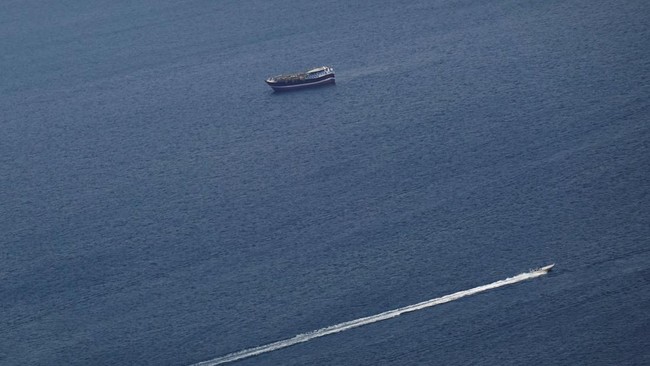
Geopolitical tensions worldwide once again remind us that the stability of global energy supplies still hinges on narrow chokepoints vulnerable to conflict. One of the most critical is the Strait of Hormuz, a narrow passage serving as the primary route for world oil trade from the Gulf region to global markets.
Various international energy reports indicate that around one-fifth of the world’s daily oil supply passes through this route. Even the smallest disruption can trigger surges in energy prices, increase transportation costs, and pressure global economic stability. For countries still reliant on energy imports, including Indonesia, this situation underscores that energy resilience is not merely a sectoral issue but the foundation of national sovereignty.
In recent years, the Persian Gulf region has repeatedly become a hotspot of tensions affecting the global energy market. Armed conflicts, threats to shipping lanes, economic sanctions, and rivalries among producer nations have made price volatility increasingly unpredictable.
The Strait of Hormuz is the most sensitive point because it lacks alternative routes with comparable capacity. When risks escalate, markets respond swiftly through rises in crude oil prices, which then cascade into transportation costs, electricity, and essential needs. This demonstrates that global energy security remains heavily determined by geopolitical stability beyond the control of importing countries.
Developments in geopolitics over recent years show that old assumptions about energy market stability are becoming increasingly fragile. Regional conflicts, rivalries among major powers, economic fragmentation, and the use of economic instruments as tools of political pressure have made energy supply chains more vulnerable.
Experiences from the pandemic, wars, and logistics crises indicate that market mechanisms do not always ensure energy availability at stable prices. In such conditions, countries without a strong foundation of energy resilience will be more easily affected through price surges, supply shortages, and pressures on fiscal budgets and exchange rates.
Indonesia is not immune to these dynamics. National energy consumption continues to rise with economic growth and population increases, while domestic oil production has declined over the past two decades. The country’s oil needs have exceeded one and a half million barrels per day, while domestic production meets only a portion.
This gap must be filled through imports, meaning national energy stability is heavily influenced by global geopolitical conditions and the security of international distribution routes. When oil prices rise, the pressure is immediately felt on the state budget, trade balance, and public purchasing power.
The structure of energy consumption shows the transportation sector as the largest user of oil fuel, followed by industry and power generation. When oil prices increase, the pressure is not only felt by the government through subsidies but also by businesses through higher production costs.
In recent years, the state budget has had to bear a heavy burden to maintain energy price stability. This confirms that energy resilience has a direct link to fiscal resilience. Without strengthening the energy sector, budgetary space for development will become increasingly constrained during global upheavals.
Dependence is not only on primary energy supplies but also on technology and infrastructure. In the era of energy transition, building new power plants, storage systems, and modern electricity grids still relies heavily on imported technology.
Without an integrated strategy, the energy transition risks creating new dependencies. Therefore, energy resilience must be understood more broadly, not just as the ability to provide energy, but also as the ability to independently and sustainably control the energy system.
When tensions rise around the Strait of Hormuz, the impacts ripple across the world through prices and distribution. Indonesia, as an archipelagic nation with substantial energy needs, cannot rely on global stability.
Energy resilience must be built as a national strategy involving economic, industrial, financial, and defence policies. In an increasingly uncertain world, energy is not just a commodity but a strategic instrument determining a nation’s ability to survive and grow.
In the short term, the most urgent step is to strengthen the capacity to face supply disruptions. Increasing national energy reserves is a strategic necessity, whether in the form of government oil stockpiles or domestic storage capacity.
Many advanced countries have reserves for several months, while national capacity remains limited. Diversifying import sources is needed to reduce dependence on a single region. Strengthening energy logistics and distribution systems must also be accelerated to ensure supplies remain secure in emergencies.
Another short-term step is to improve energy efficiency. Efficiency is not just an environmental agenda but part of economic defence. Reducing unproductive consumption in transportation, industry, and buildings can curb imports while maintaining fiscal stability. In an uncertain global situation, every energy saving means strengthening the nation’s manoeuvrability.
In the medium term, energy resilience must be bolstered through domestic capacity. Increasing oil and gas production remains necessary as long as national needs are not yet replaced.
Building refineries, gas infrastructure, and electricity networks must be accelerated so that the energy system becomes more integrated and less reliant on importing finished products. Indonesia has significant gas potential, but infrastructure limitations hinder its utilisation.