
From Home Kitchen to Modern Cafe: Baker’s Gram Crafts Family Flavour Legacy
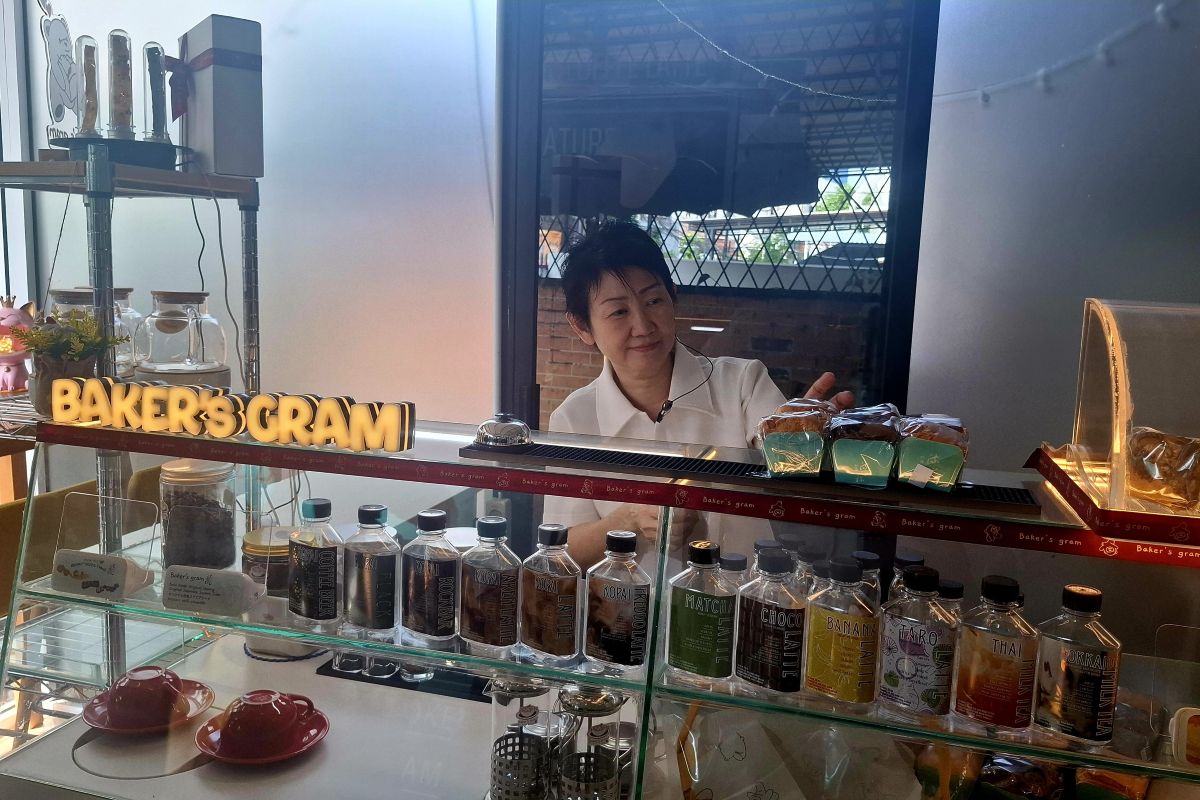
The journey of a business often begins with family traditions passed down through generations. This is the case for Ratna, owner of Baker’s Gram, a culinary micro, small, and medium enterprise (UMKM) that has grown from a home kitchen into a modern cafe. Amidst the aroma of coffee and陈列 of cakes at Baker’s Gram in Jakarta’s Gunung Sahari district lies a long journey that began when Ratna was in junior high school (SMP). She was accustomed to helping her mother manage the family’s bakery, part of their bridal house and wedding needs business. According to Ratna, the recipes used still preserve the family’s traditional ones from decades past. “This is a family business passed down from my mother, and even the recipes date back to old times,” Ratna said during an interview with a reporter some time ago. Ratna admits she has been working since her teenage years. While in school, most of her time was spent assisting the family’s bridal house business, which also ran a bakery. The workload left little room for a typical teenage social life. She said working at the bridal house often required the entire family, including herself, to work without weekends, especially during peak order periods. “Due to the busy schedule, I didn’t get to enjoy my teenage years going out with friends,” she said. At that time, the family bakery produced large cakes as part of wedding services, from attire to wedding cakes. As market trends shifted, Ratna began offering smaller, portable bakery products. “We used to make old-fashioned sponge cakes, with basic recipes originating from Japan,” she said. The name Baker’s Gram originated from a simple conversation with her child. Previously, the business was known as Golden Cake, but Ratna felt the need for a name closer to the bakery world she was in. From that discussion, Baker’s Gram emerged. The nickname “baker” had long been associated with Ratna, while “gram” was chosen to symbolise the precision required in measuring ingredients for baking. “I’m called a baker. Why gram? Because only bakers can measure in grams. It’s the baker who blends the ingredients,” she said with a smile. After years of helping the family business, Ratna worked at a private company. However, the 2022 pandemic hit the company hard due to lack of investors, prompting her to return to the culinary business. “Building Baker’s Gram was like starting from scratch,” she said. Leveraging existing business connections, Ratna restarted the bakery business. Demand came quickly, especially during Christmas and New Year. “At the start, we were producing for 18 hours a day during Christmas. We only rested for six hours,” she said. Orders came not only from Jakarta but also from other cities like Surabaya. To maintain product quality, deliveries used fast courier services to ensure cakes arrived fresh. In each baking session, Baker’s Gram typically bakes around 45 cakes arranged in a 5x9 pattern inside the oven. This setup ensures even heat distribution and perfectly baked results. “The ideal quantity is 45 to maintain quality,” Ratna said. She admitted building the business was done gradually, with capital accumulated bit by bit. “The capital was built up step by step. The priority was to get started. If there was money, we continued; if not, we paused,” she said. Today, Baker’s Gram not only sells bread and cakes but also offers a cosy cafe concept. A variety of menus are available, including Japanese square cakes, chicken and beef pastries, coffee, breakfast items, and main courses. In the business development process, Ratna established PT Genta Tata Boga as a legal entity in late December 2024 to comply with government regulations. Her business now has full legal compliance, including a Business Identity Number (NIB) issued via the Online Single Submission system, halal certification, and approval from the Food and Drug Supervisory Agency (BPOM). Ratna also joined BRI Jakarta’s Rumah BUMN UMKM mentorship programme in 2024. Through this, she actively participated in training sessions on digital marketing, e-commerce, and self-declared halal certification. “I was introduced to BRI by a friend during a training session at the Jakarta Provincial Industry, Trade, Cooperatives, and Micro, Small, and Medium Enterprises Office,” she said. According to Ratna, digitalisation training has become crucial for business owners post-pandemic. “After Covid-19, being digital is essential. Although I feel my digital skills are still lacking. If digital is strong, online sales usually increase,” she said. She admitted she is still refining social media and internal systems to ensure stable, high-quality products. For Ratna, the biggest benefit of the Rumah BUMN BRI training wasn’t just business knowledge but also the opportunity to connect with fellow UMKM entrepreneurs. “The most impactful part for me is making many UMKM friends. We’re all motivated. Seeing others’ good packaging and appealing sales methods inspires us,” she said. During the training, Ratna also learned about product packaging design. Her interest in design led her to create most of Baker’s Gram’s visual concepts herself. “I designed the Baker’s Gram stickers myself. I just take them to the printer for production since the size and design are already set,” she said. Ratna said she regularly attends Rumah BUMN BRI training sessions, which typically last about two hours monthly. “If there’s training, I attend,” she said.