
From Generative to Agentic AI: This is the New Direction of AI Technology
Agentic AI has become a hot topic recently. Several artificial intelligence companies, such as OpenAI and Anthropic, are competing to introduce AI agent services, including those to assist with coding and to identify critical security vulnerabilities in companies.
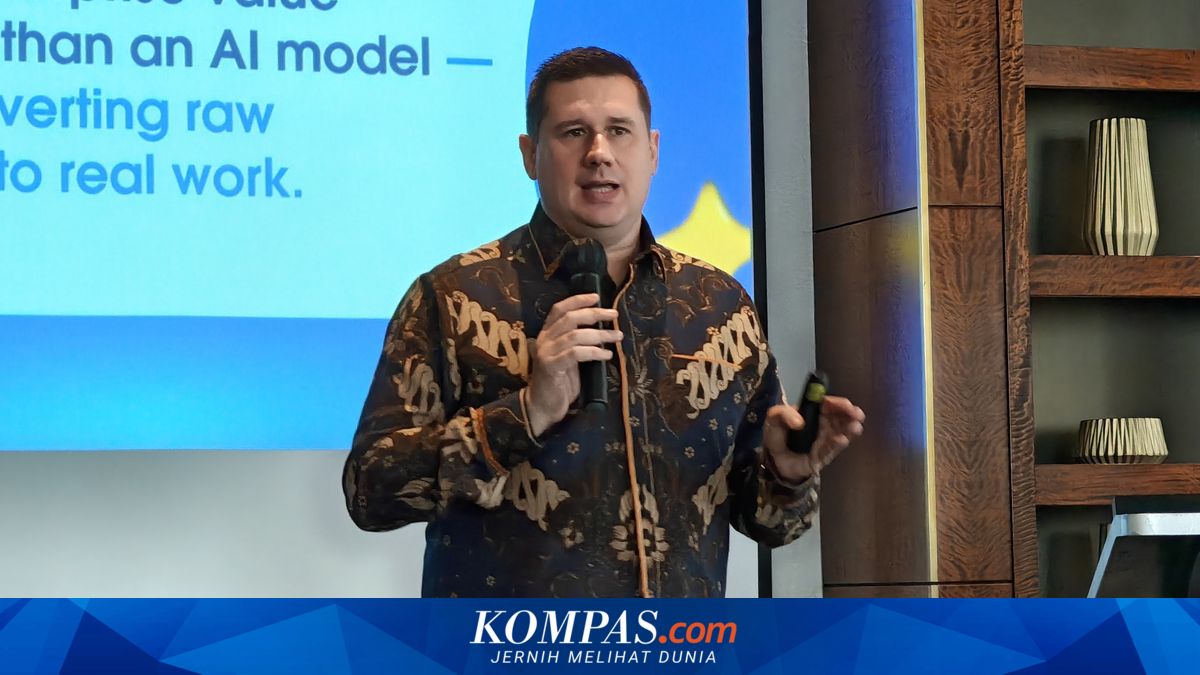
According to Gavin Barfield, VP & CTO Solution at Salesforce ASEAN, agentic AI is not merely an evolution of technology but a revolution that will change the way companies operate and interact with customers.
This is because agentic AI is not only capable of generating content but also taking autonomous actions in business processes.
In general, Barfield explained that the development of AI is divided into three main phases.
The first phase is predictive AI, which uses historical data to predict future events, such as customer behaviour.
The second phase is generative AI, which has become popular in recent years through the presence of chatbots and large language models (LLMs) or AI models. In this phase, AI is already capable of generating content such as text, images, and videos.
However, according to Gavin, many implementations of generative AI still stop at the trial stage and have not provided real business impacts.
This is caused by several factors, such as suboptimal data quality, lack of integration into workflows, and inability to execute tasks directly.
“Generative AI helps create content, but it doesn’t really do the work,” he said.
Entering the third phase, namely agentic AI, which not only provides recommendations but can also perform tasks automatically.
Gavin then gave a simple analogy regarding the difference between generative AI and agentic AI through the navigation system in an autonomous car.
If generative AI is like a GPS that provides directions, then according to Gavin, agentic AI is more akin to a driverless car that can take control and perform tasks directly.
One important component in Agenforce is data that is claimed to be of high quality as the foundation of AI. Because, according to Gavin, without accurate and relevant data, AI cannot produce optimal outputs.