
From Forest to Socio-Ecological Safeguards
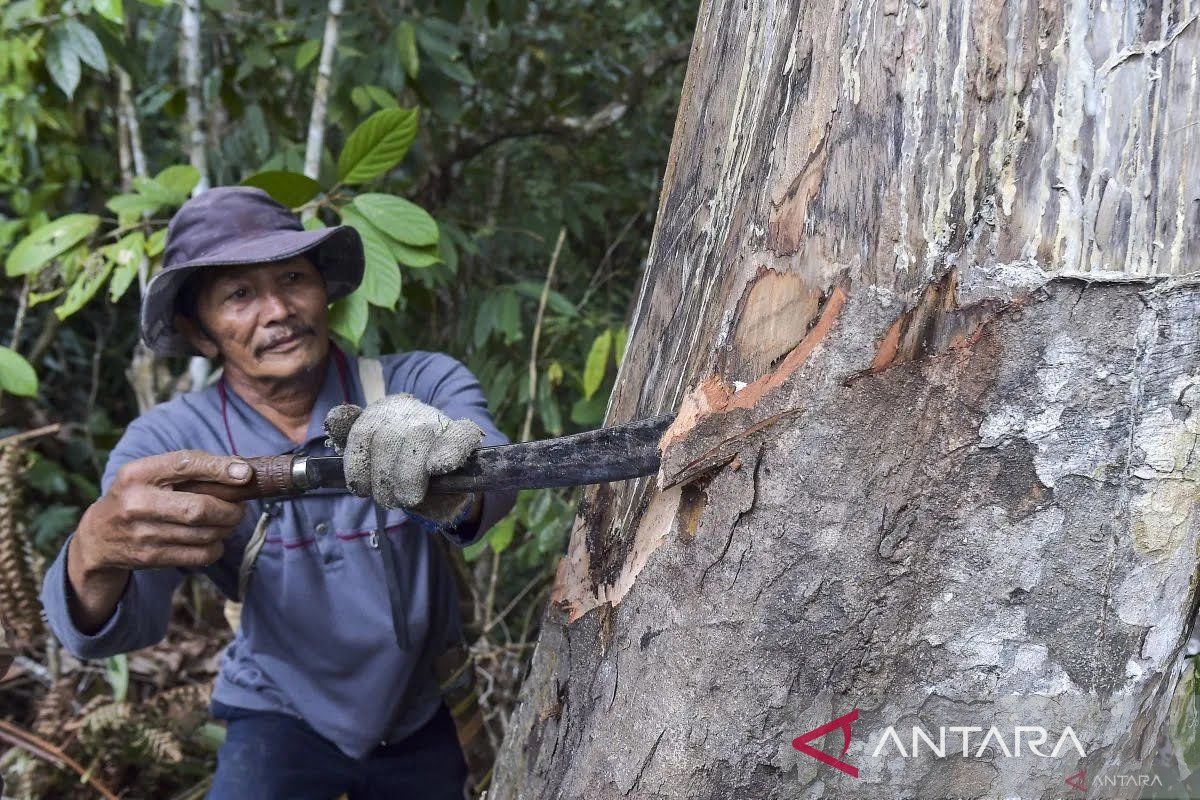
Jakarta – Indonesia frequently celebrates forests as “repositories of biodiversity” and “economic potential”, yet rarely manages them as engines of equitable and sustainable welfare.
Official data from the Ministry of Forestry (2025) shows that Indonesia’s forest area in 2024 remained approximately 95.5 million hectares, or 51.1 per cent of the land area. This indicates it is not yet too late to reassert forest management orientation – not merely short-term exploitation, but value-added management that maintains forest cover whilst serving the welfare of local communities.
A pragmatic approach already underway involves “domesticating” forest commodities, particularly non-timber forest products and spice trees, within agroforestry systems, community-managed forest plantations, and social forestry schemes based on community tenure rights.
With support for downstream industrial development, quality standardisation, and inclusive mixed financing, forests cease being merely admired potential and instead become sources of sustainable production. Biological wealth, carbon stocks, and community rights remain protected, whilst added value grows in the hands of forest-adjacent communities.
One of the simplest measures of forest value is “irreplaceable heritage”, expressed through endemicity. Indonesia harbours staggering figures: hundreds of species of mammals, birds, reptiles, amphibians, and fish exist nowhere else on Earth. Official data records at least 270 endemic mammals, 386 birds, 328 reptiles, 204 amphibians, and 280 fish species. These figures represent not merely biological pride but global heritage and strategic capital.
When the world discusses biodiversity, Indonesia is the epicentre. This wealth is also a responsibility – many endemic mammals are threatened with extinction, and significant ecosystems, such as peatlands, have already degraded. This means nature-based economics only yield sustainable benefits if ecology and governance are strengthened simultaneously.
So long as forest commodities remain positioned as “harvests” from wild nature – without measured cultivation, quality standards, or downstream processing – added value will remain thin and ecological pressure will persist. The key is shifting from fragile wild extraction towards production systems based on agroforestry, community-managed forest plantations, and social forestry, which enable commodity domestication without losing ecological function.
The economic potential is not hypothesis but already visible at scale. Indonesia supplies approximately 80 per cent of the world’s rattan, with processed rattan exports recorded at hundreds of millions of dollars annually, though most raw material still derives from natural forests. For resin commodities such as benzoin and dammar, export values for raw materials remain relatively low per tonne, whereas downstream processing – for instance into essential oils – can multiply value several times over.
Among spice-plantation groups, nutmeg cultivation spans over 280,000 hectares with production in the tens of thousands of tonnes. Pepper and sago crops also demonstrate significant production scale. Meanwhile, palm sugar exports have recorded substantial growth over the past two years. These figures demonstrate that a “production base” already exists; what is lacking is strengthened value-added development.