
From Elephants to Mega Mendung: When Conservation Must Sustain Livelihoods
Discussions on conservation often begin with forests and wildlife. About shrinking habitats, threatened populations, or increasingly frequent conflicts.
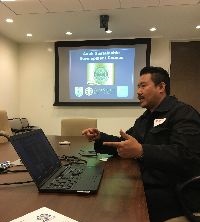
However, for Wahdi Azmi, a veterinarian and conservationist who has spent decades handling human-elephant conflicts in Sumatra, such perspectives leave a crucial gap: humans.
In a discussion on the Leaders Talk Tourism channel addressing Circular Letter No. 6 of 2025 from the Directorate General of Natural Resources and Ecosystem Conservation, Wahdi presented a view that sounds simple but strikes at the heart of conservation issues in Indonesia.
“Conservation cannot just talk about wildlife. If the surrounding communities do not gain benefits, conservation will always lose,” he said.
That statement encapsulates his extensive field experience. In many human-elephant conflict cases he has handled, the root problem is not solely the animals’ behaviour, but landscape changes not matched by adequate social and economic designs.
When forests turn into plantations or settlements, wildlife living space narrows. At the same time, communities around the areas face growing economic pressures.
In such situations, encounters between humans and wildlife become inevitable. However, according to Wahdi, the real issue is not just the emerging conflicts, but how we respond to them.
So far, conservation has often been implemented with a protectionist approach, establishing areas, restricting activities, and relying on regulations to keep ecosystems intact. On paper, this approach seems logical.
However, in the field, it often creates a divide between conservation and community life. For residents near conservation areas, such policies frequently mean reduced access to land, limited economic opportunities, and increased risks of conflicts with wildlife.
In those conditions, conservation is no longer seen as a shared interest, but as a burden.
“We often forget that humans are part of the ecosystem. So the approach cannot just be protection, but must be integration,” Wahdi said.
The integration Wahdi means is not mere symbolic involvement, but uniting three elements that have run separately: conservation, local economy, and education. Without connections among them, conservation will always be vulnerable—depending on external oversight and intervention.
Mega Mendung
This idea finds relevance when pulled from the wildlife conflict context and viewed in broader practices.
In the Mega Mendung area, Bogor, a similar approach is being applied in a different form, but with the same logic.
In that hilly region, which serves as one of the ecological buffers for the Jabodetabek area, pressure on land continues to rise. Land use conversion poses a real threat, not only to forest sustainability but also to water systems and surrounding community life.
Amid that situation, the Arista Montana area, developed jointly with Yayasan Paseban under Andy Utama’s guidance, attempts to build an approach that does not separate conservation from human activities.
Here, environmental preservation is not run as a standalone project, but as part of an economic and social system.
One prominent practice is the development of community-based organic farming. Local farmers are directly involved in the production process, from land management to marketing the yields.
They not only work but also receive guidance to understand sustainable farming techniques that maintain soil and water quality.
In this system, protecting the environment is no longer just an ecological obligation, but an economic necessity. Agricultural productivity depends on ecosystem health, so nature preservation becomes part of daily interests.
Yayasan Paseban
This approach gradually changes the position of conservation. It no longer appears as a restriction, but as the foundation of those economic activities. However, such integration does not happen automatically. Behind the running economic practices, there is another equally important process: strengthening community capacity.
This is where Yayasan Paseban’s role becomes crucial. Through various education and training programmes, communities are not only introduced to conservation concepts but also equipped with skills to implement them. Training in organic farming, environmental management, and education for the younger generation become part of efforts to build a more comprehensive understanding.
Education here does not stop at awareness but extends to practical abilities. Communities understand how to manage resources sustainably, while also turning them into sources of livelihood.
This approach creates a more fundamental change. Communities are no longer objects of conservation programmes, but primary actors with direct interests in environmental sustainability.
If drawn back to Wahdi Azmi’s experience, what is happening in Mega Mendung shows a similar pattern to what he found in Sumatra. In two different contexts—human-elephant conflicts and agricultural landscape management—the main issue remains the same: conservation cannot be separated from human life.
In Sumatra, conflicts arise when wildlife and human spaces overlap without adequate economic integration. In Mega Mendung, potential conflicts are instead suppressed the opposite way—by integrating conservation into the community’s economic and social system.
Both demonstrate that conservation success is not only