
From Commitment to Impact: Grounded Downstreaming
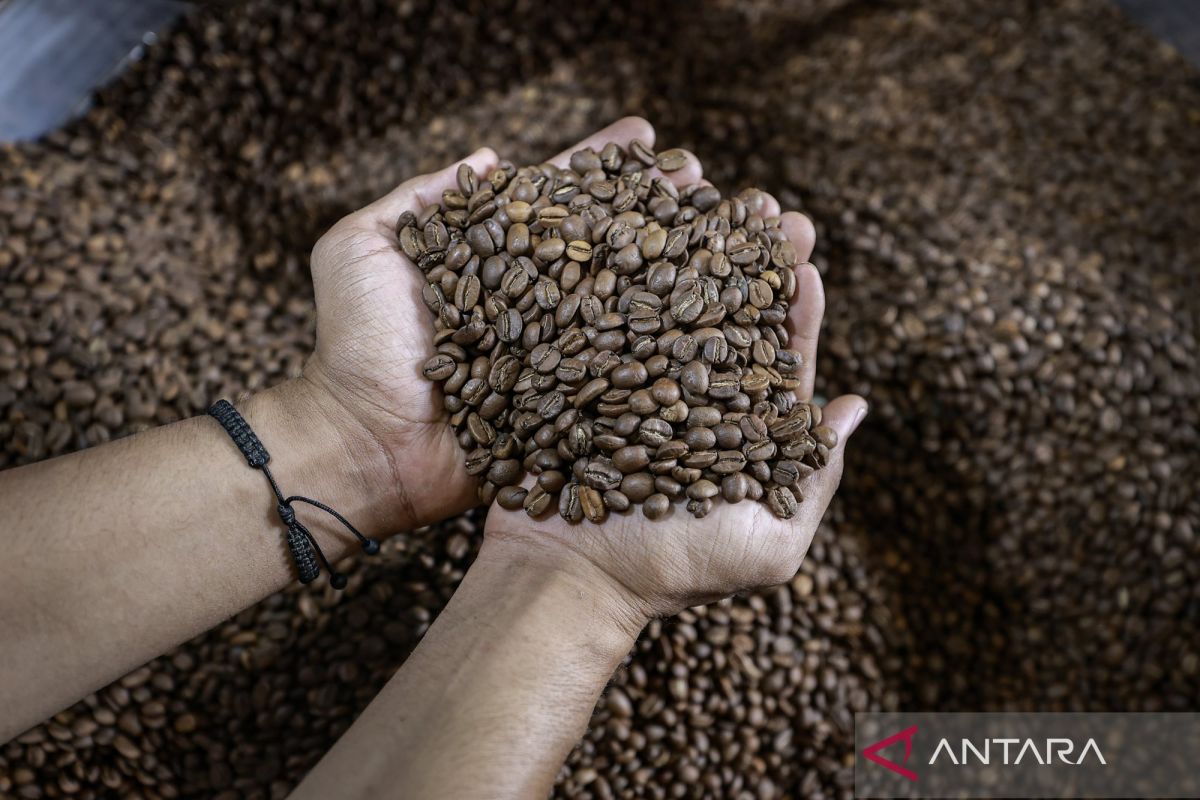
Jakarta (ANTARA) - President Prabowo Subianto’s concern regarding Indonesia’s imports of coffee and chocolate products warrants attention and should serve as a critical analysis for Indonesia’s plantation sector. In a discussion on downstreaming and industrialisation with several journalists and economists at his private residence in Hambalang, Bogor Regency, West Java, the President raised a seemingly simple yet fundamentally important question: Indonesia possesses the world’s best coffee and cocoa, yet imports food products based on coffee and cocoa. The President’s question is significant, not because we should be averse to foreign products, but because it touches the core of our development issues. Why has a country rich in raw materials not fully become the master of value creation? Why has the advantage in plantations not fully transformed into advantages in factories, on retail shelves, and in consumers’ minds? In the case of the coffee industry, for example, 2024 trade data indicates that Indonesia remains a major exporter. Coffee exports reached approximately 317,000 tonnes, valued at around 1.638 billion US dollars (approximately Rp26 trillion). At the same time, coffee imports were around 52,000 tonnes, valued at approximately 186.7 million US dollars (around Rp3 trillion). These figures are important to emphasise as they demonstrate a surplus in Indonesia’s coffee export-import trade balance. In segments closer to consumers, the picture becomes more intriguing. Processed coffee imports in 2024 were recorded at around 200 million US dollars (approximately Rp3.2 trillion), up from about 120.4 million US dollars (around Rp1.9 trillion) in 2023. Meanwhile, Indonesia’s processed coffee exports were also substantial, at around 647.8 million US dollars (approximately Rp10.4 trillion) in 2024. This means that coffee downstreaming is actually underway. The issue is not the lack of processing, but that it is not yet deep enough, not broad enough, and not strong enough in building brand dominance. A similar situation is evident in cocoa. In 2023, Indonesia’s cocoa exports reached approximately 339,989 tonnes with a value of 1.198 billion US dollars (around Rp19.2 trillion), while imports were around 340,451 tonnes with a value of 979.6 million US dollars (around Rp15.7 trillion). In terms of volume, the balance is nearly even, even slightly negative. However, data from January to September 2024 shows encouraging developments, with cocoa export values at around 1.646 billion US dollars (approximately Rp26.3 trillion), surpassing imports of around 979.6 million US dollars (approximately Rp15.7 trillion), resulting in a value surplus of about 667.2 million US dollars (around Rp10.7 trillion). Even more importantly, the structure of our cocoa exports already indicates a direction towards downstreaming. In 2023, the value of manufactured cocoa exports reached around 1.150 billion US dollars (approximately Rp18.4 trillion), far exceeding primary cocoa exports of only about 46.9 million US dollars (around Rp750 billion). This means Indonesia is no longer merely selling beans but exporting many processed products, such as cocoa butter, cocoa fat, cocoa oil, and cocoa powder. Therefore, the President’s concern is actually not about “why we import,” but “why the value of brands and proximity to consumers is still largely enjoyed by others.” This is where the real challenge lies.