
From Cipasung, Islamic Scholars and Police Safeguard Indonesian Unity
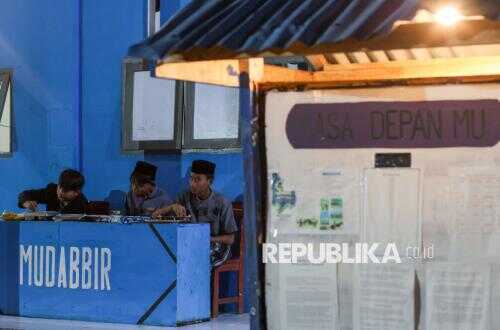
On a morning at the grounds of an Islamic boarding school founded during the colonial era, uniformed brown steps met with sarongs and white prayer caps. Two worlds often seen as different—state apparatus and Islamic scholars—stood together in unified respect. From Tasikmalaya to Jakarta, one question emerges: in what new direction are Indonesia’s pesantren (Islamic boarding schools) heading?
At Pesantren Cipasung in Singaparna, Tasikmalaya Regency, West Java Police Chief Rudi Setiawan arrived not merely for a courtesy visit. He engaged in dialogue and emphasised the intention to build synergy between the police and pesantren. For him, pesantren represent a strategic space for forming national character.
“I feel it is necessary to build closeness,” he said, emphasising the importance of Islamic scholars with good morals and strong character in protecting the Unitary State of the Republic of Indonesia. In the warm atmosphere of Ramadan, the meeting felt more like a conversation amongst the nation’s extended family than an official ceremony.
Cipasung Pesantren’s leader, Ubaidillah Ruhiyat, welcomed the visit with the same tone: this was not merely a symbolic visit, but rather a manifestation of unity between religious scholars and authorities in maintaining public security and order. He even conveyed his hope that santri (Islamic boarding school students) aspiring to become police officers would be facilitated well. “Police with an Islamic boarding school background,” he said, “will be more beloved by the community.”
Pesantren Cipasung itself is no minor institution. It has produced many national figures, standing firm through the colonial period, revolution, and the modern era. Traditions of morality and nationalism have grown side by side within it. The Police Chief’s visit seemed to reaffirm one thing: pesantren are not only moral bastions but also strategic partners of the state.
The spirit of strengthening pesantren does not stop in Tasikmalaya. At the national level, Indonesia’s Ministry of Religious Affairs is preparing a major step: the establishment of a Directorate General (Ditjen) for Pesantren. This new structure at Echelon I level will specifically oversee more than 42,000 pesantren spread throughout the country.
The Director General of Islamic Education, Amien Suyitno, called the establishment of the Ditjen Pesantren an important milestone. Until now, pesantren management has been under the Directorate General of Islamic Education, whose scope of work is very broad—ranging from early childhood Islamic education to religious higher education institutions. With such a heavy burden, focus on pesantren has been deemed not yet optimal.
“This structural separation will make pesantren management more focused, faster, and measurable,” he said. The regulation required is now awaiting the issuance of a Presidential Regulation amending Presidential Regulation Number 152 of 2024 concerning the Ministry of Religious Affairs.
The Minister for State Apparatus Empowerment Rini Widyantini confirmed that the process within her ministry has been completed. “We have finished. It just needs to be signed,” she said. Meanwhile, President Prabowo Subianto has previously stated the establishment of the Ditjen Pesantren as a concrete step to strengthen an ecosystem of pesantren-based education.
Even the Minister of Religious Affairs Nasaruddin Umar had previously announced this plan at the commemoration of Islamic Scholars Day on 22 October 2025. Deputy Minister of Religious Affairs Muhammad Syafii explained that the establishment of this new structure will bring significant changes in pesantren governance.