
From Birth to Death, Bandung City Unifies Civil Registration Services
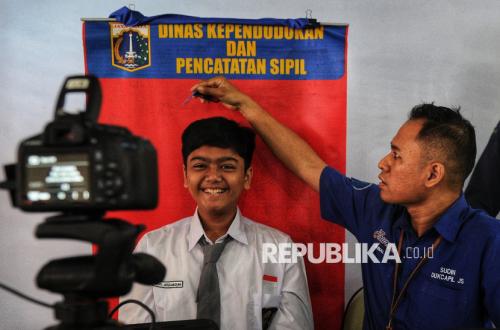
Civil registration administration in Bandung City is now increasingly connected to various public services that follow residents’ life journeys. The Teropong Daerah survey conducted by Kompas Research and Development from 23 February to 3 March 2026 recorded a satisfaction rate for these services at 84.3 percent. This figure reflects a process that is increasingly fast, simple, and non-repetitive.
The most noticeable change is in the way civil registration documents are processed. Previously, residents had to visit service offices in person; now, various documents can be handled simultaneously with important life moments.
In the early life phase, administrative recording is carried out through the Pelana programme (Civil Registration Services at Delivery Locations). Through collaboration with health facilities at 102 locations—including 50 Independent Midwife Practices (PMB), 7 community health centres, 32 hospitals, and 13 clinics—parents can immediately obtain important documents for their newborn babies, such as Family Cards, Birth Certificates, and Child Identity Cards, during the delivery process. This approach accelerates recording while ensuring every baby is registered from the start.
Entering the family formation phase, population data updates are conducted through the Kompak Kang programme (Collaboration on Civil Registration Recording with the Bandung City Ministry of Religious Affairs). Through cooperation with the Office of Religious Affairs in 30 sub-districts, married couples no longer need to handle document changes separately, as data updates are done simultaneously with marriage registration.
Meanwhile, family status changes are facilitated through the Siap Pa programme (Integrated Civil Registration Services System in Collaboration with the Religious Court). After a court decision, civil registration documents can be directly updated without additional procedures, making the administrative process more concise and efficient.
In the final life phase, the Pelita Hati programme (Integrated Services at Sub-Districts for Death Certificates) provides convenience to the community in fulfilling civil registration documents, specifically Death Certificates, for deceased family members, relatives, and loved ones.
This approach is then strengthened by expanding more flexible access. The Bandung City Civil Registration and Civil Record Office now provides online administrative services, allowing document processing without visiting the office. Additionally, these services are also available on weekends (Saturday–Sunday) to reach residents with time constraints during weekdays.
The combination of cross-sector innovations, digital services, and time flexibility demonstrates a shift from a counter-based system to a more collaborative approach closer to residents’ needs. This integration not only speeds up administrative processes but also reduces previously repetitive steps.
On the other hand, strengthening the digital system continues through the development of Digital Population Identity (IKD), with the current achievement at 21.19 percent of the activation target. This step is part of efforts to provide more practical and self-accessible services.
Although showing significant progress, several challenges still need to be addressed, particularly in expanding digital service reach, increasing awareness of the importance of data updates, and ensuring vulnerable groups are optimally served.
The Head of the Bandung City Civil Registration and Civil Record Office, Tatang Muhtar, stated that the changes focus on simplifying processes that have long been considered complicated.
“We are changing the approach, from previously requiring the public to come to services, to a system that is present at important life moments. From birth to family status changes, we have arranged everything so the process is faster and non-repetitive,” he said.
He added that expanding access is key to improving service quality.
“We also open online services and on weekends so the public can handle documents without time constraints. This is part of our efforts to ensure services truly follow public needs,” said Tatang.
Bandung Mayor Muhammad Farhan emphasised that civil registration is the main foundation in ensuring the public can access various basic services.
“Civil registration is the gateway for the public to obtain various basic services. Therefore, we ensure the process is increasingly easy, fast, non-complicated, and accessible whenever needed,” said Farhan.
He added that service integration will continue to be expanded to be more relevant to public needs.
“What we promote is not just service acceleration, but how this process truly integrates with residents’ lives. When services are present in every important phase, the public no longer feels administration as a burden,” he said.
The Bandung City Government will continue to direct the strengthening of civil registration services towards inter-service integration and ease of access, so that document processing becomes a natural part of every important event in residents’ lives, rather than a separate and time-consuming process.