
From Amba to Rimueng: The Linguistic Trail of the Tiger from Siberia to Aceh
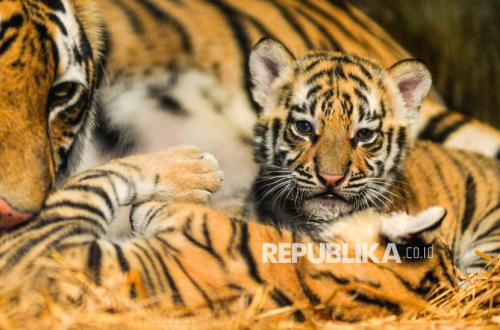
This journey begins in the northern hemisphere, in the landscape of the Russian Far East, where snow-covered taiga stretches frozen almost year-round. In this extreme region lives one of the world’s toughest big cats: the Amur tiger. It is not only a symbol of biological resilience against temperatures of minus tens of degrees but also a representation of ecological balance in that area (Goodrich et al., 2015). However, for indigenous peoples like the Nanai and Udege, the tiger is never reduced to merely a species. They call it Amba.
The term Amba is not a literal translation of “tiger”, but a deeper spiritual concept: “Great Spirit” or “Forest Guardian” (Arseniev, 1923). In their cosmology, directly uttering the tiger’s true name is considered a spiritual ethical violation. This stems from animistic beliefs that view nature as a living entity with consciousness and will (Vitebsky, 2005). An encounter with Amba is not just a human interaction with wildlife, but a sacred experience of meeting the laws of nature embodied in a living creature. In the silence of birch and fir forests, Amba walks as a guardian of balance, ensuring no element of life exceeds its bounds.
Moving south, the landscape changes dramatically. From Siberian snow to the Himalayan mountains in Bhutan, the tiger remains present but with different meanings. Here it is known as Tag, and its presence reaches altitudes of over 4,000 metres above sea level, an ecological phenomenon showing extraordinary adaptability (Thinley et al., 2015). In Tibetan tradition, the tiger is one of the Gyeltsen Zhi or Four Dignified Animals, each symbolising certain spiritual qualities (Beer, 1999).
Tag symbolises calm confidence—a strength that does not explode but is present in self-control. This symbolism reaches its most concrete form in the legend of Paro Taktsang, or “Tiger’s Nest”, a sacred site believed to be where Guru Rinpoche meditated after riding a female tiger to subdue evil forces (Gyatso, 2006). In this context, the tiger is not only a guardian of nature but also a bridge between the human world and the spiritual dimension. It serves as a mediator between fear and enlightenment.
Entering China, the tiger’s symbolic dimension becomes even more complex. It is known as Lǎohǔ, with the prefix Lǎo indicating respect for age and wisdom (Eberhard, 1986). In Chinese tradition, the tiger is the Bǎishùzhīwáng, King of all beasts. This image appears not only in folklore but also in broader symbolic systems, including feng shui and Chinese astrology (Yang & An, 2005).
Interestingly, the stripes on the tiger’s forehead are often interpreted to resemble the character Wáng, meaning “king” (Allsen, 2006). This interpretation is not mere visual coincidence but a reflection of how humans read nature as a text full of meaning. In this case, the tiger is honoured not only for its strength but also because it is seen as bearing cosmic signs in its body.
When we move to India and Nepal, the tiger’s meaning reaches a more explicit theological dimension. Here it is known as Bagh or Puli, and serves as the vehicle (vahana) for Devi Durga, the goddess of war and cosmic protector in Hindu tradition (Kinsley, 1988). The tiger in this context is not just a symbol of power but a manifestation of divine energy that destroys evil and restores balance.
The tiger’s presence in real landscapes like the Sundarbans—the world’s largest mangrove forest—strengthens the connection between myth and reality (Seidensticker, 2010). There, tigers live alongside humans in constant tension. Yet, even in conflict, respect remains the basis of the relationship. Many local communities perform rituals before entering the forest, seeking protection from the unseen “guardian” (Jalais, 2010). Here it is evident that spirituality is not merely cultural heritage but also a mechanism for adapting to ecological risks.
Before crossing to Sumatra, we stop in Malaysia, where the tiger is called Pak Belang. This name is a euphemism—a linguistic strategy to avoid directly naming a creature considered sacred or dangerous (Endicott, 1979). Calling the tiger “Pak” (uncle) creates a familial relationship that places humans in a position of respect, not dominance.
This concept reflects what anthropologists call “kinship ecology”—the way humans build kinship with nature to maintain balance (Ingold, 2000). In the Malaysian context, the tiger is present not only in the forest but also as a national symbol, strengthening collective identity rooted in respect for wild nature.
Entering the island of Sumatra, this narrative finds new depth. In Lampung, the tiger is called Tuan or Datuk. This naming explicitly acknowledges the tiger’s authority as the owner of the forest territory (Persoon & van Est, 2000). Humans, in this case, are merely guests who must maintain attitude and ethics when entering the realm of the jungle ruler.
In Bengkulu, the Rejang people call it Setua or Satuo, meaning “the elder”. Local beliefs see the tiger as a manifestation of ancestors who continue to oversee human behaviour (Marsden, 1811). This concept creates a moral system based on a sense of being watched—not by formal law, but by a living spiritual presence in the forest.