
From AI to Local Manufacturing: How Philips is Expanding Diagnostic Access in Indonesia
Jakarta – As an archipelago with over 17,000 islands, Indonesia continues to face the enduring challenge of ensuring all citizens—whether in major cities, remote areas, borderlands, or small islands—receive rapid and accurate healthcare services.
The difficulty lies not merely in developing adequate facilities, but in ensuring diagnostic capability reaches regions where specialist medical professionals remain extremely scarce.
Indonesia is not alone in facing this challenge. According to Jeff Cohen, Senior Vice President and Global Business Leader for Ultrasound at Philips, healthcare systems worldwide face pressure from rising patient numbers and increasingly complex diseases, whilst healthcare worker availability has not kept pace with demand.
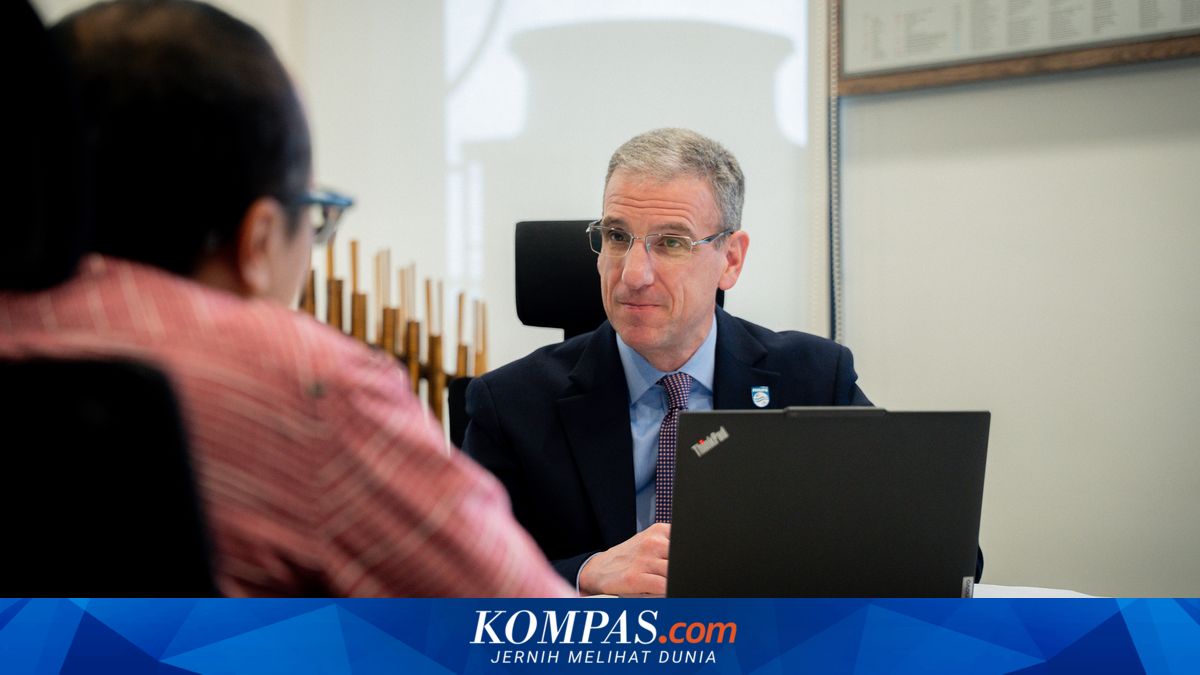
“Healthcare worker burnout and shortages may be the greatest challenge we hear about globally,” Jeff stated during his visit to Jakarta on Friday, 13 February 2026.
In early 2026, the Coordinating Ministry for Community Empowerment reported that healthcare insurance coverage in Indonesia continues to strengthen, with 98 per cent of the population—approximately 282.7 million people—registered with BPJS Kesehatan, Indonesia’s health insurance scheme.
This achievement means Indonesia has reached Universal Health Coverage (UHC) and met targets set out in the National Medium-Term Development Plan (RPJMN) for 2025–2029. The accomplishment is supported by all 31 provinces and 397 municipalities/cities that have registered at least 98 per cent of their populations.
Nevertheless, the World Health Organization (WHO) notes that Indonesia’s greatest healthcare challenge remains non-communicable diseases such as hypertension and diabetes, exacerbated by low detection and treatment rates and uneven distribution of healthcare professionals, particularly in rural areas.
Health Minister Budi Gunadi Sadikin has reinforced this point, stating that access, quality, and affordability of healthcare services remain major challenges within Indonesia’s healthcare system.
In this context, Jeff emphasised that ultrasound technology plays a crucial role because it can provide rapid and accurate clinical information across various healthcare facilities, from clinics to hospitals.
“Our aim is to deliver better healthcare to more people, wherever they are,” Jeff told Kompas.com.
This need is increasingly urgent given Indonesia’s high prevalence of non-communicable diseases, including stroke and heart disease—the two leading causes of death in the country. Early detection is therefore vital for improving patient outcomes.
Philips has integrated artificial intelligence (AI) into ultrasound systems to help healthcare workers operate more efficiently whilst maintaining consistent examination quality. AI automates routine steps such as measurements and image analysis, reducing examination time and assisting users regardless of experience level to achieve more reliable and consistent results.
In cases of heart attack, for example, AI can reduce examination time by approximately 50 per cent, allowing healthcare workers to focus more on patient care rather than administrative tasks.
Jeff emphasised that Philips’ approach to AI development is responsible and healthcare-worker-focused. AI models are trained using validated datasets from various geographic regions to ensure accuracy across diverse populations.
Philips also collaborates with global technology partners, including NVIDIA, to strengthen computing capability and image processing through graphics processing unit (GPU) technology.
“Healthcare workers are the heart of our innovation cycle. Their input shapes our solution development. Many of our best features come directly from what healthcare workers in the field need,” he said.
Handheld ultrasound technology also supports earlier detection of pregnancy complications. This technology is needed in Indonesia given that according to the Indonesian Obstetrical and Gynaecological Association (POGI) data for 2025, maternal mortality remains around 189 deaths per 100,000 live births.
Indonesia’s geographic characteristics as an archipelago make portable, user-friendly technology that supports use in remote areas critical.
The tele-ultrasound feature allows healthcare workers in remote areas to connect with specialists in major cities in real-time, maintaining diagnostic quality whilst receiving immediate guidance from specialists. This approach not only expands specialist reach but also strengthens local healthcare worker capacity through continuous learning.
Jeff stressed that healthcare transformation depends not only on technological innovation but must be combined with locally relevant solutions.
This rationale underpins Philips’ new partnerships with PT PHC Indonesia and PT Graha Teknomedika for local production of ultrasound systems and patient monitors in Indonesia.
“We live in an increasingly globalised yet localised world. To remain relevant in a market like Indonesia, we must build local presence,” he said.
Local production ensures solutions become available faster, align more closely with Indonesia’s healthcare needs, and support government policy on domestic content levels (TKDN). This initiative also creates opportunities for technology transfer, skills development, and a stronger national medical device ecosystem.
Philips has been present in Indonesia for decades, with over 3,900 employees across 12 cities.