
From 1 June 2026, Social Assistance in 42 Indonesian Cities to Switch to Digital
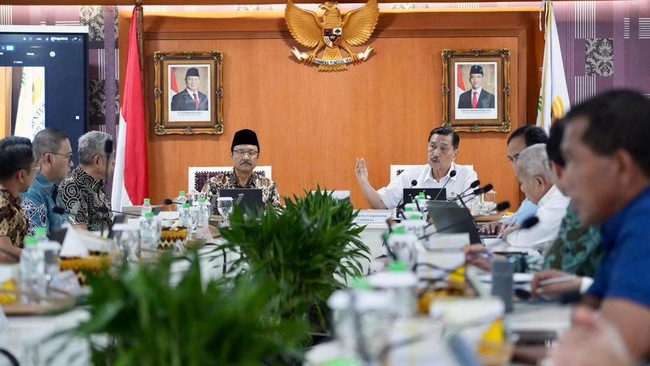
Jakarta, CNBC Indonesia - The Chairman of the Government Digital Transformation Acceleration Committee (PTDP), Luhut Binsar Pandjaitan, has revealed that the government is now preparing to expand the pilot programme for digital social assistance, or digital bansos, from Banyuwangi to 42 districts and cities across Indonesia.
According to Luhut, in this phase, the digital social assistance system is estimated to manage data from 10 to 11 million registered households.
From the perspective of technological infrastructure readiness, the Government Services Linkage System (SPLP), managed by the Ministry of Communication and Digital (Komdigi), is assured to be tested and ready to facilitate the interoperability mechanism for automatic data exchange.
This system will synchronise data from eight main agencies, namely Dukcapil, BPS, BKN, PLN, BPJS Ketenagakerjaan, ATR/BPN, Korlantas Polri, and Kemensos.
“After 77 years of Indonesia’s independence, poverty data is truly beginning to be administered in a more integrated and systematic manner. Therefore, interoperability and cross-sector synchronisation must run without obstacles,” Luhut continued.
The government has also established a measured roadmap (timeline) for implementation. On 1 June 2026, the registration process along with the kick-off of digitalisation of social assistance in 42 districts and cities will officially begin. The data collection process is targeted to be completed by the end of July 2026, followed by the gradual mechanism for distributing social assistance based on the latest data verification.
“I ask every data-owning agency to ensure that the Service Level Agreement (SLA) is fulfilled to avoid bottlenecks in the field. In addition, cybersecurity must be maintained at the highest standards by BSSN, considering this involves the data of millions of Indonesians,” he stressed.
As a form of supervision and high-level commitment, President Prabowo Subianto is scheduled to directly review the implementation and system readiness in the field through working visits to Surabaya, Banyuwangi, and Bali on 8-9 June 2026, to be followed by a Limited Meeting at the Tampak Siring Palace.
To ensure the entire process runs according to target, the committee team is currently holding online coordination meetings every two days to monitor progress on repository integration, local data testing, and staging data tests.
“The closer we get to implementation, the more detailed the work will be. The devil is in the details. However, I appreciate the hard work and solid collaboration from all ministries and agencies as well as the Regional Coordinators. If all these stages run according to plan and our system fundamentals are well maintained, the national rollout of the digital social protection system can optimistically be carried out in October as directed by the President,” Luhut concluded.
Luhut stated that the government is also transparently identifying structural challenges, namely the potential for exclusion errors where more than 3 million people in decile 1 are not yet reached by assistance, as well as inclusion errors that cause around 2.7 million recipients to be in decile 4 group.
As a mitigation and improvement step, the government relies on cross-ministry data integration. The success of the pilot in Banyuwangi Regency has validated that the use of integrated administrative data—including population data, asset ownership, employment, and electricity consumption—can significantly improve the accuracy of recipient eligibility.
“Data is the main foundation of fair and on-target social policies. The existence of these exclusion and inclusion errors is something that must and is being addressed together through a more precise digital system. There is no single party that is the greatest in this big job; we are all one team that must support each other and maintain the work rhythm,” said Luhut.