
Frequent KRL Problems Leave Passengers Feeling Stifled and Crushed
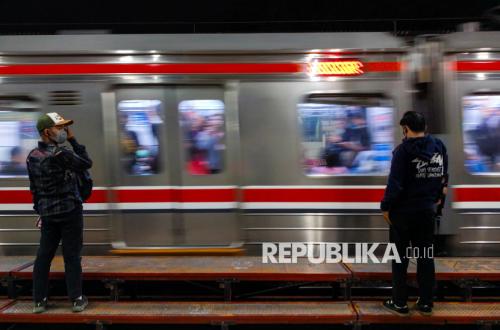
Every morning, Rachman begins his journey from his home in Bogor to Jakarta, where he works. A private-sector employee and daily commuter who relies on the Jabodetabek electric multiple-unit (KRL) service, travelling by train has become an inseparable part of his routine.
In recent months, however, the journey has not always gone smoothly. A shortage of trainsets has made waiting times and crowding increasingly noticeable for the young Bogor resident.
“The shortage of trainsets is really noticeable. Sometimes I end up on an SF10 or SF8 formation, so it gets even more crowded. Some trains also feel stuffy, and the air conditioning is not very effective, which makes the journey uncomfortable,” Rachman told Republika in Jakarta on Tuesday (20 October 2026).
Rachman is one of millions of commuters who rely on the electric trains. The 30-year-old questioned why so many trainsets were experiencing problems at passengers’ expense.
“I hope KAI and INKA will check again that the trainsets are fit to run and won’t break down during journeys. If they have not passed testing, they simply should not be used yet,” Rachman said.
The problems affecting seven iE305/CLI-225 KRL trainsets manufactured by state-owned PT Industri Kereta Api (INKA) have come under intense scrutiny. PT Kereta Api Indonesia (KAI) president director Bobby Rasyidin said he understood the impact on customers of faults affecting several KRL trainsets made by INKA.
“Disruptions, particularly during peak hours, can directly affect journey times and the activities of people who rely on the Commuter Line every day,” Bobby said in a written statement in Jakarta on Friday (16 October 2026).
Bobby said KAI was treating the issue seriously. Any rolling-stock fault that affects passengers’ journeys, he said, must be addressed, evaluated and followed up clearly.
KAI has asked for every technical finding on the trainsets to be dealt with comprehensively, Bobby said. INKA, as the rolling-stock manufacturer, has been asked to ensure that corrective measures are based on accountable inspection results and technical assessments.
“We need swift and complete follow-up. The root cause of every problem must be identified and then resolved with the appropriate corrective measures,” Bobby added.
He said support for the national railway industry must go hand in hand with responsibility for maintaining the quality of products used to provide public services. KAI is also continuing to provide technical and operational support during the evaluation and remedial work.
“We support the development of the national railway industry. But once rolling stock is being used to carry people every day, its safety and reliability standards must be consistently maintained,” Bobby said.
KAI vice-president of corporate communications Anne Purba said the seven iE305/CLI-225 KRL trainsets made by INKA had previously undergone a phased inspection and maintenance programme. The final trainset completed the programme on 5 October 2026, and all seven returned to service on the Bogor Line from 6 October 2026.
“Some technical issues remained after the trainsets returned to service. We have reported all the findings to INKA for action. KAI’s team is continuing to monitor them so that each follow-up measure can be tested directly through the trainsets’ performance in service,” Anne said.
Anne said the Jabodetabek Commuter Line served 270,891,261 passengers from January to September 2026, up 6.02% from 255,520,949 in the same period in 2025. At that scale of service, she said, the reliability of every trainset was crucial, because a single disruption could affect other journeys, particularly during peak hours.
“When problems occur, KAI adjusts train operations and makes operational changes to maintain service and minimise the impact on passengers,” Anne said.