
French Archaeologists Reject Claim of World's Oldest Cave Paintings from Indonesia, Cite Methodological Issues
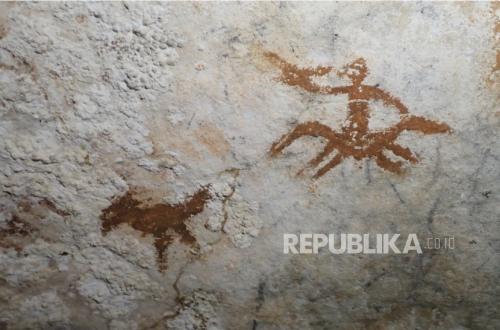
French archaeologist Georges Sauvet has stirred the research world by rejecting Indonesia’s claim that the world’s oldest cave paintings originate from the country. The cave paintings in question are hand stencils at Leang Metanduno in Maros Regency, estimated to be between 71,000 and 67,000 years old. Sauvet has questioned the dating methodology, arguing it is biased and prone to error, and has not been verified using alternative methods.
This was stated in his academic article titled ‘Uranium-thorium dating: the race towards the earliest rock art’, published in Aplomb Publication, AOJ of Historarchaeology & Anthropological Exploration Volume 2 Issue 1 - 2026, on 20 May. In the introduction, he wrote: ‘In recent years, uranium-thorium dating of calcite layers covering prehistoric cave paintings has yielded increasingly older age estimates. However, this method has drawbacks as it contains potential bias that tends to make sample ages appear older than they actually are. The issue is that this bias is not easily detected, leading many researchers to accept these very old dates without critically revalidating their accuracy.’
Therefore, caution is essential. Each sample must undergo thorough physicochemical analysis and cross-verification using carbon-14 dating or other relevant methods on the same sample. This step is crucial to ensure the dating results are genuinely accurate and scientifically accountable.
Previously, during a presentation at the National Research and Innovation Agency (BRIN) on Thursday, 22 January 2026, archaeologist and geoscientist Prof Maxime Aubert from Griffith University and Southern Cross University presented findings on the dating of rock art at Leang Metanduno, Muna Island, Southeast Sulawesi.
In his presentation, Prof Aubert detailed how scientists determine the age of prehistoric paintings. He used laser ablation uranium-series (LA-U-series) dating on microscopic calcite layers covering the cave paintings.
According to Prof Aubert, the principle of rock art dating is simple yet precise. The process begins with rainwater seeping into limestone caves. ‘Rainwater percolates through limestone, dissolving small amounts of calcium and uranium. When this water flows over rock art surfaces, it deposits a thin layer above the paintings,’ he explained.
This thin calcite layer is key. It contains uranium that decays into thorium over time. By comparing uranium and thorium atom counts, researchers can calculate when the layer formed. ‘If the layer is above the painting, it provides a minimum age—meaning the painting is at least as old as the layer. If the layer is below, it gives a maximum age,’ Aubert said.
A simple analogy is a ‘layer cake’. If the cave painting is the bottom layer, the water and calcium deposits in the cave form successive layers above it. Within these layers, uranium decays into thorium over time. Researchers then measure the uranium and thorium atoms in the ‘layer cake’.