
Free Nutritious Meals Programme Touted as Engine for Village Economies and Farmers
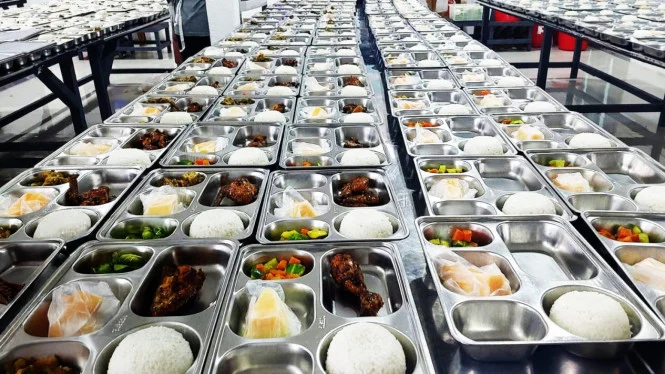
Jakarta, VIVA – The Free Nutritious Meals (MBG) programme, a flagship initiative of President Prabowo Subianto and Vice-President Gibran Rakabuming Raka’s administration, continues to be scaled up.
To date, the programme has reportedly reached approximately 60 million beneficiaries and is targeted to serve 82 million by December 2026 at the latest.
The government maintains that MBG is not simply a free food distribution scheme but rather part of a broader national development strategy integrated with free health screenings and equitable access to education.
The kitchens of the Nutrition Fulfilment Service Units (SPPG) form the operational backbone of the programme. Each kitchen unit employs an average of around 50 people per day — a figure seen as reflecting a significant direct economic impact, particularly in job creation across various regions.
The ripple effects of the programme are believed to extend well beyond the consumption sector, reaching upstream industries. Muhammad Makmun Rasyid, founder of the Centre for Indonesian Crisis Strategic Resolution (CICSR), considers MBG to have significant potential to stimulate agriculture and village economies.
“With stable and measurable demand from MBG kitchens, villages have the opportunity to become new centres of economic growth. This can strengthen the national food supply chain whilst opening up space for young people’s involvement in the agricultural sector,” said Makmun on Monday, 23 February 2026.
According to him, the surge in demand for commodities such as vegetables, fruit, eggs, and other protein sources creates market certainty for farmers. Production, distribution, and processing of agricultural products at the local level also stand to increase.
These conditions are seen as potentially curbing the pace of urbanisation, as villages would hold stronger economic appeal. Moreover, national food security is said to become more robust if supply chains run in a stable and integrated manner.
Makmun added that these significant opportunities must be accompanied by concrete support, ranging from access to financing, adoption of agricultural technology, through to sustainable business partnerships — particularly for young farmers.
The government itself has affirmed that MBG is designed not only to improve the nutritional quality of the population but also to serve as an economic engine based on food production. With the ongoing expansion of SPPG kitchens, the programme is projected to become one of the pillars of people-centred economic growth in the years ahead.