
Free Nutritious Meals Programme Assessed as Helping Improve Children's Eating Habits
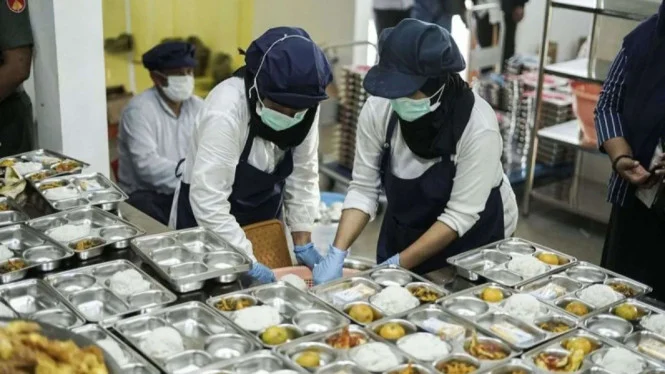
Indonesia’s Free Nutritious Meals (MBG) programme, which has been operating for a year, is assessed as capable of fostering positive eating habits among Indonesian children. A study by the Research Institute of Socio-Economic Development (RISED) has documented changes in the eating routines of MBG recipient children.
RISED Director M. Fajar Rachmadi stated that approximately 80 per cent of parents surveyed by RISED researchers reported that, following the introduction of MBG, their children became more consistent in consuming nutritious food.
“The RISED survey findings are interesting, as they reveal new facts from the field that had not previously been fully documented,” Fajar said in a statement on Friday, 27 February 2026.
Fajar further explained how his team obtained an in-depth understanding from the survey they recently conducted. He acknowledged that one key finding from their detailed questions to parents of MBG recipient students was the recognition that parents bear responsibility for meeting their children’s nutritional and dietary needs.
“The presence of MBG actually provides peace of mind to families whilst their children are at school, and our survey shows that 55 per cent of parents agree that their children’s eating habits changed to become less selective about food following the MBG programme,” Fajar said.
The RISED survey involved approximately 1,800 parents and provided an initial picture of the programme’s daily micro-effects. One key finding showed that 81 per cent of parents from disadvantaged families expressed support for the continuation of MBG.
“Interestingly, when children can receive meals at school, parents also feel reassured. This reassurance arises because the parents we surveyed are confident that their children are regularly receiving nutritious meals through the MBG programme,” he said.
Consistent with the RISED team’s findings, Dr Andi Khomeini Takdir, an internal medicine specialist, believes that regular provision of nutritious meals has the potential to form better eating habits in children.
Daily exposure to the diverse MBG menu is assessed as helping children more readily accept food variety. He considers the healthy food intervention through MBG to be a good idea for improving children’s eating patterns, including children from upper-middle-class families who have hitherto been assumed to receive good nutritious food at home.