
Free Nutritious Meals and Islamic Social Finance Schemes
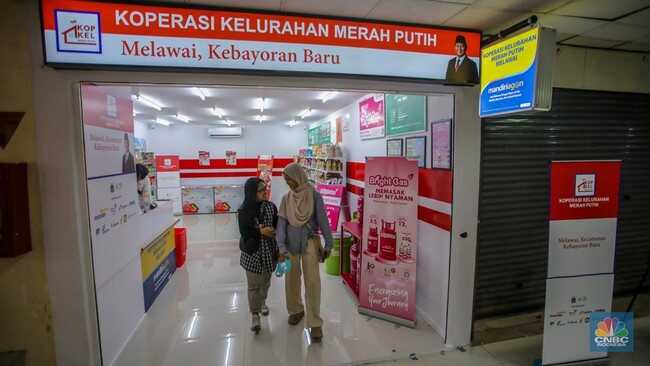
The Free Nutritious Meals (Makan Bergizi Gratis, or MBG) programme has become a priority agenda. More than simply placing food on schoolchildren’s plates, the programme addresses human resource quality, generational prospects, and the nation’s development trajectory. The government has consistently emphasised that MBG represents long-term investment rather than mere social expenditure.
Notably, during a Ministry of Religious Affairs (Kemenag) forum on priority programmes for 2025–2029 in Jakarta, officials suggested that the potential of national zakat and wakaf should be optimised to support MBG. This proposal opens broader discussion: can Islamic social finance mechanisms—zakat, infak, sedekah, and wakaf (ZISWAF)—legitimately support free nutritious meal programmes?
The question is not straightforward, as it touches upon public policy, fiscal governance, and Islamic jurisprudence (fiqh) with distinct normative boundaries, particularly regarding the eight categories of zakat beneficiaries (asnaf). The discussion is simultaneously compelling and sensitive. This analysis examines whether ZISWAF can and should support MBG.
Conceptually, MBG addresses chronic malnutrition, stunting, and unequal access to nutritious food. Data from the Central Statistics Agency and various health surveys confirm that malnutrition and stunting remain serious challenges, though trends have improved in recent years. The programme aims to ensure schoolchildren, particularly from vulnerable families, receive adequate nutrition. The rationale is straightforward: healthy, well-nourished children demonstrate better learning capacity, higher long-term productivity, and greater social mobility prospects.
However, beyond this simplicity lies a fundamental question: how should it be financed? With potential beneficiaries numbering tens of millions of children, MBG requires substantial and sustained budgeting. Here, the proposal to optimise Islamic social finance emerged.
The Ministry of Religious Affairs has advocated optimising national zakat and wakaf potential to support MBG. Indonesia possesses considerable zakat potential. Various studies estimate national zakat potential at over 300 trillion rupiah annually, though actual collection remains significantly below this figure. The National Zakat Board (BAZNAS), the authoritative national zakat administrator, has recorded increasing zakat collection in recent years, reflecting rising public awareness of zakat’s obligation and social role.
At the macro level, the question seems reasonable: if zakat potential is substantial and MBG serves social purposes, why not integrate them? However, this is where we must pause and enter the realm of fiqh.
Zakat is not merely an alternative fiscal instrument. It constitutes a financial act of worship (ibadah maaliyah) with strict regulations. The Qur’an explicitly identifies eight beneficiary categories (asnaf) in Surah At-Taubah, verse 60: the poor (fakir), the needy (miskin), zakat administrators (amil), those whose hearts are to be reconciled (muallaf), slaves seeking freedom (riqab), the debt-burdened (gharim), those fighting in Allah’s cause (fi sabilillah), and travellers (ibnu sabil).
The critical question is whether MBG falls within any of these eight categories. Literally and structurally, a universal free meal programme for all students does not automatically qualify under these asnaf. Not all MBG recipients are poor or needy. If the programme is universal, zakat risks being distributed to individuals who jurisprudentially do not meet the eligibility criteria (mustahik).
This is where the fiqh problem emerges. Directly channelling zakat to finance universal MBG carries the risk of violating Shari’ah’s established zakat distribution principles. Zakat cannot be redirected toward general purposes lacking clear connection to the asnaf.
Certainly, there is scholarly debate about the term “fi sabilillah.” Some scholars broaden its meaning to encompass all general public interest. However, classical jurisprudential consensus restricts it to specific contexts of struggle in Allah’s path, not general government social programmes. Therefore, from a cautious fiqh perspective, zakat cannot directly serve as the primary financing source for a universal MBG programme.
Beyond the jurisprudential dimension, governance concerns merit scrutiny. If zakat substitutes for government budgeting that should derive from the state budget (APBN), moral hazard emerges. The state bears constitutional responsibility to ensure public welfare. Shifting this obligation to zakat mechanisms effectively represents “privatisation of state responsibility” through religious instruments.
Zakat is not a tax substitute. Zakat possesses its own maqashid (objectives): wealth redistribution and empowerment of beneficiaries toward poverty alleviation. Therefore, improperly integrating zakat with MBG creates dual problems: jurisprudential violations and public governance concerns.
Does this mean ZISWAF cannot participate at all? No. Islamic social finance instruments can engage through more creative approaches that maintain Shari’ah compliance. ZISWAF funds can support productive ecosystems underpinning such programmes.
For example, productive financing for poor farmers supplying MBG food ingredients, or capital support for small-scale livestock producers and fishing communities qualifying as mustahik. Additionally, productive wakaf can establish food production centres or community-based communal kitchens. Furthermore, empowerment programmes for food-based SMEs managed by eligible beneficiaries can create sustainable value chains strengthening meal programme sustainability whilst maintaining proper Islamic finance principles.