
Free Nutritious Meal Programme Requires Strict Oversight to Achieve Its Grand Vision
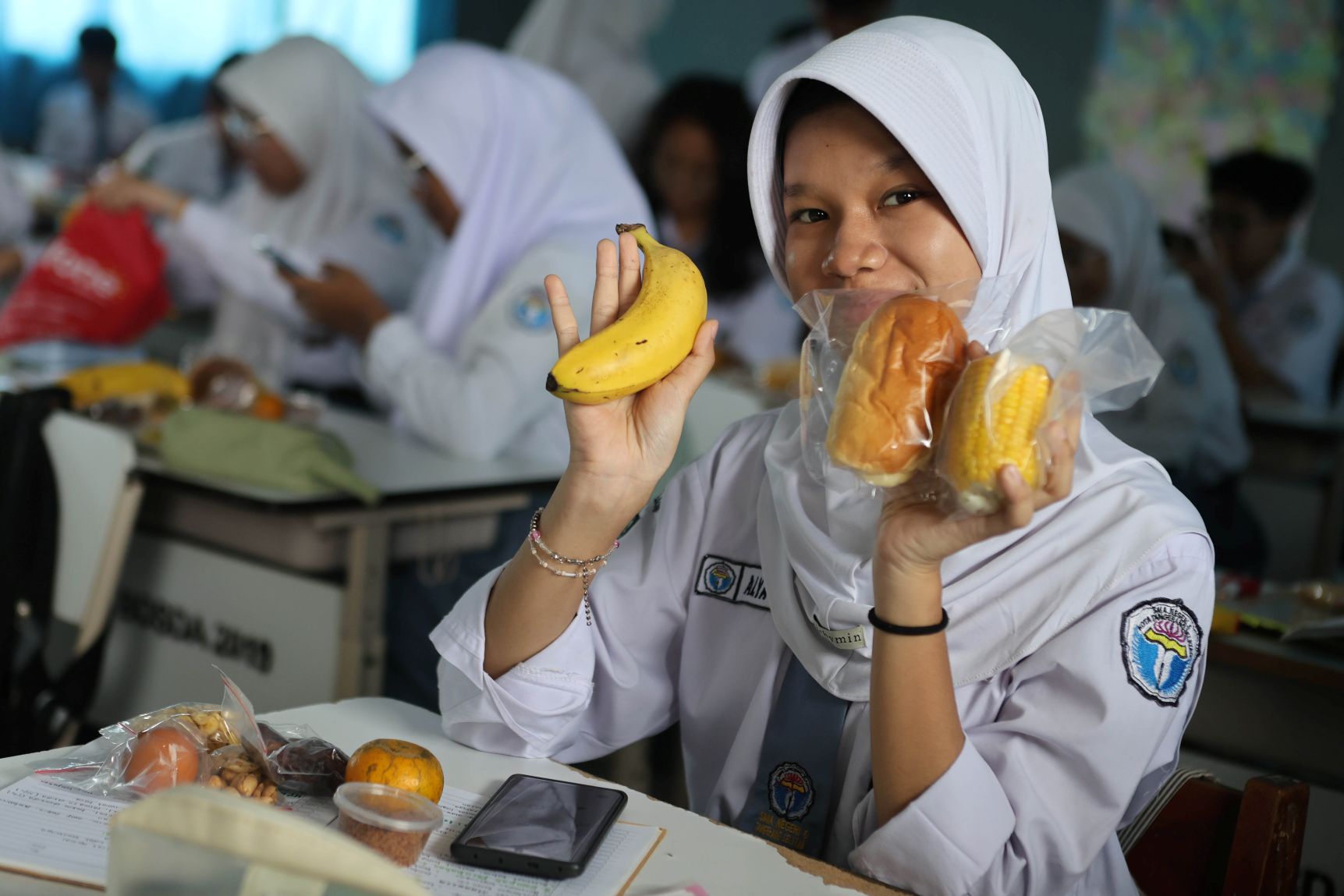
IMPLEMENTATION of the government’s Free Nutritious Meal Programme (MBG) continues with ongoing evaluation. In the field, strict oversight of the Nutrition Fulfilment Service Units (SPPG) has become a primary agenda.
This supervisory measure is deemed critical to ensure that the entire food provision process—from kitchen preparation to the dining tables of children and programme beneficiaries—operates in accordance with the established Standard Operating Procedures (SOP). On Java alone, the National Nutrition Body (BGN) has temporarily halted operations of 1,512 SPPG as part of tightening programme implementation evaluation.
Director of Monitoring and Oversight for BGN Region II, Albertus Dony Dewantoro, stated on Friday (13 March) that this measure is part of efforts to reorganise the Free Nutritious Meal Programme (MBG) service so that all operational facilities meet established standards—including health, sanitation, and governance protocols.
“Based on evaluation data, the 1,512 SPPG units that have been temporarily suspended are distributed across several provinces in Region II: DKI Jakarta with 50 units, Banten with 62 units, West Java with 350 units, Central Java with 54 units, East Java with 788 units, and Yogyakarta with 208 units,” he explained.
Dewantoro stated that BGN will provide mentoring and verification support to affected units to help them quickly meet required operational conditions. “SPPG operations that have been temporarily suspended will be reopened in stages once all operational requirements and established standards have been met,” he said.
Operational challenges in the MBG programme must be continuously addressed to rebuild public trust in the initiative. The programme’s meaning in public perception has diminished and its image has deteriorated. This observation comes from Risang Rimbatmaja, a researcher and behaviour change communication practitioner from Cipta Foundation, an NGO active in health and environmental sectors.
Risang offered an interesting perspective on how public response can differ from programme managers’ views, whilst providing recommendations based on his expertise for improved governance and public communication.
“The logic of programme managers—in this case the National Nutrition Body (BGN)—and public logic are different. Statistically, incidents occurring in the MBG programme may be extremely small—only 0.00-something per cent of total distributed portions. However, for the public, just one or two incidents become sensational situations,” he explained.
According to Risang, the public does not employ ‘proportional logic’ in viewing the MBG programme, but rather ‘expectations logic’. When field reality deviates from high expectations regarding safe, nutritious food, even minor issues trigger strong reactions. This is why uncompromising oversight of SPPG becomes absolutely essential.
“Furthermore, MBG challenges are not limited to hygiene but extend to the very essence of nutrition itself. Based on observations I have conducted in several major Indonesian cities, public literacy regarding balanced nutrition concepts remains troubling,” he said.
Balanced nutrition actually has two main pillars: menu diversity and portion size. Unfortunately, the concept of ideal portions—dividing a plate proportionally between carbohydrates, proteins, vegetables, and fruit—is often overlooked. Interestingly, according to Risang’s observations, public criticism often misses the mark.
“The public usually does not consider nutritional balance. They more often protest the amount, which they consider insufficient, or question the type of side dish. Yet the essence lies in diverse foods representing bodily needs and appropriate portion sizes. When implemented with good oversight and massive education, MBG is the key to saving Indonesia’s future health,” he stated.
Risang highlighted concerning facts about current dietary patterns. Referring to health data, Indonesian vegetable and fruit consumption is critically low. “Indonesians eat chaotically. Data shows that only about 6 per cent of the population consumes adequate vegetables and fruit. This means 94 per cent of our population lacks sufficient vegetable and fruit intake,” he said.
This condition, Risang noted, is worsened by the invasion of ultra-processed foods or factory-packaged products that now dominate. The consequences are severe: surging non-communicable diseases (NCD) such as cancer, stroke, and diabetes are poised to strike the 40–50 age group in the future. Therefore, the MBG programme must also be viewed as a vehicle for massive nutrition education.
Risang cited Japan’s success as an example. “Japan succeeded in educating its population to adopt correct eating behaviour through a school-based lunch model. MBG is actually very strategic for creating positive behaviour change towards better dietary practices among Indonesians,” he concluded.