
Free Homecoming Travel and a Journey Home That Humanises
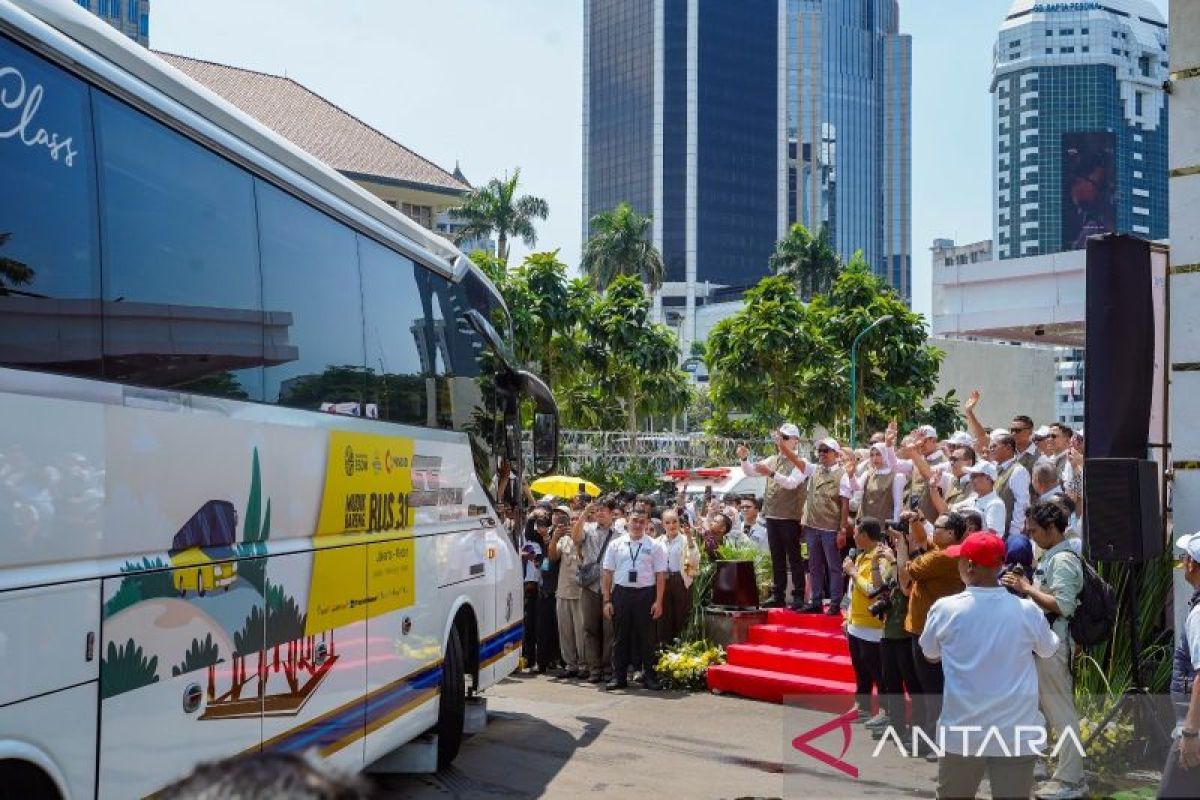
Eid is still three days away, but that does not deter her from hurrying home for mudik. In front of her, a neat row of buses stands in line, their engines idling softly, as if sharing in the pounding hearts of anticipation from the passengers.
Sri straightens her small bag containing clothes and simple provisions, a small souvenir for her parents in Klaten, Central Java, during the mudik. It looks heavy, though truthfully, the heaviest burden is not the luggage, but the longing she has kept quietly for the past year amid the hustle and bustle of Jakarta.
For Sri, mudik is not merely a physical journey. Mudik becomes a space to return to being a child, not just a mother or a worker.
In moments like these, for those going mudik, the distance between city and village is no longer measured in kilometres, but in the warmth of long-awaited embraces.
“I have joined the Free Mudik Programme for three years, and I am very happy. The service is good, everything is good, really. We also feel light, feel happy,” said Sri, who this year is participating in the 2026 Mudik Bersama Programme.
Sri’s story is a small portrait of millions of mudik tales in Indonesia. Every year, a massive flow of people moves simultaneously towards their hometowns.
Roads are congested, stations are full, terminals are bustling with neatly stacked suitcases and cardboard boxes. Behind all that, there is one commonality binding fellow mudik travellers, in the form of longing that yearns to be fulfilled.
Behind the sacredness of that mudik journey, there is a reality that is not always light. Rising transport costs, long and tiring trips, and uncertainties amid the dense mudik flow often become a burden in themselves for many families.
Not a few have to reconsider mudik plans, even postponing the desire to meet parents in order to maintain financial stability.
At this point, the meaning of mudik begins to shift from mere tradition to an issue of access. Who can go home, and who must wait?
This question becomes important amid economic conditions that demand many families to be more prudent, including for mudik needs.
Free Mudik
The presence of free group mudik programmes becomes an answer to that anxiety. Mudik is not just about transportation, but about reopening opportunities for many people to still go home, without being burdened by heavy costs.
When travel fares can be reduced, including for mudik, space in family budgets opens up for sharing with parents, helping siblings, or simply bringing small joys to the hometown.
Free mudik programmes by various business entities, both government-owned and private, need to be continuously promoted.
One of those routinely conducting mudik is the Indonesian Mining Industry Holding, MIND ID, along with its group members, namely ANTAM, Bukit Asam, INALUM, TIMAH, and Vale Indonesia.
This year, they, as a form of the state’s presence, are sending off 1,700 mudik participants using 28 buses and 4 ships; this initiative presents a tangible form of the company’s presence amid society that is bearing the longing to mudik.
Besides them, a series of other business entities are doing the same, providing free mudik. This shows that the role of the business world does not stop at business activities alone.
In essence, it is more than numbers of how many have been successfully sent off for mudik, but what is felt is the impact on society.