
Frederica Widyasari Dewi: Indonesian Women as Key Pillars of the Nation's Economy
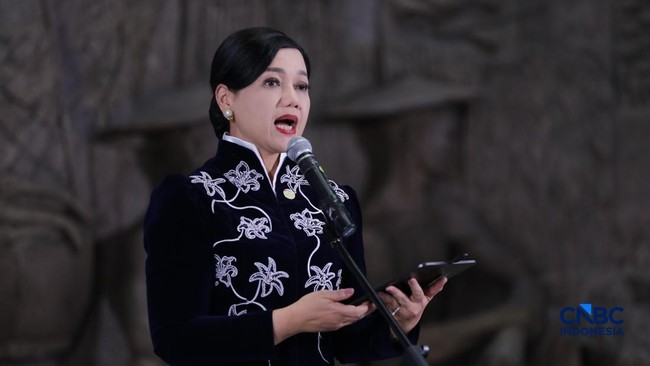
Jakarta, CNBC Indonesia - The Chair of the Financial Services Authority (OJK) Board of Commissioners, Frederica Widyasari Dewi, emphasised that Indonesian women hold a strategic role as the main pillar in advancing national development, particularly in the economic sector. This was stated by the woman familiarly known as Kiki Widyasari at the CNBC Indonesia Top Women Fest 2026 event, themed “Celebration of Powerful Women, Strong Women, Strong Economy”. According to her, the theme is highly relevant to the current situation, where women in strategic positions contribute to strengthening national economic growth. “Women in powerful positions today play a significant role in supporting the strengthening and growth of the economy in our country,” she said during a CNBC Indonesia TV broadcast, quoted on Thursday (30/4/2026). She also shared her experiences following a visit to the United States (US), including attending a United Nations (UN) forum in New York. At the forum, the issue of empowering Micro, Small, and Medium Enterprises (MSMEs) was a primary focus, particularly regarding the ‘missing middle’ phenomenon—that is, businesses operating between micro and large scales. She emphasised that the MSME sector is closely linked to women. Based on data, around 64.5% of MSME actors in Indonesia are women, equivalent to more than 37 million female entrepreneurs spread across various economic sectors. “This shows that women make a significant contribution to Indonesia’s economic growth,” she said. On that occasion, Frederica also quoted R.A. Kartini’s thoughts on the importance of women’s education as the foundation for building the nation’s quality. According to her, Kartini’s vision remains highly relevant today, especially in the context of women’s roles in the economic sector. Furthermore, Frederica highlighted the challenging global economic conditions due to geopolitical dynamics and energy price fluctuations. Nevertheless, she remains optimistic that Indonesia can face these pressures with strong economic fundamentals. She noted that Indonesia’s fiscal condition remains solid, supported by the stable performance of the financial services sector. Bank credit growth, third-party funds, and maintained non-performing loan (NPL) levels serve as positive indicators, while reforms in Indonesia’s capital market have also received appreciation from global investors, including institutions like MSCI. On the other hand, Frederica stressed the importance of digitalisation in empowering women, particularly through access to digital finance such as fintech. Digitalisation is seen as capable of opening wider opportunities for women to develop businesses and enhance financial inclusion. However, she also warned of risks behind this technological development. The OJK has recorded many women falling victim to scams in the digital financial sector due to a lack of literacy and vigilance. “Digitalisation has great potential but also great risks. Therefore, there needs to be guidance and education so that women can utilise it optimally and safely,” she explained. Closing her remarks, Frederica hoped that this event would not only serve as a discussion forum but also produce concrete steps in supporting women’s empowerment in Indonesia. “Support from women for women must continue to be strengthened to provide real contributions to the nation and state,” she concluded.