
Franco-German Dispute Threatens Europe's Stealth Fighter Jet Project
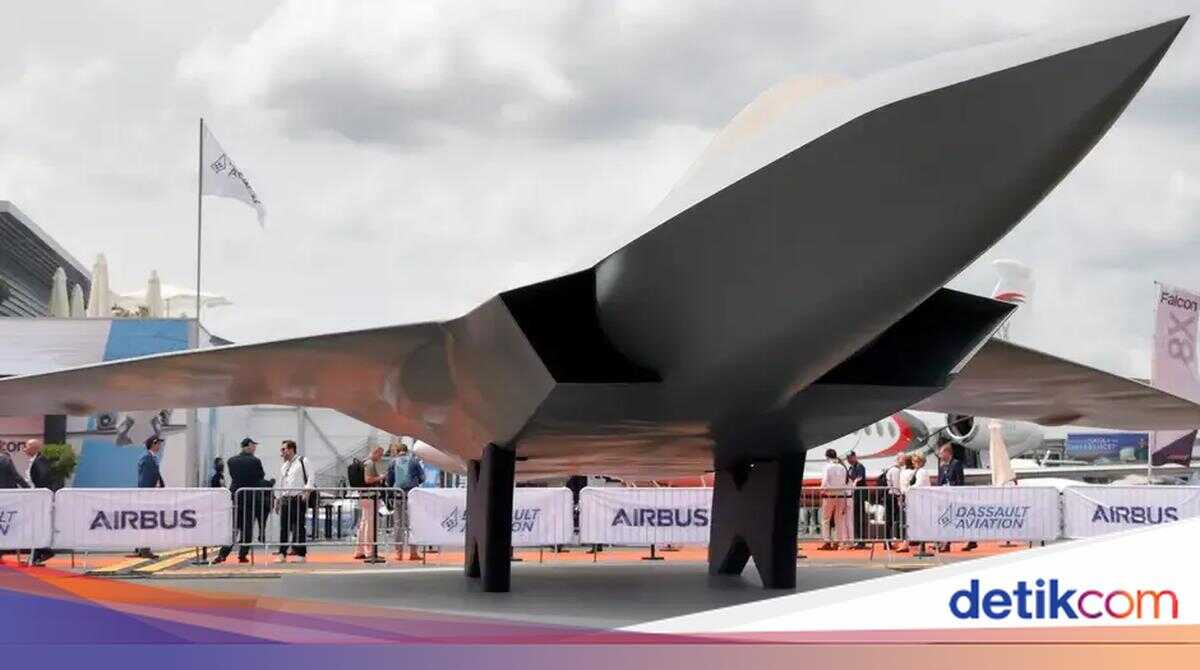
Michael Schoellhorn, CEO of Airbus Defence and Space, has affirmed that the Future Combat Air System (FCAS) — the Franco-German sixth-generation fighter jet programme — will not die. However, he acknowledged that “there will be restructuring in several areas.”
In an exclusive interview, Schoellhorn, whose company is one of the two principal partners in the project, stated emphatically: “FCAS will remain.” Nevertheless, he did not deny the existence of friction with French partner Dassault Aviation.
“Yes, there are issues regarding the manned fighter aircraft between the two companies. One of them is mine,” he said. “The risk with large-scale European projects like this is not just about political will, but also about industrial alignment among the players involved.”
In recent weeks, reports have circulated that the €100 billion (approximately USD 118 billion) air defence system project is on the brink of failure. One of the primary causes is Dassault’s insistence on maintaining control over the fighter jet development within the project.
What is the FCAS dispute about?
FCAS was launched in 2017 by French President Emmanuel Macron and then-German Chancellor Angela Merkel, with Spain subsequently joining. However, the project has been hampered by industrial disputes, fuelling speculation that FCAS would be radically restructured or even terminated.
The original plan was to build a sixth-generation fighter jet integrated with drones, combat cloud technology, and advanced weapons systems. Dassault was to lead the jet’s development, while Airbus’s Germany-based defence division would handle the other components.
However, the two companies have clashed over the jet’s specifications, its development pathway, and the selection of suppliers.
Responding to reports that FCAS was on the verge of collapse, Schoellhorn reiterated: “FCAS will remain. But certain parts of the project do need to be restructured.”
He noted that the project was designed in a different geopolitical context. Now, the defence landscape is shifting rapidly, with a surge in orders for Europe’s defence industry.
“We live in a completely different world. Speed is the key. The era when something was designed in meticulous detail with lengthy requirement lists and only materialised 15 to 20 years later is over,” he said. “Change is happening so fast that the way we develop systems must also change. Restructuring FCAS is indeed unavoidable.”
Germany’s stance on FCAS
On Wednesday (18 February), German Chancellor Friedrich Merz gave a strong signal that the plan to build a European sixth-generation fighter jet could be scrapped. He argued that the current jet design is better suited to France’s military requirements than those of the Bundeswehr.
This pessimistic tone aligns with signals from France in recent weeks. Several French officials have been quoted as saying the likelihood of the project being terminated is greater than that of a relaunch. One French parliamentarian even stated: “FCAS is dead. Everyone knows it, but nobody wants to say it.”
Merz said France’s need for an aircraft capable of carrying next-generation nuclear weapons does not align with Germany’s current military requirements.
“France wants to build a single model that meets their specifications. But that is not what we need,” he said. “This is not merely a political dispute — it is a fundamental difference in requirement profiles. If it cannot be resolved, this project will be difficult to sustain.”
However, France’s Delegate Minister for European Affairs, Benjamin Haddad, affirmed his government’s commitment to FCAS.
“We support FCAS,” he said at the Munich Security Conference. He acknowledged that ambitious projects of this nature are inherently difficult, as they involve governments and industries unaccustomed to working together.
According to Haddad, the French and German governments are still discussing the next steps. He expressed optimism that Dassault and Airbus — two innovative companies — can sit down together and continue the project.
More than just a fighter jet
Schoellhorn believes FCAS’s survival need not depend on a single fighter jet model. Restructuring, in his view, could actually strengthen the project.
He pointed to the successful pan-European collaboration on the Eurofighter Typhoon, which involves Airbus, Britain’s BAE Systems, and Italy’s Leonardo.
“Within FCAS, we are indeed still struggling in terms of collaboration,” he said. “But if ultimately there are two fighter jets within one large project with various other assets, that is not the end of the world.”
In his view, this would not end Franco-German-Spanish cooperation and could even make FCAS more resilient.
What does FCAS comprise?
Public attention has thus far focused on the ambition to build a sixth-generation fighter jet — more advanced than the fifth-generation jets currently in service or under development.
However, Schoellhorn emphasised that FCAS goes far beyond a mere fighter aircraft.
“FCAS is much more than an aircraft. At its core is the combat cloud. There are unmanned systems, sensors, and simulation capabilities. Most of these components are progressing very well,” he said.
Germany has even begun discussing the possibility of scaling down the project by removing the fighter jet component and focusing on the combat cloud-based command and control system.
These discussions are taking place as European governments continue to increase defence spending, particularly after nearly four years of Russia’s invasion of Ukraine has transformed the continent’s security landscape.