
France's Dilemma in the Midst of Iran-United States Conflict
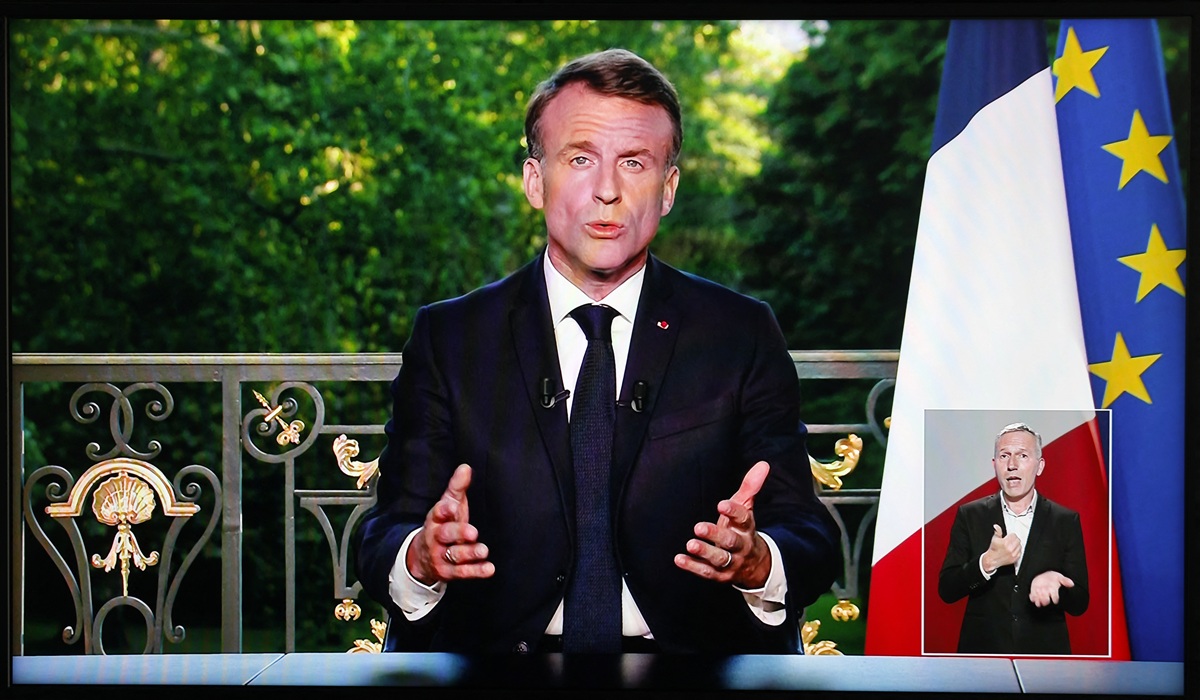
France finds itself in a precarious diplomatic position in the midst of conflict between Iran, the United States, and Israel. President Emmanuel Macron has criticised military operations against Iran as violations of international law, whilst maintaining that Tehran bears significant responsibility for escalating the conflict.
Historically, approximately half a century ago, Iranian Revolutionary leader Ruhollah Khomeini resided for several months in the village of Neauphle-le-Chateau, west of Paris, from where he recorded speeches that galvanised the Iranian Revolution before returning to Iran in 1979 to overthrow the Shah’s government.
Today, decades later, a new Middle Eastern conflict has once again placed France and European Union nations in a difficult position. Following the death of Iran’s Supreme Leader Ali Khamenei and escalating attacks from the United States and Israel, the conflict risks expanding and drawing Western nations into the fray.
Since the reported conflict began, killing more than 1,200 people in Iran, President Macron has sought to maintain a relatively balanced position. He has criticised operations against Iran and labelled them as violating international law, whilst also judging Tehran as bearing a major role in triggering the conflict.
“France’s position is somewhat walking a tightrope,” said Laure Foucher, a researcher at the think tank Fondation pour la Recherche Strategique (FRS).
“Macron’s position acknowledges that these operations are conducted outside the framework of international law. At the same time, France is not condemning it harshly because we believe that responsibility lies primarily with Tehran, which is unwilling to compromise,” she explained.
Nevertheless, the French government continues to criticise the military approach pursued by Washington and Tel Aviv.
“France has been very clear in stating that Iran’s nuclear issue and the threats emanating from Iran cannot be resolved through military operations from outside, and the stated objectives of Israeli Prime Minister Benjamin Netanyahu and US President Donald Trump to overthrow the regime are even more impossible,” Foucher added.
Initially, US and Israeli military operations focused on Iranian military leadership, missile programmes, and nuclear facilities. However, developments have seen both nations increasingly pushing for the overthrow of Iran’s government.
The French government views this step with scepticism, given past experience in the region.
“We have the precedent of Iraq. We know where that led,” Foucher stated.
Amid this situation, some French citizens view military operations against Iran as a violation of international law.
“The attacks by America and Israel against Iran are absolutely unjustifiable,” said Adèle Supau, a 23-year-old Paris resident.
“I could never speak on behalf of all people or about something I have never experienced. But this is not the way to change things. So I cannot say that I would ever agree with America and Israel,” she said.
In response to mounting tensions, France has deployed ten warships to the eastern Mediterranean, Red Sea, and Strait of Hormuz. Macron has also deployed two warships in the Mediterranean to protect shipping routes and French citizens in the region. Approximately 400,000 French citizens are known to reside in various Middle Eastern countries.
“This is not an offensive mission,” Macron stated.
He has also called for the formation of an international coalition to safeguard commercial shipping routes deemed vital to the global economy. Nevertheless, some citizens hope the French government will adopt a more forceful stance against US and Israeli military operations.