
Fragile Ceasefire: The World Must Face These 7 Bitter Realities
Jakarta, CNBC Indonesia - Global financial markets briefly breathed a sigh of relief after the United States-Israel and Iran agreed to a ceasefire. However, the issues are far from resolved.
Optimism was immediately reflected in the strengthening of gold prices, global stocks, and bonds, with the S&P 500 index only about 3% away from its all-time high reached at the end of January.
The rise in energy commodity prices remains at a “painful” level so far, but has not yet destroyed global demand. This bolsters investor confidence that a scenario of global recession accompanied by high inflation can be avoided for the time being.
However, this euphoria could be temporary. Investors are facing a “damned if you do, damned if you don’t” situation.
If the ceasefire fails to hold, markets could reverse sharply as investors begin to factor in a more prolonged and difficult-to-resolve conflict.
Even if the ceasefire holds, there is no guarantee of an economic recovery in the near term.
New Threats: Tariffs, Energy Disruptions, to Global Supply Chains
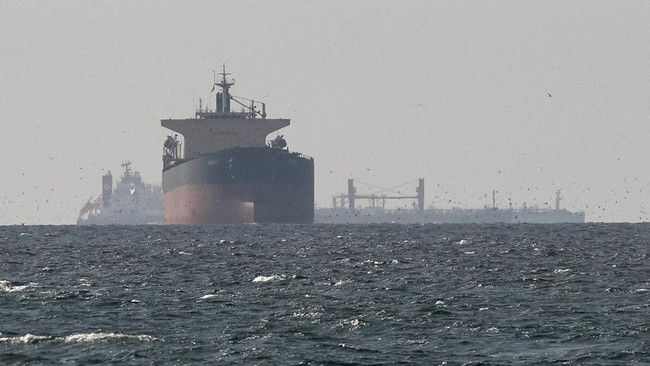
Even though the Strait of Hormuz has been reopened, uncertainty lingers. Iran still has the potential to impose additional fees on that energy trade route. Especially after Israel attacked Lebanon—violating the ceasefire agreement—on Thursday (09/04/2026).
On the other hand, the recovery of global energy supplies will not be instantaneous. Gulf countries have cut oil production by up to 10 million barrels per day, or about 10% of global supply. The process of restoring production, repairing infrastructure, and rearranging tanker distribution will take time. Moreover, energy shipping insurance costs are estimated to remain high.
The problem becomes even more complex with disruptions in the gas sector. Qatar’s Ras Laffan LNG export facility has lost 17% of its capacity due to drone attacks and is estimated to take years to recover.
The impact of these events spills over into various sectors:
This situation further emphasises the increased need for hedging against geopolitical risks, pandemics, and conflicts. However, the additional costs for such precautions are instead holding back investments and becoming a hidden burden on the global economy.
Energy Dependence Becomes a Problem: The World Must Diversify
This crisis once again opens up an important fact that the world’s dependence on a single main energy route like the Strait of Hormuz is a major risk.
Diversification is now the key word. Countries are encouraged to:
Seek new energy sources outside the Middle East,
Accelerate the development of renewable energy,
Develop alternative technologies such as nuclear and new gas exploration.
History shows that energy crises often spark innovation.
The 1970s oil crisis, for example, drove major investments in nuclear energy in France as well as North Sea oil exploration by the UK and Norway. Even the fracking revolution in the United States also stemmed from previous energy crisis pressures.
This means that behind the current uncertainty, there is an opportunity to build a safer and more sustainable global energy system.
The best scenario for the world right now is to successfully avoid a major economic crisis and take an important lesson that energy resilience is the main foundation of global economic stability.