
Four Suspects Charged with Selling Expired Imported Lamb Meat in Tangerang
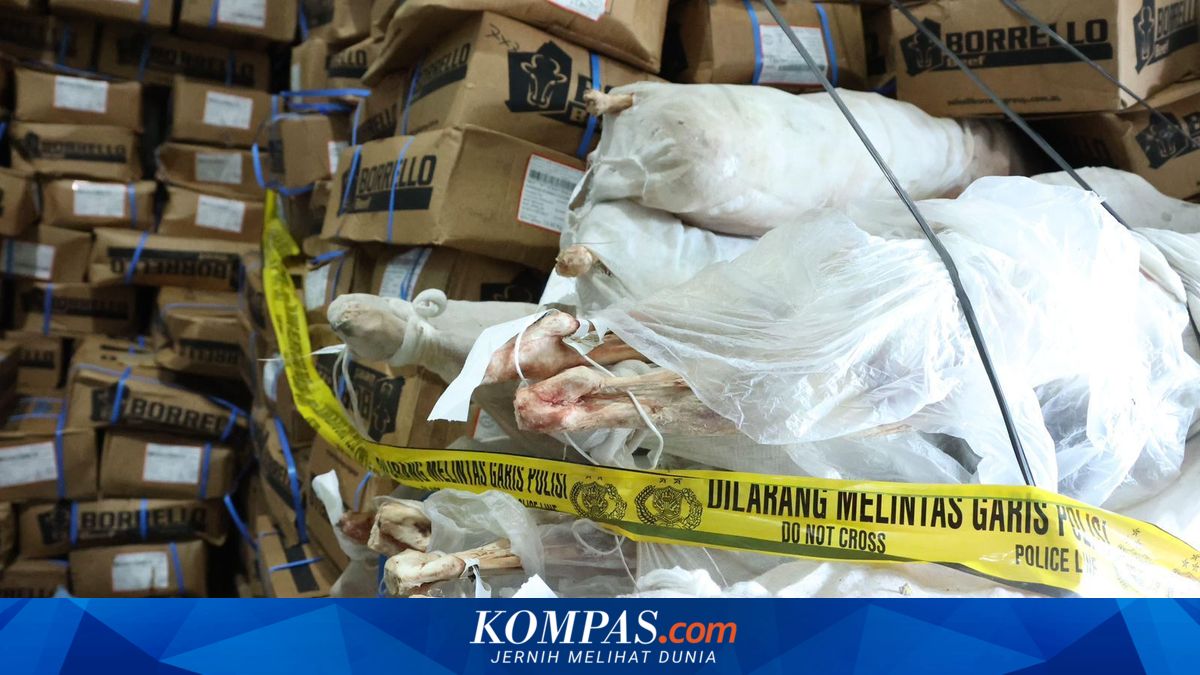
JAKARTA — The Indonesian National Police’s General Criminal Investigation Directorate (Bareskrim Polri) has designated four individuals as suspects in a case involving alleged violations of consumer protection and food safety regulations related to the circulation of expired imported lamb meat in Tangerang.
Kombes Setyo K Heriyanto, Deputy Director of the Serious Crime Directorate at Bareskrim Polri, stated that the suspects engaged in re-selling imported meat that had passed its expiration date since April 2024, taking advantage of high food demand ahead of the Islamic holiday season.
“The suspects obtained the meat starting in 2022. Some of it had already been sold, but the remaining expired meat was subsequently resold to merchants at prices ranging from approximately 50,000 to 80,000 rupiah per kilogramme,” Setyo said in a press release on Monday, 16 March 2026.
Kombes Pol Teuku Arsya Khadafi, Head of the Mobile Patrol Unit at Bareskrim Polri, stated that the case began with a public report regarding plans to sell expired carcassed imported lamb meat from Australia.
Following up on this information, the Mobile Patrol Unit team investigated and conducted surveillance on the meat distribution activities.
From the operation, officers secured three trucks carrying approximately 9 tonnes of expired imported lamb meat that was intended to be distributed to merchants.
“From both locations, additional evidence in the form of expired imported lamb meat was discovered,” said Teuku.
After investigation, the case was escalated to the prosecution phase by the Serious Crime Directorate’s Subdirectorate I at Bareskrim Polri.
During the investigation process, officers examined 10 witnesses, comprising sellers, intermediaries, buyers, drivers and assistants involved in the meat distribution.
Evidence was discovered in three trucks and two warehouses in the Tangerang area.
Results from witness statements, expert testimony, and laboratory testing of meat samples by the Animal Product Quality Testing and Certification Centre confirmed that the meat was unfit for consumption.
According to Setyo, organoleptically the meat’s colour was abnormal, it had a musty and rancid odour, and its acidity level exceeded normal limits.
For their actions, the suspects have been charged under Article 8, paragraph (3) in conjunction with Article 62, paragraph (1) of Law No. 8 of 1999 on Consumer Protection, as well as several provisions in Law No. 18 of 2012 on Food and Law No. 7 of 2014 on Trade.
They face a maximum sentence of five years imprisonment or fines of up to 2 billion rupiah.