
Four Decades at Monas: Budi and the Struggle of Street Photographers in the Digital Age
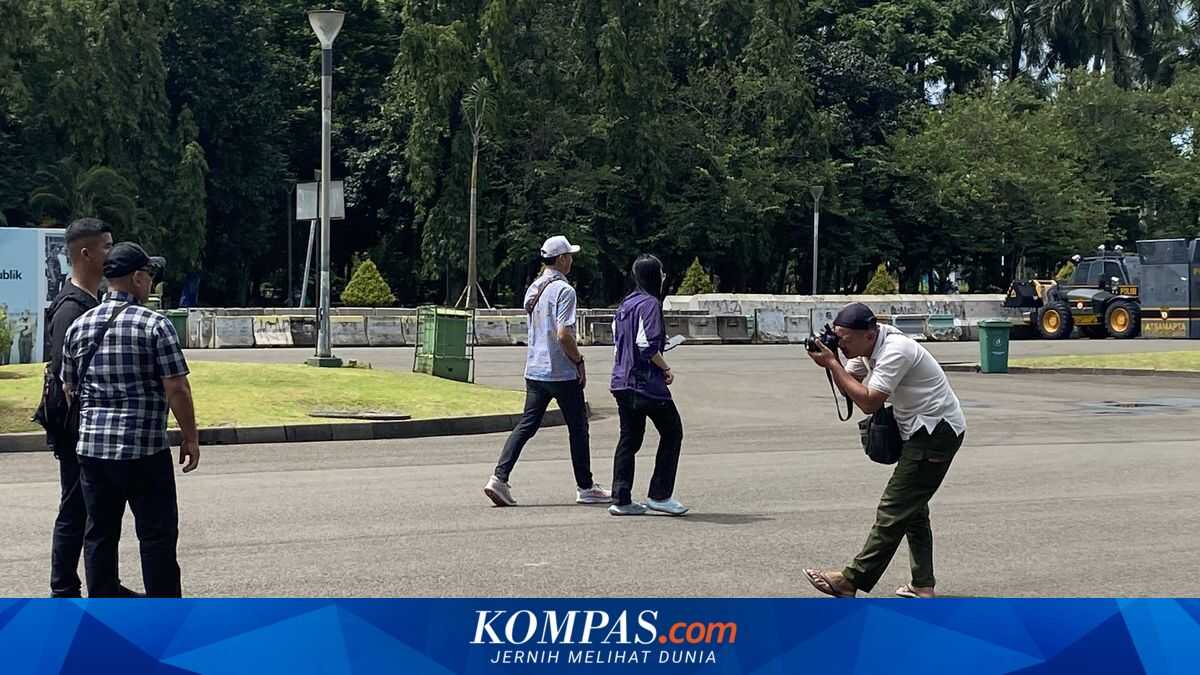
JAKARTA — The midday sky at the Monumen Nasional (Monas) plaza in Central Jakarta appears cloudy as visitors move through the area on Friday, 27 February 2026. A gentle breeze rustles the neatly arranged palm leaves along the wide asphalt paths. Among the moderate flow of visitors, several men with cameras hung around their necks stand alert, not shouting to offer their services but rather observing the arriving groups, reading the situation, and slowly approaching when they spot families or groups of friends struggling to arrange their selfies.
For Budi, the Monas plaza is far more than a public space. This is where he has earned the money to raise his children, pay his rental fees, and navigate the passage of time, from the era of analogue cameras to the current dominance of smartphones with advanced camera capabilities.
Budi began his career as a street photographer in the late 1980s. At that time, the Monas area was not as orderly as it is today. Access was not as restricted and cameras were not possessions owned by everyone.
He acknowledges that he never received formal photography education. All his skills were self-taught, from simply borrowing a friend’s camera and observing shooting techniques to eventually being able to purchase his own camera.
“I learned photography on my own. Self-taught. Eventually I became skilled,” he says.
Now, a Canon DSLR camera and a portable printer always accompany him at work. All this equipment was purchased from savings accumulated over many years.
The small printer is the key to his fast service. Photos can be printed on-site in approximately one minute.
“Print immediately, done in one minute. If it’s just a file it’s IDR 10,000, later I can send it. If it’s printed it’s IDR 20,000,” Budi explains.
“Nowadays people use mobile phones. So it’s quiet,” he says.
According to him, almost everyone now arrives with smartphones equipped with capable cameras. Even the image quality of the latest smartphones is deemed sufficient for personal documentation needs.
“There are still groups, there are still women. But it’s a different era,” Budi remarks.
On most days, particularly outside holiday seasons or approaching Ramadan, his income is unpredictable.
“When it’s quiet I might make IDR 100,000 a day. Sometimes more, sometimes less. It’s uncertain,” he says.
Yet during busy periods in the past, he could take home earnings many times higher. The Eid holiday season remains his hope.
However, he is aware he cannot rely solely on busy seasons. Every day he maintains the same routine: arriving in the morning, standing at strategic points, and waiting for opportunities.