
Fossils in Amber Reveal Ancient Ant and Parasite Interactions
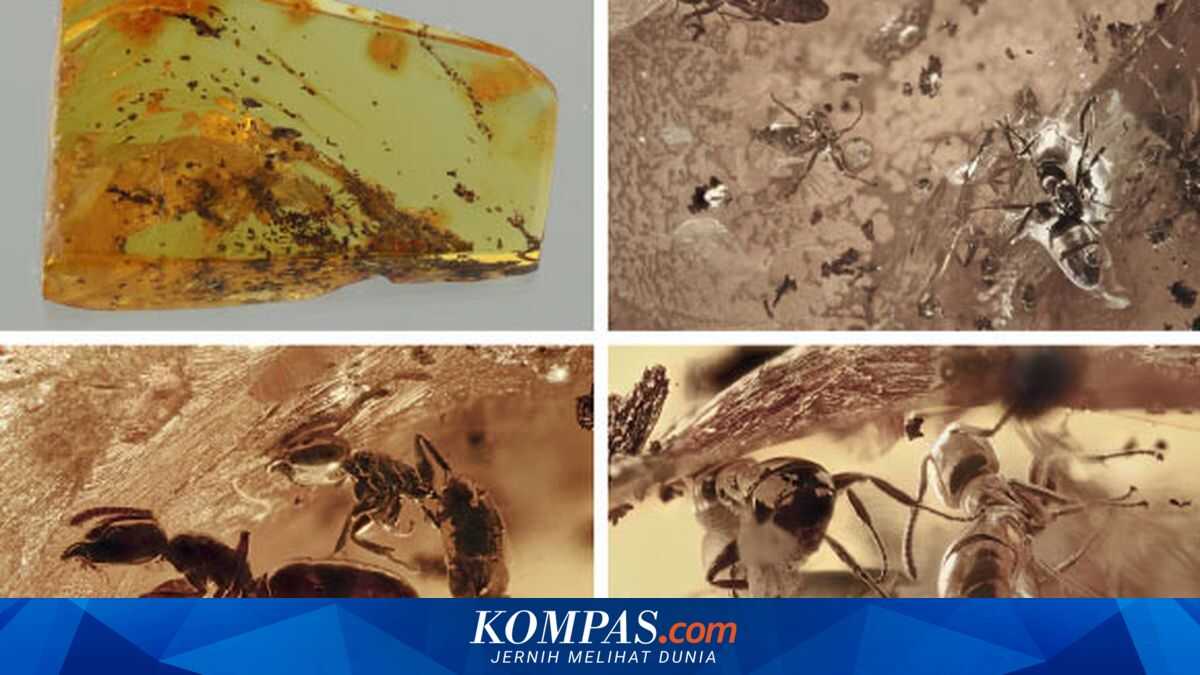
Fossils trapped in amber—fossilised tree resin—for millions of years are not merely visually striking. Rather, amber has proven capable of “preserving” moments of ecological interaction between ancient organisms. A recent morphological study has revealed possible parasitic and commensal relationships between ancient ants and mites that lived alongside one another.
The research analysed six amber specimens from various geological periods—ranging from the Cretaceous Period, through the Eocene, to the Oligocene—sourced from the Baltic region, the Dominican Republic, and Myanmar (Burma). The findings open a new window into understanding the behaviour and ecological habits of insects from millions of years ago.
“Inclusions in amber represent possible interactions between various organisms that formed the environment,” stated Dr de la Fuente.
He added that the identification and morphological characterisation of fossil ants discovered alongside other organisms provides a genuine picture of life on Earth millions of years ago.
The phenomenon of more than one organism being found within a single piece of amber is termed syninclusion—a rare occurrence of considerable value to palaeoecology.
The specimens contained ancient ants alongside various other organisms such as spiders, wasps, snails, centipedes, termites, mosquitoes, and notably mites.
The researchers explained that the earliest ants discovered from the Late Cretaceous period are known as stem ants. This group has no modern descendants. All ants living today evolved from another group called crown ants.
Notably, within the six pieces of amber studied, scientists found both types of ants, including “hell ants”—an ancient ant group that also evolved from stem ants and possessed highly unique mandible morphology.
In three of the six pieces of amber, ants were found in extremely close proximity to mites.
In the first specimen, one crown ant, a wasp, and two mites were discovered positioned so closely to the ant’s body that the mites were suspected to have been “hitchhiking” on the ant.
The second specimen contained stem ants and a spider. The third specimen contained a hell ant, a snail, a centipede, and several unidentifiable insects.
In the fourth specimen, stem ants and a mite were found approximately 4 millimetres apart. The fifth specimen even displayed three different ant species in close proximity to mites and termites, as well as mosquitoes and a winged insect in a less well-preserved condition.