
Fossil of the Oldest Primate Relative Found: What Does It Mean for the Origin of Humans?
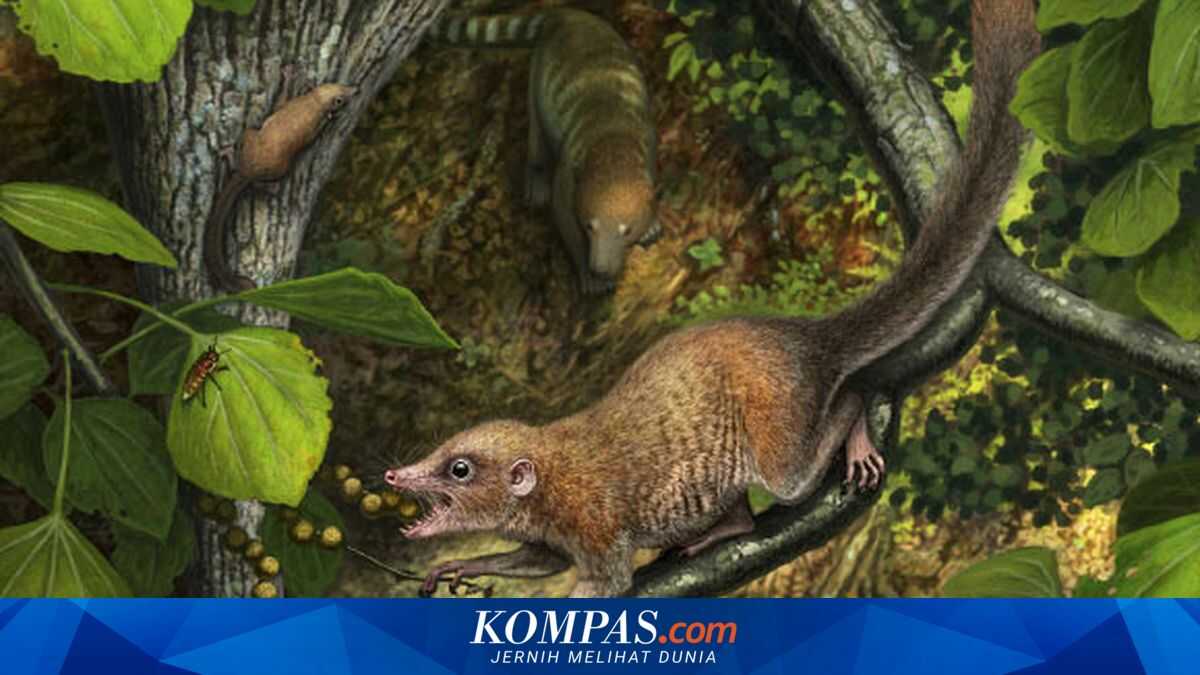
The discovery of three tiny teeth in Colorado, United States, opens a new chapter in the debate over the origin of primates—the group of mammals that would eventually give rise to humans. The fossil comes from Purgatorius, a mouse-sized mammal long considered the earliest primate relative ever found.
This finding is not merely an addition to the fossil record. It expands the geographic range of Purgatorius hundreds of kilometres further south than previously known, while challenging long-standing theories about how ancient primates dispersed after the dinosaurs’ extinction.
Purgatorius, a small tree-dwelling mammal that first appeared around 65.9 million years ago, roughly 100,000 years after the mass extinction at the end of the Cretaceous period.
Until now, Purgatorius fossils had only been found in northern North America, in places such as Montana and Saskatchewan (Canada). This led scientists to suppose the animal was confined to that region.
However, three teeth dating to 65.5–65.4 million years ago found in the Corral Bluffs area of the Denver Basin, Colorado, tell a different story. The fossil represents the southernmost Purgatorius ever documented.
“A Purgatorius could fit in the palm of your hand,” said Stephen Chester, a palaeontologist at Brooklyn College, New York, who led the study.
He added, “The Purgatorius tooth is about two by two millimetres in size, so finding it with the naked eye would be extremely unlikely.”
To find them, the research team used a specialised device called a ‘bubbler’—a machine that pumps pressurised air into a water-filled tank to break up the sediment and sieve small bone fragments through a fine mesh.
Tyler Lyson of the Denver Museum of Nature & Science described how arduous the process was.
“To find these three very small teeth, we had to sift more than 8,000 pounds of soil. It takes a strong crew,” he said.
“The discovery helps fill gaps in our understanding of the geography and evolution of our earliest primate relatives after the dinosaur extinction,” said Chester.
There had long been an assumption that Purgatorius would not be found in southern regions because forests in that area were destroyed by the asteroid impact. The ankle bone structure previously found suggested the animal lived in trees.