
Fossil of Long-Legged Crocodile Species That Lived 200 Million Years Ago Discovered
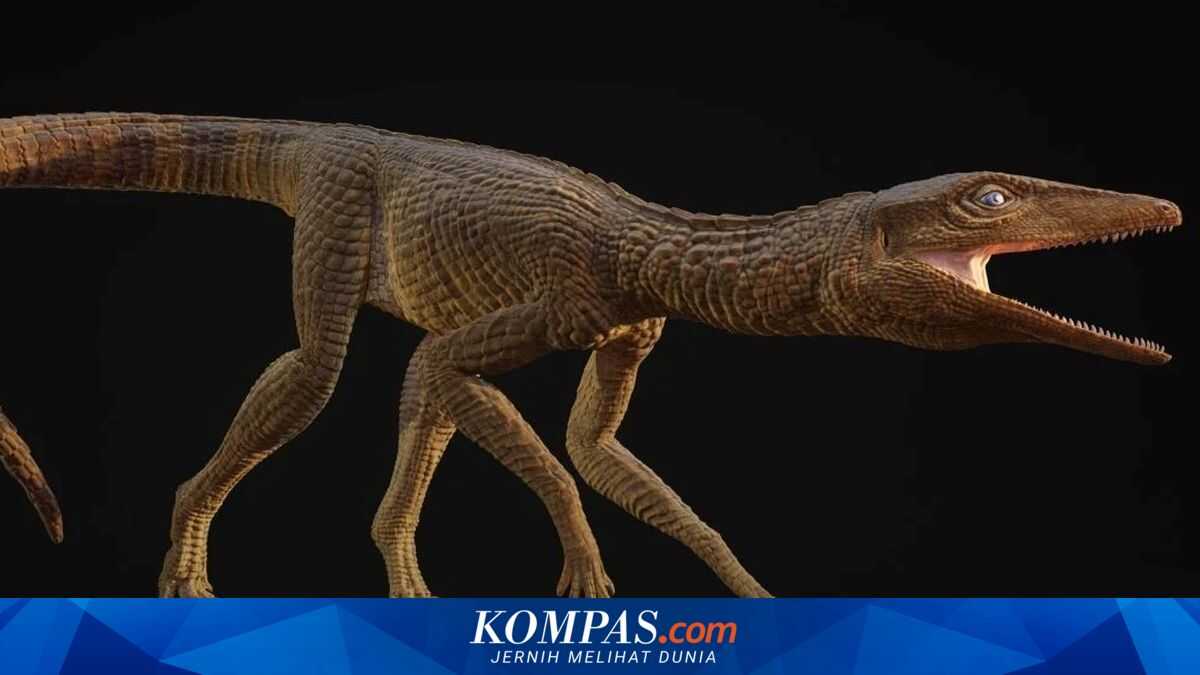
Scientists have discovered a new species of ancient crocodile that lived approximately 200 million years ago during the Triassic period. The fossil was found in Gloucester, England, and reveals a surprising fact: the ancestors of crocodiles were not the river or swamp dwellers we know today, but fast runners on land.
This species belongs to the crocodylomorph group, a broad evolutionary lineage that includes modern crocodiles. However, its body shape is very different from that of modern crocodiles. It has long, slender legs and a light body—characteristics that make it look more like a “reptilian greyhound” than a semi-aquatic predator.
Its body structure shows a full adaptation to terrestrial life. Unlike modern crocodiles, which have stout bodies with short, strong legs for swimming, this species has long limbs and an upright posture—indicating an ability to run quickly across dry landscapes.
The name of this species is also unique and meaningful: Galahadosuchus jonesi. The first part of its name refers to Galahad, a legendary knight in Arthurian mythology known for his upright posture—a tribute to the animal’s posture. The second part is given in honor of a teacher who inspired the lead researcher of the study.
“We named it after my physics teacher in high school,” said Ewan Bodenham, a PhD student at the Natural History Museum London and University College London, and the lead author of the study.
He added, “Mr. Jones was a great teacher, not only because he was able to explain things clearly, but also because he seemed genuinely interested in science. That was very inspiring to me.”
According to Ewan, his teacher always challenged his students to improve. “He didn’t let me get complacent. He was very good at challenging people and helping students become the best version of themselves. Above all, he was a funny, sincere, and kind person.”
In the same location, researchers previously discovered another species called Terrestrisuchus, one of the early branches of the crocodylomorph group. Like this new species, Terrestrisuchus had long legs and lived entirely on land.
Ewan’s doctoral project focuses on the evolutionary relationships of these early crocodiles. “My PhD project researches the evolutionary relationships of early crocodiles,” he explained. “We conducted a detailed anatomical description of this specimen, then compared it with other early crocodiles to determine whether it was just another example of Terrestrisuchus or a truly new species.”
The results were convincing. The research team found 13 significant anatomical differences between the new fossil and Terrestrisuchus. These differences were considered significant enough to establish it as a completely new species.
By documenting species that lived before the mass extinction, scientists can understand how living things reacted to extreme environmental changes. This research not only enriches the understanding of crocodile evolution but also provides a broader picture of the ancient ecosystems before one of the largest disasters in Earth’s history.
The discovery of this long-legged crocodile serves as a reminder that evolution does not always proceed in a straight line. The ancestors of crocodiles were once agile land runners, quite different from the river predators we know today.