
Forum Sinologi Indonesia Discusses Evolution of Chinese-Indonesian Identity
Chinese-Indonesian identity continues to undergo transformation in line with changing times and national socio-political dynamics. From an era marked by restrictions to one of openness, Chinese-Indonesian expression now emerges with greater confidence within the framework of Indonesian nationhood.
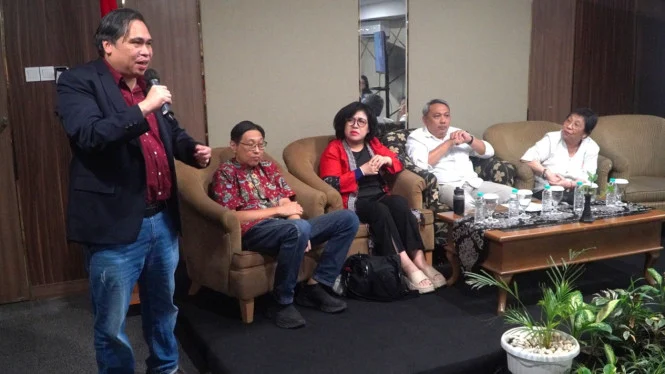
These changes were highlighted in a discussion titled “Imlek 2026: Chineseness within the Framework of Indonesian Culture”, organised by the Indonesian Peranakan Chinese Association, Indonesian Youth Tionghoa Association, and Forum Sinologi Indonesia. The forum brought together academics and community leaders to examine the dynamics of Chinese identity in Indonesia.
Johanes Herlijanto, chairman of Forum Sinologi Indonesia, stressed that Chinese-Indonesians have long grounded their identity in national consciousness. “Throughout history, Chinese people in Indonesia chose to become Indonesian and prioritised Indonesian identity in both political and cultural terms,” he stated.
According to him, this choice was not merely symbolic but rather a political decision accompanied by commitment in daily life. He considered this awareness important amid the surge of global cultural influences, whether from the West or China.
Dr Thung Julan, senior researcher at the National Research and Innovation Agency, explained that identity is always formed through processes of social interaction. “Identity is never singular; it emerges from interaction, acculturation, and assimilation processes that unfold over time,” he said.
He added that the long history of migration produced peranakan groups with distinctive Indonesian characteristics. However, different migration flows meant that each Chinese-Indonesian group’s experience of identity was not uniform.
Budiman Tanah Djaja of the Indonesian Peranakan Chinese Association observed the most evident changes occurred after the 1998 Reformation. The younger generation, who came of age in an atmosphere of freedom, had greater space to express their identity.
“For the post-Reformation generation, identity became more fluid and progressive,” he said. He cited terms such as “Chindo” as an example of how the new generation conceptualises Chineseness in more contextual ways.
Meanwhile, Christine Susanna Tjhin reminded participants that identity is also influenced by international perspectives. She explained terms such as huayi, huaren, and huaqiao that distinguish citizenship backgrounds from China’s perspective.
Amid these changes, all speakers agreed that Chinese-Indonesian identity will continue to develop. However, the common thread remains the same: maintaining Indonesian identity as the primary foundation in preserving diversity and national belonging.