
Former Trade Minister Tom Lembong Delivers Scathing Criticism of Attorney General's Office in Corruption Trial Defence
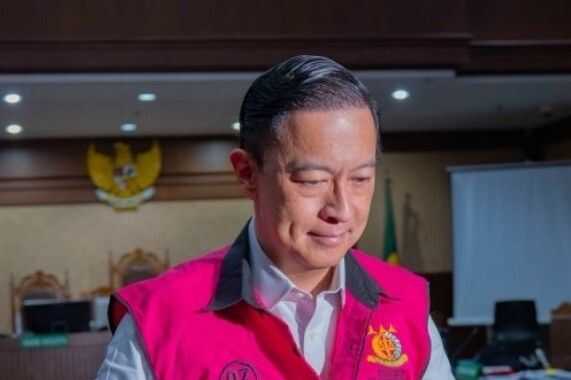
Former Trade Minister Thomas Trikasih Lembong launched a sharp critique of the Attorney General’s Office (Kejagung) during the reading of his defence plea at the Jakarta Corruption Court (Tipikor) on Wednesday evening (9 July 2025). He argued that the legal proceedings ensnaring him in an alleged sugar import corruption case were riddled with irregularities and failed to reflect the principles of justice.
“The past eighteen months have opened my eyes and heart to just how tangled our law enforcement apparatus is,” Tom told the panel of judges.
The former head of the Investment Coordinating Board (BKPM) stated that his experience throughout the legal process illustrated how easily a person could fall victim to what he described as a chaotic system.
Charges Deemed Inconsistent
Tom highlighted changes to the indictment, which he characterised as an attempt to “move the goalposts”. At the press conference announcing his detention on 29 October 2024, he was accused of formulating a sugar import policy that harmed the state by granting licences to private firms rather than state-owned enterprises (SOEs).
“The Attorney General’s Office at the time said SOEs were disadvantaged because they lost profit opportunities. The logic is like blaming the public for choosing a private petrol station over a Pertamina one,” Tom remarked.
He was also initially accused of causing retail sugar prices to exceed the Maximum Retail Price (HET). However, in the formal indictment received four months after his detention, the charges shifted. Prosecutors alleged that Tom’s policy caused PT Perusahaan Perdagangan Indonesia (PPI) to purchase white sugar at higher prices than private companies, and that the state suffered losses because the industry imported raw sugar subject to lower import duties.
“Payment of lower tariffs was deemed a state loss, even though it complied with raw material import duty regulations,” Tom explained.
State Losses Figure Ballooned
Tom also questioned the changing value of alleged state losses. Initially cited at Rp400 billion, the figure subsequently increased to Rp578 billion without any new evidence being uncovered.
“This was not the result of a new audit, but a change in calculation methodology by the Attorney General’s Office and the Development Finance Comptroller (BPKP). This is clearly an attempt to alter the basis of the indictment,” he asserted.
He expressed regret that the BPKP audit was only submitted after all witnesses had been examined, meaning the irregularities in the state loss calculations could not be further tested during the trial. “The audit working papers were not even disclosed in court, despite containing numerous calculation errors,” he added.
Criticism of Alleged Selective Prosecution
In his defence, Tom also criticised the Attorney General’s Office for what he considered discriminatory law enforcement. He cited major cooperatives such as INKOPKAR, INKOPPOL, KKP TNI-Polri, and sugarcane farmer associations that also imported raw sugar but were not subject to legal proceedings.
“If importing raw sugar is considered wrong, why are the cooperatives not being prosecuted? This demonstrates inconsistent law enforcement,” Tom said.
He suspected that he had been targeted from the outset by certain parties within the sugar industry. “Mr Charles Sitorus was targeted, nine private sugar companies were targeted, and I was also targeted. This is not merely a legal process, but part of a specific agenda,” he stated.
Seven-Year Prison Sentence Demanded
The prosecution demanded a seven-year prison sentence for Tom Lembong along with a fine of Rp750 million, with a subsidiary of six months’ imprisonment, over alleged state losses of Rp578 billion. He was charged under Article 2 paragraph (1) or Article 3 in conjunction with Article 18 of the Corruption Act as amended by Law Number 20 of 2001, as well as Article 55 paragraph (1) point 1 of the Criminal Code.
The case has attracted considerable public attention. A number of national figures, including Anies Baswedan, were known to have attended hearings that drew extensive scrutiny from the public and the media.