
Former Subordinate Questions Ex-Minister Nadiem During Chromebook Corruption Trial
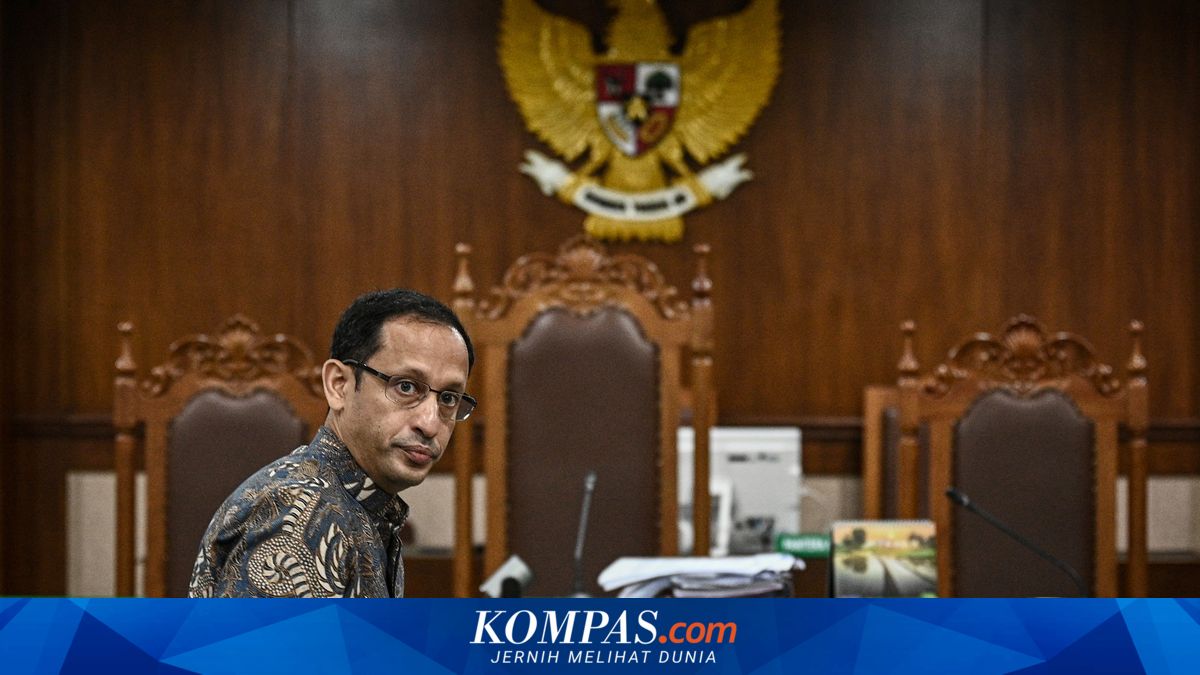
Jakarta — Former Director of Junior Secondary Education (SMP) at the Ministry of Education, Culture, Research and Technology (Kemendikbudristek) Mulyatsyah questioned ex-Minister Nadiem Makarim during an extended hearing in the alleged corruption case involving the procurement of Chromebook laptops for school students.
Nadiem appeared as a witness in the continued trial of Mulyatsyah and two other defendants: former technology consultant at Kemendikbudristek Ibrahim Arief, and former Director of Primary Education (SD) at Kemendikbudristek Sri Wahyuningsih.
“This is a rare opportunity for me to meet face-to-face and to ask questions, because I never had such a moment to question even when I was still in active service,” Mulyatsyah said during the hearing at the Jakarta Corruption Court on Tuesday, 10 March 2026.
Mulyatsyah began by questioning who held policy-making authority within a ministry. Disagreeing with Nadiem’s previous testimony, Mulyatsyah cited Education Ministry Regulation Number 49, which he argued clearly establishes that the Minister holds primary policymaking authority.
“According to Education Ministry Regulation Number 49, the Minister is the one with primary policy authority, Mas Nadiem. Eschelon 3, eschelon 2, and eschelon 1 are policy implementers. That is in the regulation that you also signed, perhaps if you have forgotten, let me remind you again,” Mulyatsyah stated.
Mulyatsyah emphasised that eschelon 2 officials merely execute ministerial orders or decisions. He further noted that ministerial instructions must be documented in written form, not merely communicated orally.
Referring to an academic review document, Mulyatsyah challenged whether such reviews constituted formal legal products. Nadiem confirmed Mulyatsyah’s point, acknowledging that only after a formal written approval document from the Director General is issued does such a decision gain formal legal standing.
Mulyatsyah then pointed out an apparent inconsistency in Nadiem’s earlier testimony, which frequently referenced review documents as authoritative sources. “When you referenced and relied upon review documents in your earlier testimony, that was actually not quite accurate in my view,” Mulyatsyah concluded.
The exchange underscored disagreements over ministerial authority structures and the proper documentation of procurement decisions.