
Former Official Says Chromebooks in Nadiem Era Were Designed for Access in Remote Areas
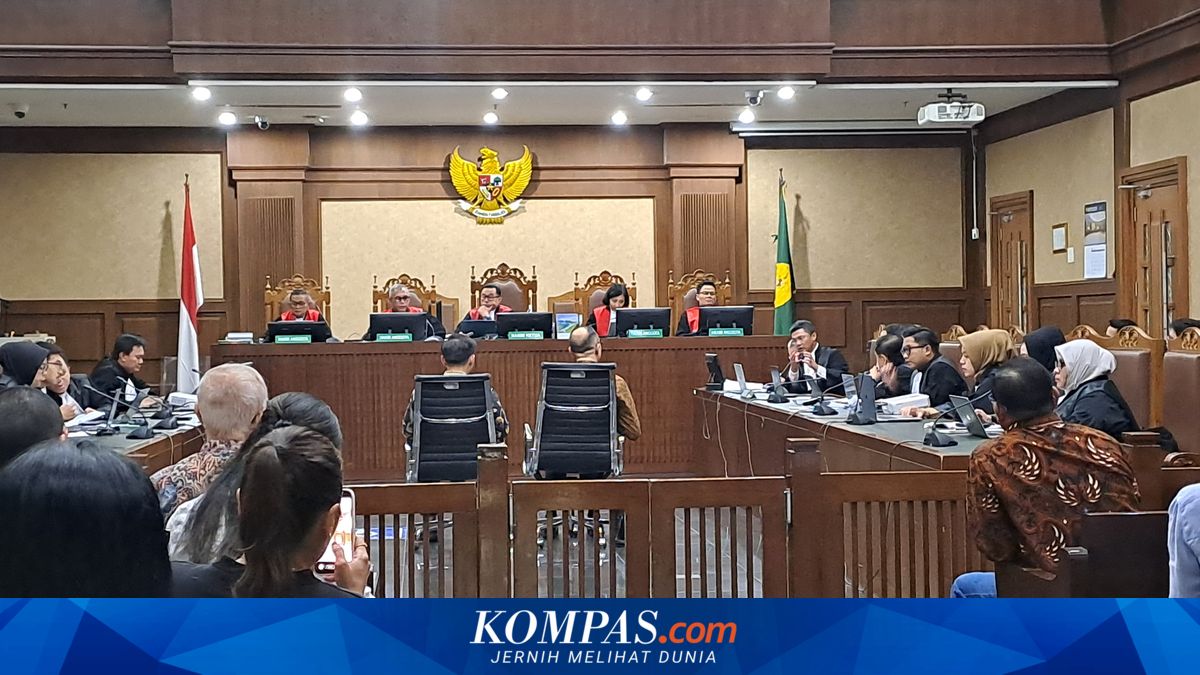
JAKARTA - A former Director General of Early Childhood, Primary, and Secondary Education at the Ministry of Education, Culture, Research, and Technology, Iwan Syahril, explained that the Chromebooks procured during Nadiem Makarim’s era were planned to be accessible from remote areas.
“Even though the internet conditions fluctuate, they can still access it because it was designed to be so lightweight that it is sufficient for difficult conditions,” said Iwan Syahril at the Central Jakarta District Court on Tuesday (14/4/2026).
He explained the development process of the digital education platform for 3T areas (disadvantaged, frontier, and outermost) with limited internet networks, even up to 2G or 3G networks.
The witness admitted to having directly reviewed the implementation in several remote areas such as East Nusa Tenggara, Maluku, and Papua.
In 2023, the ministry conducted a census of the programme’s utilisation to ensure the presence and use of devices and applications in schools.
The census results, reported to the minister in November 2023, found several obstacles, ranging from missing devices, damaged ones, to duplicate serial numbers between schools.
“Because to use the product for schools, there must be a special account. So it can be detected who is using it,” he clarified.
In response to these findings, the government carried out various intervention measures, such as direct assistance to schools, involvement of Chrome Device Management (CDM) as a repair centre, and community-based teacher training.
In addition, solutions were prepared in the form of local servers or “smart clouds” to support schools in areas with limited internet access.
“We are not just about data, but follow-up to ensure maximum utilisation, especially for learning,” the witness emphasised.
The interventions focused on schools that had not yet optimally used educational technology.
“CDM helps to identify. So the team knows verification, of course, with this. The data comes directly from educational units and provinces with the education offices,” he explained.