
Former KPK Leader Reveals State Loss Calculations in Pertamina Case Fall Below Standard
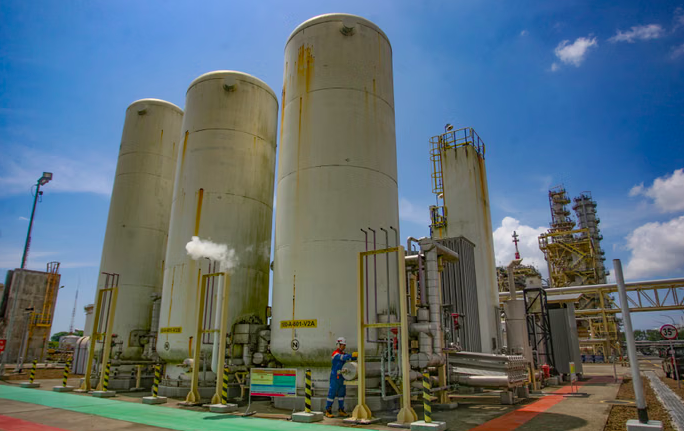
Former Deputy Head of the Anti-Corruption Commission (KPK), Alexander Marwata, has stated that he found no evidence of corruption in the alleged corruption case regarding crude oil and refinery product management, including the lease of a terminal belonging to PT Orbit Terminal Merak (OTM) involving beneficial owner Muhammad Kerry Adrianto Riza.
Marwata said his opinion was based solely on the indictment, court proceedings he observed, and the court judgment. “My opinion is only based on the indictment, then the facts presented during the trial which I followed, and also the verdict. So I do not consider issues outside of that,” Marwata said at a press conference regarding the appeal in the Pertamina case on Friday, 13 March.
It is known that beneficial owner PT Orbit Terminal Merak (OTM) Muhammad Kerry Adrianto Riza, OTM Director Gading Ramadhan Joedo, and Commissioner of PT Jenggala Maritim Nusantara Dimas Werhaspati have filed appeals against the Jakarta Corruption Court’s verdict in the alleged Pertamina crude oil and refinery product management corruption case. The Jakarta Corruption Court sentenced Kerry Riza to 15 years imprisonment and ordered payment of Rp2.9 trillion in compensation, whilst Gading and Dimas were sentenced to 13 years imprisonment.
Marwata served as an expert in the alleged Pertamina crude oil and refinery product management corruption case involving defendants including former Pertamina Patra Niaga General Director Riva Siahaan, former Head of Central Marketing and Trading Pertamina Patra Niaga Maya Kusmaya, and former Vice President of Trading Operations Pertamina Patra Niaga Edward Corne. During this process, Marwata reviewed the Pertamina case, including the fuel terminal lease by PT OTM.
As an expert, Marwata stated he could not identify the substance of corruption in the indictment against the defendants. He conveyed this directly to the judicial panel. “When I was an expert, I explained to the panel. Generally speaking, the substance across the seven clusters was quite similar. I told the panel that I read the indictment and I cannot identify where the substance of the corruption is,” Marwata said.
According to Marwata, corruption offences typically involve conflicts of interest, bribery, or gratification. However, he found no indication of these in the crude oil management case. Marwata emphasised there was no evidence of bribes or gratification received by Pertamina management or PT Pertamina Patra Niaga in the fuel terminal lease from PT OTM. He stated that Pertamina’s decision to lease the fuel terminal complied with the business judgement rule principle.
“I do not see that Pertamina management or Pertamina Patra Niaga received bribes or gratification. And I see that all decisions made by Pertamina management or Pertamina Patra Niaga were based on the business judgement rule,” Marwata said.
Additionally, Marwata criticised the state loss audit results in the Pertamina case, which he described as substandard and unreliable for the court to use when determining the amount of state losses. This is because the audit report did not provide adequate explanation regarding the data sources and calculation methods used by auditors in determining the value of state losses. For example, when auditors cited price differences or overpricing, the audit report should have included comparison prices and their sources. This would allow all parties reading the report to understand the data sources the auditor used to reach conclusions about state losses.
“I have no clear picture regarding the state loss figures cited by BPK auditors. That is why I said the audit report is substandard because clearly, according to BPKP standards, the audit report should detail and clearly present the data used by the auditor to reach a conclusion,” Marwata said.
However, the judicial panel took over and legalised the report instead. As a former corruption court judge, Marwata stated that the judicial panel had the right to disagree and correct BPK audit results.
Regarding the OTM fuel terminal lease case, Marwata also highlighted the use of the total loss concept in calculating state losses. This is particularly concerning given that the terminal had been used by Pertamina to strengthen national energy security.
“Total loss is absurd, as the defence counsel said, very absurd, when the benefit has already been provided but then you are asked to return the entire payment Pertamina made to the company,” he said.
Marwata also questioned the element of unlawful conduct by the defendants. He stressed that administrative errors possibly committed by state administrators do not automatically make business partners criminally liable.
“Administrative errors by state administrators or BUMN directors when making decisions do not automatically drag in business partners or vendors of the company into criminal responsibility,” he said.
For this reason, Marwata considered Kerry and others’ decision to file an appeal as the appropriate step. Moreover, he noted, the judicial panel’s verdict did not consider testimony from the defendants’ witnesses and experts. The judicial panel appeared merely to have given the defendants the opportunity to present witnesses and experts.
“When it was the defendants’ or their lawyers’ turn to present witnesses or experts, the time was rushed. This is also unfair. In my view, this constitutes unprofessional conduct and may also violate ethical codes,” he said.
For this reason, Marwata called for reporting the matter to the Judicial Commission.