
Former Iranian Crown Prince Reza Pahlavi Seeks European Support
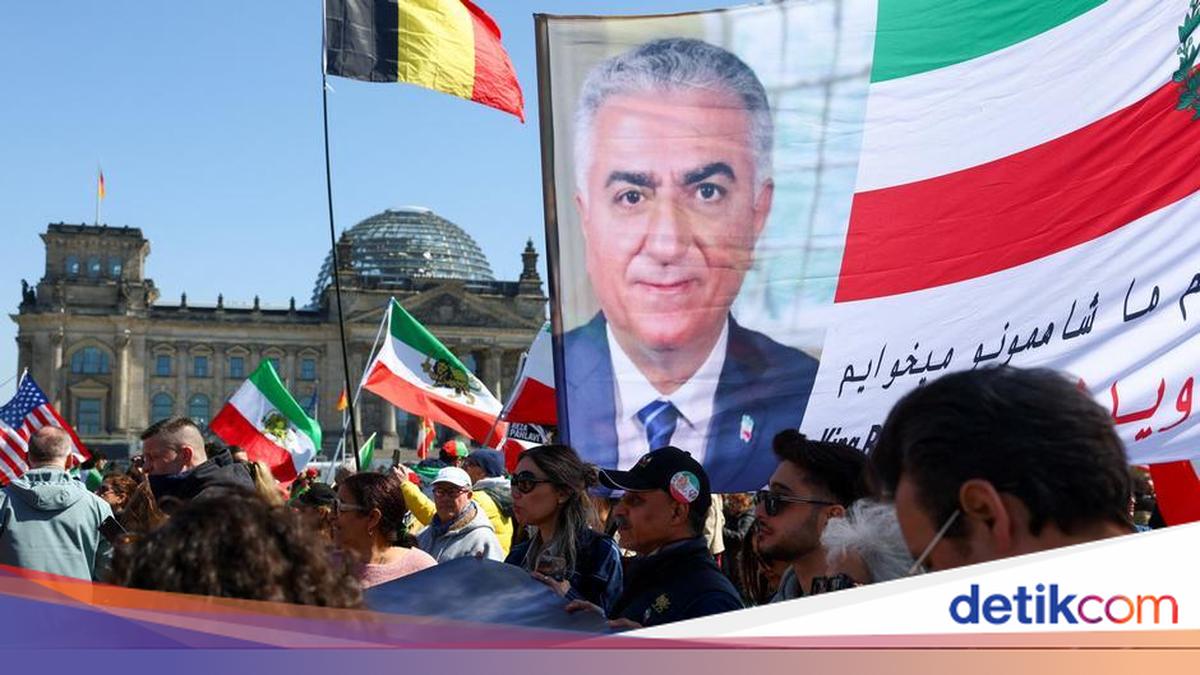
Reza Pahlavi, the former crown prince of Iran’s last Shah and an opponent of the ruling Khamenei regime in Iran, visited Berlin on Thursday (23/4). During his visit, he called on European governments not to intervene in the US-Israel war against Iran and to take other firmer measures, such as expelling Iran’s ambassador and helping Iranian citizens access blocked internet.
According to him, any form of negotiation with the leaders in Tehran is tantamount to ‘yielding’ to the Iranian regime; he hopes a new wave of street protests will topple the current government.
“The entire narrative of ceasefire and negotiation is still based on the thinking that … they will compromise,” said Pahlavi, who is visiting Germany after stops in Sweden and Italy, seeking political support from Europe and the Iranian diaspora.
“I do not see that compromise happening,” he said, while condemning the new figure at the top of Iran’s leadership—who is replacing the late Supreme Leader Ali Khamenei—as “a new face with the old system.”
He further added that Iran has “slaughtered thousands of innocent civilians” and that Iran is also threatening Europe with long-range missiles. “No negotiation will resolve that. It is in their DNA.”
Pahlavi’s father, Mohammad Reza, was overthrown in the 1979 Islamic Revolution. Reza Pahlavi has repeatedly stated that he is ready to lead a transition if the Islamic Republic collapses in the war that erupted at the end of February.
However, Pahlavi represents only one of several Iranian diaspora groups, which often clash fiercely. During his visit to Berlin, he was welcomed by some supporters but also by his fierce opponents. One activist even threw red liquid at him.
Pahlavi has also failed to gain recognition from US President Donald Trump, who has not met him officially to date. Trump has repeatedly expressed doubts about Pahlavi’s ability to lead Iran.
German Chancellor Friedrich Merz is not scheduled to meet with Pahlavi, although some German parliament members will hold talks with him.
The son of the ousted Shah received support from demonstrators who chanted his family’s dynasty name during January protests against the religious system, as well as massive pro-monarchy demonstrations in February in Munich and several cities in North America.
“Inside Iran, tens of millions of Iranians are chanting my name, and they still are,” said Pahlavi at a press conference in Berlin, adding that “Iran’s Generation Z is currently my biggest supporter.”
Iran keeps Strait of Hormuz closed despite extended ceasefire
Oil prices surged on Thursday (23/04), even though US President Donald Trump has extended the ceasefire in the conflict with Iran.
Tehran stated it will not reopen the Strait of Hormuz to shipping traffic as long as the US naval blockade remains in place.
Crude oil prices jumped up to 4% in early Asian trading, with the international Brent oil benchmark rising 3.5% on Wednesday evening (22/4) to break through $100 (Rp1.72 million) per barrel. Oil prices have risen significantly since the US and Israel attacked Iran on 28 February. Brent oil was previously traded around $70 (Rp1.2 million) before the conflict began.
Iran receives first revenue from Strait of Hormuz customs system
Iran’s Deputy Parliament Speaker, Hamidreza Hajibabaei, announced that Iran’s central bank has received the first revenue from toll fees imposed on ships passing through the Strait of Hormuz, according to a report carried by the semi-official Tasnim news agency.
“The first revenue received from the Strait of Hormuz toll has been deposited into the account of Iran’s Central Bank,” the report said.
This vital route has essentially remained closed to commercial shipping since the Iran war began at the end of February. Iran’s control over the waterway has led the US to impose a new blockade in the Strait of Hormuz since 13 April.
The closure of this vital shipping route, which accounts for one-fifth of global oil and liquefied natural gas supplies, has caused global oil, gas, and fuel prices to soar.
Experts have criticised Iran’s toll collection system for ships passing through the strait as contrary to international law.
Freedom of navigation “is the foundation of international maritime trade … the ability to cross these areas without any hindrance,” said Robert Huebert, an international relations expert from the University of Calgary in Canada. “If Iran charges fees, Iran will face direct opposition from almost all countries.”
Tehran first announced the imposition of these fees after the start of the US-Israel war against Iran.
Fragile situation in Strait of Hormuz overshadows US-Iran peace talks
The peace situation in the Middle East remains fragile after Iran fired on three ships and seized two international vessels in the Strait of Hormuz on Wednesday (23/4). This has created a ‘deadlock’ over the prospects of further US-Iran peace talks scheduled to be held in Pakistan this week.
US President Donald Trump said on Tuesday (22/4) that the US would extend the ceasefire to allow more time for Pakistan-mediated negotiations. The White House said the ceasefire’s time limit has not been determined.
However, Iranian officials have not agreed to the meeting, stating that no decision has been made regarding Iran’s participation in the new round of peace talks. Iran’s Parliament Speaker, Mohammad Bagher Qalibaf, said a full ceasefire can only hold if Washington lifts the blockade on Iranian ports.
Iran considers the blockade an act of war. “Reopening the Strait of Hormuz is impossible with such a blatant ceasefire violation,” it wrote.