
Former Deputy Attorney General Addresses Role of Family in Shaping Prosecutorial Integrity Through New Book
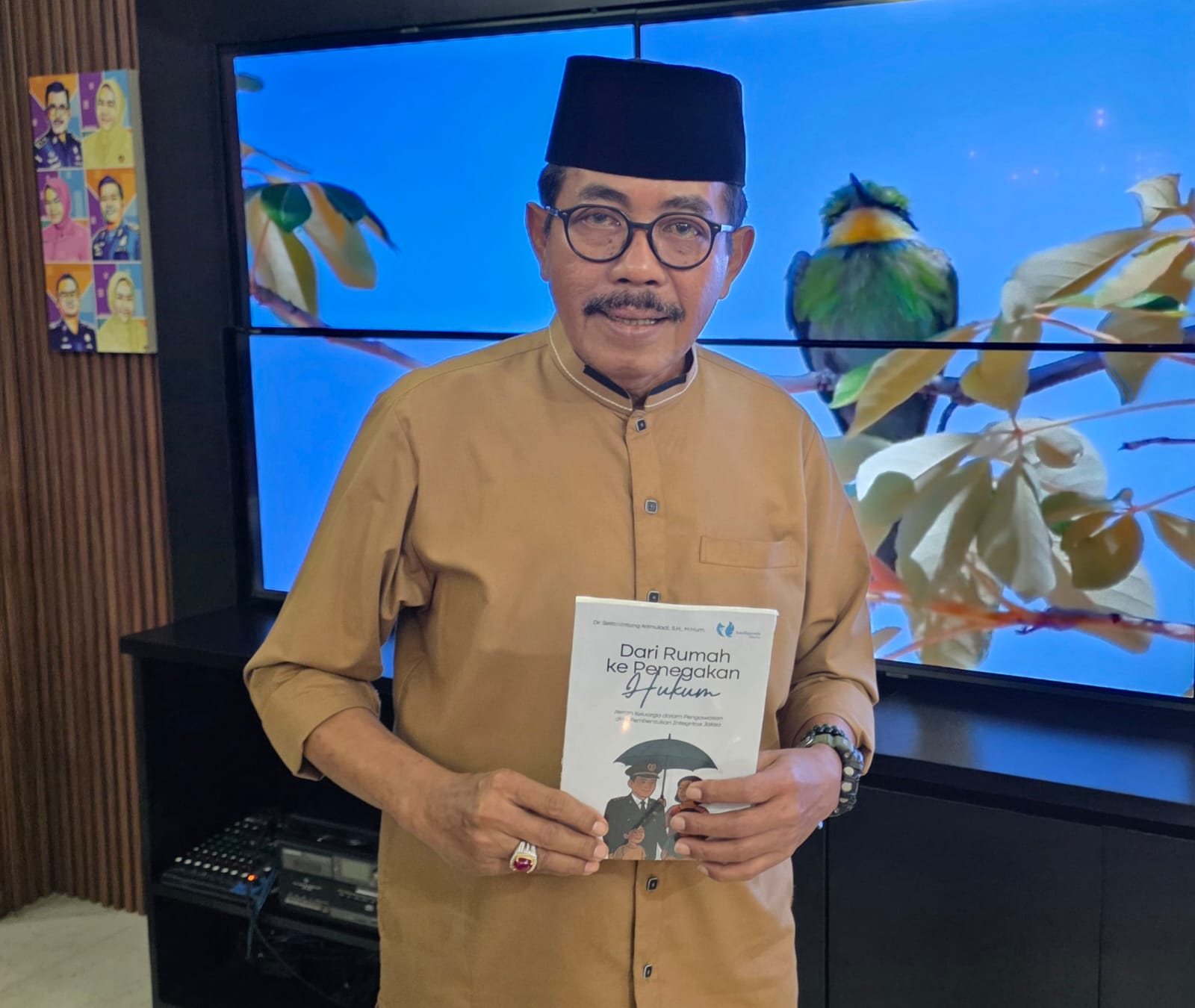
FAMILY upbringing plays a foundational role in shaping the character and integrity of law enforcement officials, particularly prosecutors, according to a new publication by former Deputy Attorney General Setia Untung Arimuladi.
In his book titled “From Home to Law Enforcement,” Arimuladi argues that integrity does not develop instantaneously when individuals enter law enforcement institutions. Rather, this value is formed through a lengthy process beginning in the family environment.
The 156-page work, published by Intelegensia Media in December 2025, offers a distinct perspective on prosecutorial integrity discourse. Traditionally, discussions concerning law enforcement integrity have focused on regulatory frameworks, supervisory systems, and institutional disciplinary enforcement.
Arimuladi, a former head of the West Java High Prosecution Office, explains in the book that the integrity of law enforcement officials, particularly prosecutors, is shaped not solely through institutional systems but fundamentally originates from the family environment. “Integrity is a value that grows from an early age and is formed through a prolonged process within the family,” he writes.
The former Deputy Attorney General notes that existing discourse on law enforcement integrity in Indonesia has concentrated predominantly on structural mechanisms, including internal oversight, disciplinary sanctions, and institutional regulations. Whilst these approaches are valued, they have not fully addressed the fundamental issues concerning character formation in individual law enforcement officials.
Arimuladi, who serves as Deputy Chairman of the Retired Prosecutors’ Association, considers the family as the primary social space where individuals initially learn fundamental life values. Within the family environment, individuals develop understanding of honesty, responsibility, discipline, and exemplary conduct, which subsequently influence their thinking and behaviour in professional roles.
In the publication, he introduces the concept of “Preventive Cognitive Family Mode,” an approach that integrates social cognitive theory, behaviourism, and family systems theory in forming character integrity. This concept demonstrates that parenting styles, family interactions, and moral value learning processes at home significantly influence individual character development.
Through this approach, the family is no longer regarded as a private sphere separate from the professional world of law enforcement officials. Instead, the family is recognised as holding an important role in a preventive system against potential integrity violations by prosecutors.
“Oversight of prosecutorial integrity does not depend solely on institutions such as the Attorney General’s Office of the Republic of Indonesia, but also originates from character formation processes at home,” states the former head of the Public Affairs and Legal Centre of the Attorney General’s Office.
Arimuladi’s thinking stems not only from theoretical study but also from his extensive 38-year career as a prosecutor in Indonesia. This experience provides an empirical foundation for understanding the close relationship between family values and integrity culture within the prosecutorial corps, which has traditionally upheld foundational values such as Tri Krama Adhyaksa and the principle of Satya Adhi Wicaksana, which emphasise honesty, wisdom, and responsibility in law enforcement.
A doctoral alumnus of Diponegoro University, Arimuladi hopes the book will serve as a reference for prosecutors, academics, law students, researchers, and policymakers. Amidst increasing public demands for transparency and professionalism in law enforcement institutions, the book reminds readers that genuine integrity is also built from values instilled early in life, beginning at home.