
Former Ambassadors Press Government to Withdraw from Board of Peace
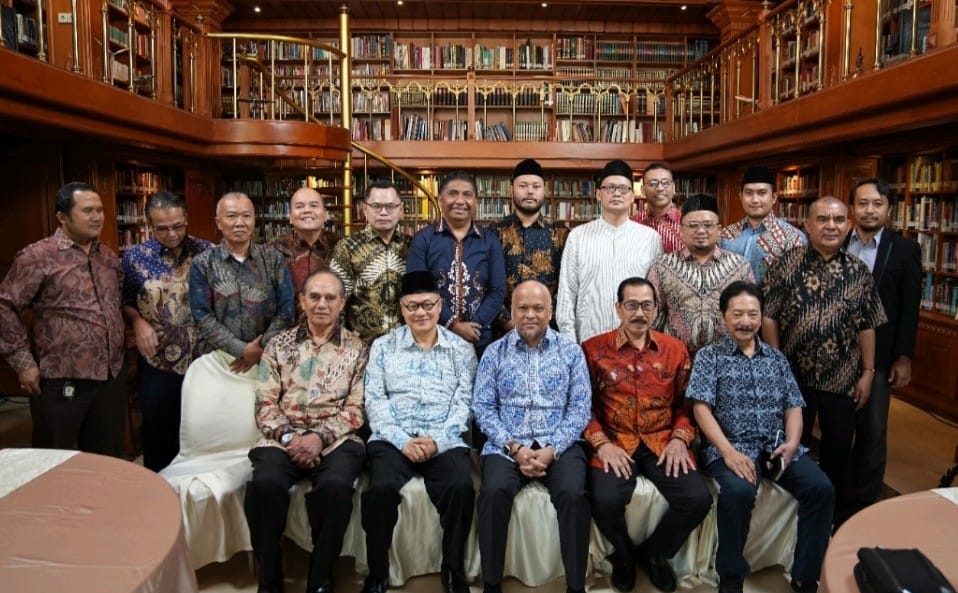
The Dialog Nusantara Forum (FDN) alongside several former Indonesian Ambassadors and experts has pressed the government to review its membership in the Board of Peace (BoP) organisation and plans to deploy TNI personnel to Gaza. The policy is deemed inconsistent with Indonesia’s constitutional mandate and independent and active foreign policy doctrine.
According to FDN Co-founder and Advisory Board Chairman Ilham Akbar Habibie on Saturday (15 March), whilst the initial motivation for joining the BoP was a constitutional commitment to support the Palestinian cause due to UN paralysis, the situation has now shifted into a wider conflict. Ilham emphasised the need for thorough evaluation of whether remaining within the BoP aligns with peace principles, particularly when the organisation’s members are actively engaged in warfare. “What if the original objective for Gaza reconstruction is jeopardised by the interests of certain parties,” he stated.
Similarly, Indonesian Ambassador to Ukraine 2017–2021 Yuddy Chrisnandi noted that every international agreement imposing substantial financial burdens on the state, such as BoP membership fees, and decisions to deploy TNI personnel abroad require approval from the Indonesian Parliament pursuant to Article 11 of the 1945 Constitution. “This is to safeguard Indonesia’s dignity as a modern and civilised democratic state,” he emphasised.
Retired Major General Muhammad Lutfie Wittoeng, Indonesian Ambassador to Venezuela 2016–2020, presented technical analysis of military deployment in conflict zones. He cautioned that deploying 8,000 personnel, predominantly consisting of construction and medical units, demands extraordinary logistical preparation and psychological readiness, as they will operate in a devastated environment for an extended period. “The psychological factor of soldiers must be a priority to prevent friction with local groups such as Hamas, given high field stress levels that could trigger unwanted incidents without clear command oversight,” he explained.
Hajriyanto Y. Thohari, Indonesian Ambassador to Lebanon 2019–2025, also criticised the troop deployment plans from the perspective of international mandate and fiscal capacity. “What is the legal basis for troop deployment outside UN flag, given that Indonesian peacekeeping missions have always had legitimate international support and clear global financing,” he stated.
Hajriyanto also highlighted the erratic and transactional character of Donald Trump’s leadership, cautioning that Indonesia must be careful not to be exploited in political schemes that do not guarantee establishment of a sovereign Palestinian state.
Aloysius Lele Madja, Indonesian Ambassador to Chile 2011–2014, warned of potential business interest traps behind Gaza reconstruction schemes initiated by external parties. Whilst appreciating the President’s political morality in fulfilling campaign promises to assist Palestine, he stressed that Indonesia must not be ensnared into serving transactional interests of particular groups. “Every diplomatic step must remain measured and ensure the outcome is a fair two-state solution, not merely a physical development project that disregards Palestinian political sovereignty,” he said.
FDN Executive Director Justin Djogo hopes all input can serve as strategic reference for President Prabowo Subianto’s administration, ensuring strategic decisions uphold independent and active foreign policy principles and preserve constitutional integrity of the Republic of Indonesia.