
Formasi Proposes Regulatory Relaxation for Tobacco Industry
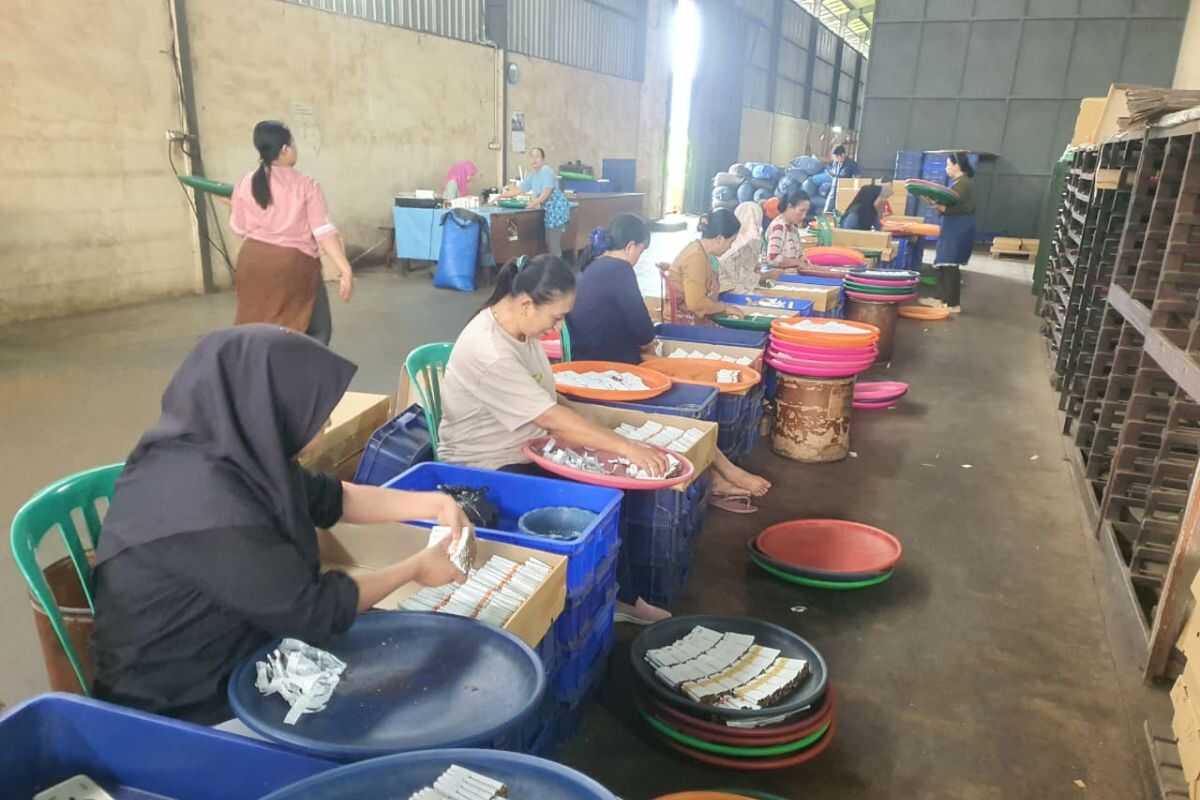
Malang (ANTARA) - The Forum of Indonesian Tobacco Industry Communities (Formasi) has proposed regulatory relaxation for the processed tobacco products industry (IHT) alongside firm government action against the circulation of illegal cigarettes.
“In order for cigarette excise revenue to be boosted to fund development programmes, including national strategic projects (PSN), rather than effectively legalising illegal IHT operators,” said Formasi Chairman Heri Susianto in Malang, East Java, on Sunday.
He said the state currently requires substantial revenue to finance national strategic projects such as the Free Nutritious Meals programme (MBG), Merah Putih Village/Sub-district Cooperatives, People’s Schools, and others.
For tax revenue to increase, he said, corporate performance must also improve through pro-business policies and conducive regulations such as policy relaxation, thereby enabling economic growth.
To boost revenue from the IHT sector, he said, the key lies in relaxation policies and creating a conducive climate. For example, relaxation measures for IHT could address the production cap for Category II machine-rolled clove cigarettes (SKM) of three billion sticks per year.
In implementing such relaxation, cigarette factories whose performance has declined from Category I to Category II should be facilitated with regard to their retail selling prices (HJE).
Furthermore, he said, IHT businesses should not be disrupted by illegal cigarette circulation, particularly on a massive scale.
The legalisation of illegal IHT operators, he said, also poses a threat to existing legal IHT businesses, as their newly legal status would clearly disrupt the IHT business ecosystem. The impact of legalising illegal IHT would affect not only Category II SKM but all hand-rolled clove cigarettes (SKT).
According to Heri, from a revenue perspective, legalising illegal IHT would not generate significant income. Assuming ten per cent of illegal IHT operators were to become legal, rough calculations indicate revenue of only approximately Rp5.5 trillion.
“That level of revenue could be matched by a single Category II SKM factory that receives policy relaxation from the government. Therefore, the policy of legalising illegal IHT is not the right choice, as it would be more detrimental to efforts to boost state revenue,” he said.
Meanwhile, Senior Researcher at the Centre for Economic Policy Research at the Faculty of Economics and Business, Universitas Brawijaya, Joko Budi Santoso, assessed that expansionary fiscal policy for funding national priority programmes must be supported by substantial increases in state revenue.
He said such significant increases in state revenue are necessary due to the ever-growing burden of national debt servicing and subsidies. This situation also affects budget efficiency, particularly transfers to regional governments and village funds (TKDD), leaving local governments with increasingly narrow fiscal space.