
Formalisation of SMEs as a Strengthening of the National Economy
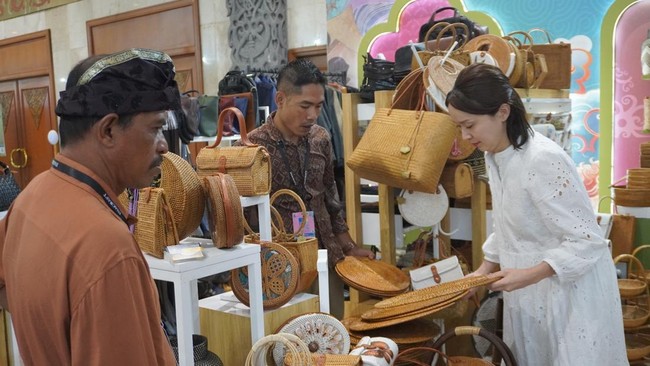
In almost every corner of this republic, the wheels of the economy are truly supported by UMKM entrepreneurs. They possess a massive quantity, high resilience, and toughness, even capable of serving as a foundation when the economy is shaken.
Data from the Ministry of UMKM records that the number of Indonesian UMKM by the end of 2025 reaches up to 30.19 million. With such a number, the contribution to the National Gross Domestic Product (GDP) is in the range of 60-61%, absorbing nearly 97% of the workforce, and contributing around 15% to national exports. These figures prove that UMKM is the backbone of the Indonesian economy.
However, behind this significant role, there is a fundamental problem that often escapes attention: the low number of UMKM with formal status. Up to 2025, more than 50% of micro businesses still lack legality or business certification (60 Decibels Report for Mastercard, 2025).
This is crucial because the formalisation of UMKM is not just about administrative business legality, but also closely related to economic growth, business protection, and business productivity.
Formalisation is often viewed as a “trap” to impose taxes and new burdens on UMKM. In reality, the essence within it is broader and more dignified. Formalisation means UMKM entrepreneurs have a legitimate business identity, ease of entry into the industrial supply chain, connectivity with digitalisation, and significant opportunities to obtain government assistance and protection programmes.
When UMKM remain informal, they will struggle to access various facilities and conveniences such as bank financing, procurement, modern markets, and difficulty in scaling up. When UMKM are not formalised, their room to manoeuvre is automatically limited. Their businesses will survive on a minimal scale with thin margins and stagnant productivity.
In the long term, this not only harms UMKM entrepreneurs but also the state. Because the national economy is ultimately supported by millions of business units that are large in quantity but not optimal in quality. Therefore, it is time for formalisation to be seen as a way out to help UMKM scale up.
Furthermore, the UMKM formalisation agenda actually has a strong regulatory foundation. Government Regulation Number 7 of 2021 (PP 7/2021) on Ease, Protection, and Empowerment of Cooperatives and Micro, Small, and Medium Enterprises emphasises the state’s mandate to provide ease, protection, and empowerment for UMKM.
In other words, the state is obliged to ensure that UMKM entrepreneurs obtain access to legality and business protection as well as an ecosystem that supports their business development. In this context, business formalisation deserves to be called part of the national policy mandate.
The problem is that conditions in the field still show challenges that need to be addressed together. By the end of 2025, there are 14,833,043 NIBs, 3,314,475 Halal Certificates, 104,760 SP-PIRT, 11,524 Trademarks, and 1,036,912 SNI Bina-UMK issued.
This achievement is good, but compared to the current existing number of UMKM which reaches more than 30 million UMKM, it means that fundamental formalisation has only reached a portion of the national UMKM population (the business formalisation rate is still low).
The government has actually taken several strategic steps, for example, the Ministry of UMKM in 2025 has the Festival for Ease and Protection of Micro Businesses programme. In this activity, the Ministry of UMKM involves more than 12,000 micro entrepreneurs with Business Ease and Protection Services, such as: Licensing Services, Certification, Business Standardisation Services, Access to Capital Services, Business Insurance Services, Employment Insurance Services, Digital Marketing/Payment Services, and Legal Aid Services for Micro and Small Businesses (UMK).
This activity has been held in dozens of varied locations and shows the presence of the government in efforts to formalise UMKM as an implementation of PP 7/2021. This step needs to be appreciated because UMKM entrepreneurs, especially micro entrepreneurs, are often not sufficiently informed about the importance of business formalisation.
They need concrete assistance, simple processes, and proof that after formalisation is achieved, they will receive truly useful benefits. The proactive approach taken by the Ministry of UMKM through the Festival for Ease and Protection of Micro Businesses is a more effective step than a bureaucratic approach that waits for UMKM entrepreneurs to come on their own.
However, despite this, there are still several fundamental obstacles that must be faced. First, perceptual barriers. For many UMKM entrepreneurs, business legality is still seen as a burden.
Second, capacity barriers. Not a few UMKM lack bookkeeping, do not understand their business classification, are not accustomed to digitalisation, and do not meet standards in product making.
In this context, formalisation is not just about providing NIB or others, but also about how to prepare UMKM entrepreneurs who are capable in terms of capacity within the formal ecosystem. Without proper capacity building for UMKM, formalisation is merely fulfilling administrative documents.
Third, policy fragmentation barriers. Legality services, halal certification, product standardisation, and others often run sporadically or independently. From the government’s perspective, all programmes are available for UMKM, but for UMKM entrepreneurs, they face complexity because they must deal with