
Forestry Minister: TNWK Boundary Fence Targeted for Completion in Four Months
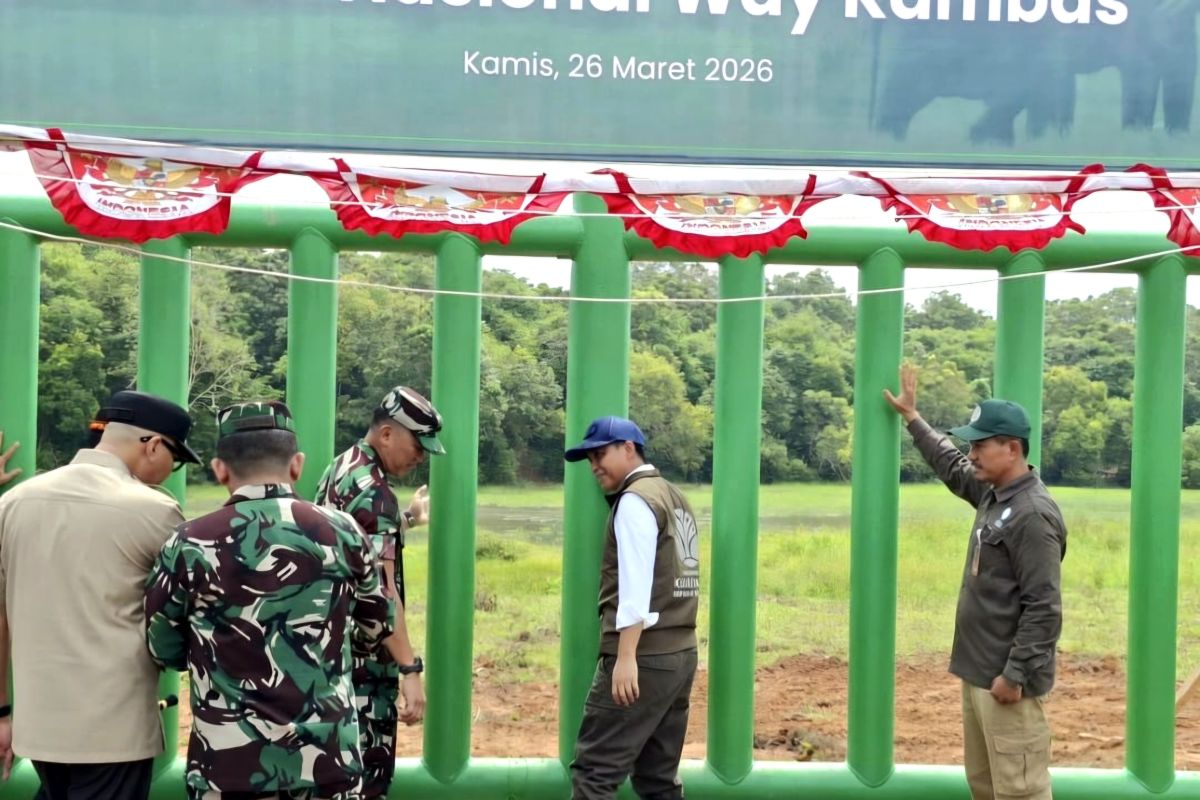
Bandarlampung (ANTARA) - Forestry Minister Raja Juli Antoni stated that the target for completing the construction of a boundary fence or barrier at Way Kambas National Park (TNWK) can be achieved within four months. “The construction of this barrier is not to separate wild animals such as elephants from the community, but rather to ensure that all can continue to live in harmony and mutually benefit each other,” said Raja Juli Antoni in East Lampung on Thursday. He explained that the construction of the barrier is one of the efforts by the President through the Presidential Assistance Fund (Banpres) to address negative interactions between wild animals, including elephants, and communities in the national park, as well as a step to improve the national park. “There are 57 national park locations across Indonesia, all rich in biodiversity that must be protected. The construction of the barrier at Way Kambas National Park will be completed within four months. It does not need to be done in stages for years, but this programme must be finished according to the specified time, around four to five months at the latest by the end of the year,” he said. “And certainly, Way Kambas National Park will become a national park where the forest and its wildlife are properly protected with various biodiversity, because here there are tigers, rhinos, tapirs, and various other animals. And the elephant is one of the President’s favourite animals,” he added. According to him, the construction of the barrier at Way Kambas National Park provides a permanent solution to the negative interactions between wild animals and communities. “Essentially, the President’s directive is for this to become a permanent solution that does not create new problems. Earlier, there was input from the community, all of which has been heard, and local cultural experiences will be applied. Even the design will be very local, in accordance with Lampung culture. Because we hope this will be sustainable, so that human-wildlife conflicts will never occur again,” he added.