
Foreign Ministry Urged to Actively Push UN to Investigate the Fall of TNI Soldiers in Lebanon
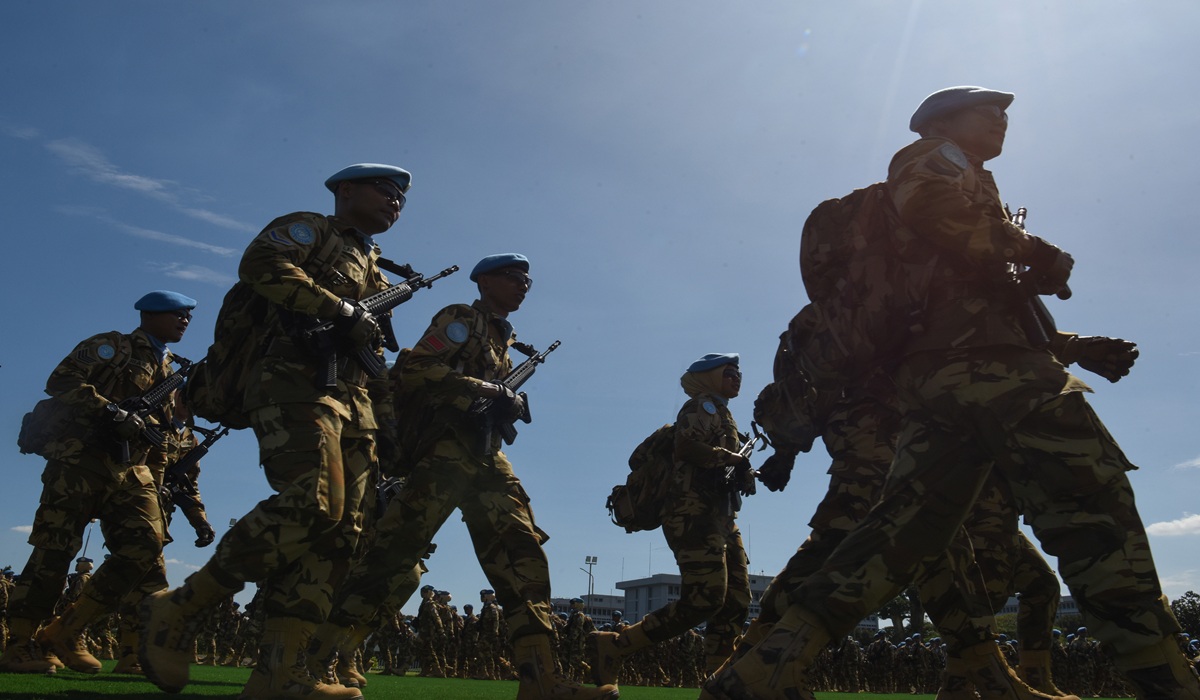
“Peace is not merely the absence of war. It is a virtue,” wrote the philosopher Baruch Spinoza.
Member of Commission I of the Indonesian House of Representatives, TB Hasanuddin, has urged the Ministry of Foreign Affairs (Kemlu) to actively push the UN Security Council to conduct an investigation into the deaths of three TNI soldiers in southern Lebanon.
Hasanuddin stressed that as the largest contributor of troops to the UNIFIL mission, Indonesia has the right to demand accountability for the fatal incident.
The PDI Perjuangan politician explained that the TNI troops are carrying out the mandate of UN Security Council resolutions 425, 426, and 1701 from 2006, particularly in securing the demilitarised zone (Demilitarization Zone/DMZ) along the border.
“So, the UNIFIL force was established based on resolutions from the UN Security Council numbers 425, 426, 1701 from 2006. And then Indonesia contributes the largest force sent there,” said Hasanuddin at the Parliament Complex in Senayan, Central Jakarta, on Wednesday (1/4/2026).
Hasanuddin detailed that the TNI soldiers, part of the Yonmek TNI Konga XXIII-S Task Force, became victims in two separate attacks. The first attack involved artillery fire, while the second incident occurred when a vehicle convoy was allegedly hit by a mine.
“They were carrying out their duties, and during those duties, they were bombed. The first one fell due to artillery fire. The second, two people fell because they were in a convoy, there was an explosion, possibly a mine that was planted,” he said.
In response to this event, Hasanuddin requested that the government, through Indonesia’s Permanent Representative to the UN, immediately submit an official request for an investigation. He also emphasised the importance of the Foreign Ministry’s role in ensuring that the responsible parties are identified, including the potential imposition of punishments if violations by Israel are proven.
“We also request that the Ministry of Foreign Affairs be more, more, well, let’s say active in pushing for this investigation. To truly find out whose fault this is. And if there is fault from any party, for example Israel, we must propose, yes, to give punishment,” he asserted.
According to his experience, sanctions that can be imposed by the UN Security Council are varied, ranging from criminal penalties for individual soldiers involved in the shooting, fines, to territorial sanctions.