
Foreign Ministry Evacuates Indonesian Citizens from Iran in Phases
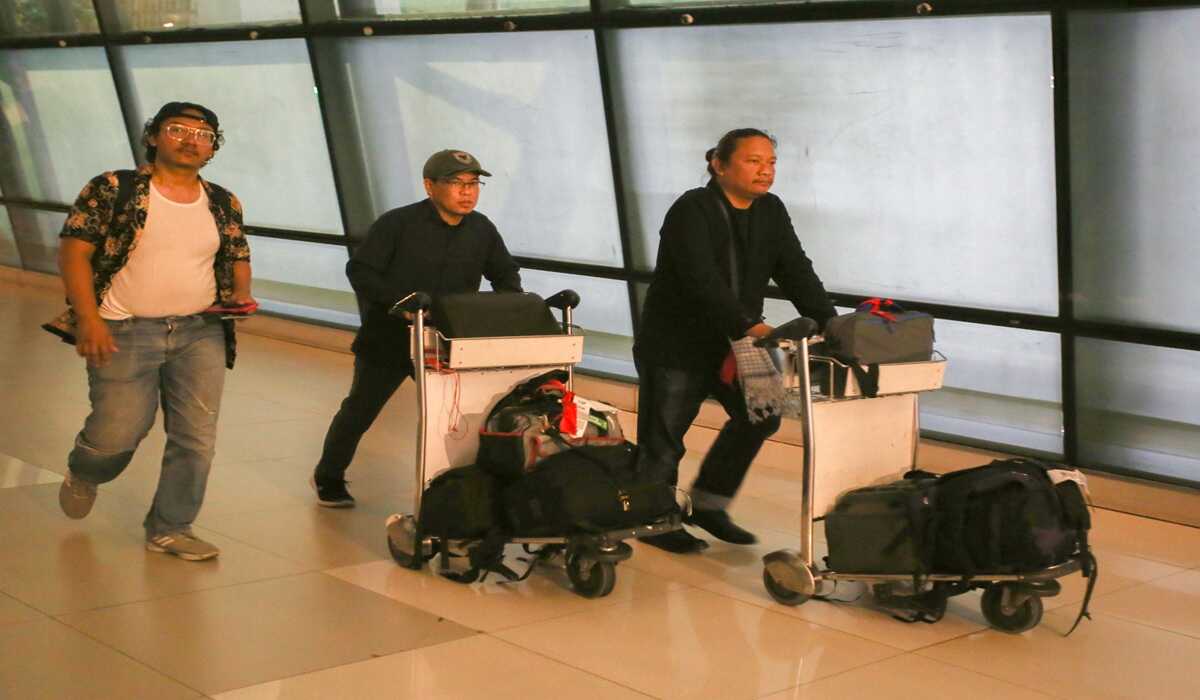
The Indonesian Ministry of Foreign Affairs (Kemlu) has begun evacuating Indonesian citizens from Iran in phases following escalating tensions in the Middle East. In the first phase, 32 Indonesian nationals are scheduled to be repatriated by land via Azerbaijan, taking into account the highly dynamic security situation on the ground. ‘The evacuation plan for Indonesian citizens in Iran will commence in stages today. The first phase will pass through Azerbaijan, but these evacuation routes may be adjusted according to the real-time conditions on the ground,’ said Henny Hamidah, Acting Director for the Protection of Indonesian Citizens (PWNI) at Kemlu, to reporters on Friday (6 March). Henny explained that the evacuation decision was made after a thorough assessment by the Indonesian Embassy in Tehran. According to Kemlu data, there are 329 Indonesian citizens residing in Iran, with the majority being students living in Qom. In addition to Iran, the government is closely monitoring the safety of more than 519,000 Indonesian citizens spread across various Middle Eastern countries, particularly in Saudi Arabia. In addition to the evacuation, Kemlu has formed a Crisis Response Team to monitor real-time conditions hourly. The government is also focusing on Indonesian citizens who are stranded at several international airports due to airspace closures and disruptions to flight schedules. A dedicated monitoring team is on 24-hour standby at King Abdul Aziz International Airport in Jeddah and at Prince Mohammad Bin Abdul Aziz Airport in Madinah to assist affected Umrah pilgrims. ‘To date, there have been no reports of Indonesian citizens who have been directly affected by the attacks. Those affected are Indonesian citizens who are stranded due to restrictions or closures of airspace, diversions of flight routes, and uncertainty in international transport schedules,’ Henny said. Director General for Asia Pacific and Africa (Aspasaf) at Kemlu, Santo Darmosumarto, emphasised that the government continues to prioritise the protection of civilians amid the threat of regional security uncertainty. ‘Indonesia continues to closely monitor the escalations occurring in the Middle East, including cross-border actions that infringe the sovereignty of several affected states. This is important because the situation could heighten security uncertainty, both regionally and globally,’ Santo asserted. Although evacuation in Iran has begun, Santo noted that governments in other Middle Eastern countries generally have not issued evacuation recommendations for foreign nationals. ‘What is being communicated by the local governments to their citizens and to foreign nationals residing there is to stay at home and stay calm,’ he added. (H-4) Sugiono said he had instructed the Indonesian Ambassador to Iran in Tehran to prepare various options should evacuation need to be conducted at any time. Kemlu continues to monitor the security situation intensively and asks all Indonesian citizens to remain vigilant. Indonesia could look to the Philippines, which is believed to have a faster emergency response system to protect its migrant workers. Ali Murtado, 24, an Indonesian student, shared his experience of the evacuation process from Iran amid the tense situation following an Israeli attack.