
Foreign Media Spotlight Indonesia's Finances Impacted by Iran War vs US-Israel
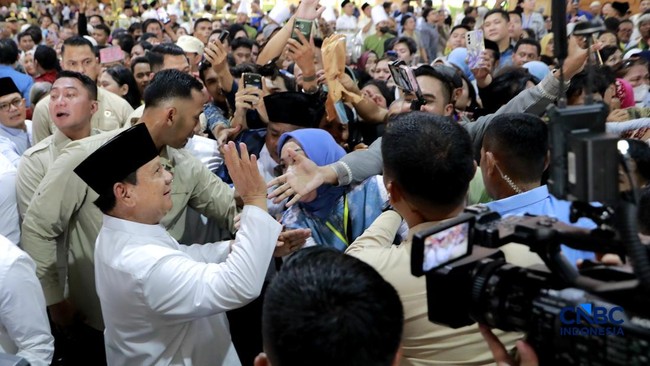
Foreign media are spotlighting the financial impact on Indonesia from the Middle East conflict stemming from the war between Iran and the United States (US) and Israel.
In an Al Jazeera report on Monday (23/3/2026), Indonesia is attempting to save up to Rp80 trillion in its budget to protect the economy from the effects of the US-Israel war against Iran.
It was mentioned that Southeast Asia’s largest economy is also considering fuel-saving measures, including the implementation of a work-from-home (WFH) policy for government employees and certain public sector workers.
Previously, President Prabowo gathered several ministers on Thursday (19/3/2026) to discuss global dynamics, including the rise in energy and commodity prices. A series of policies were issued as a form of anticipation to avoid burdening the public.
Coordinating Minister for the Economy, Airlangga Hartarto, after the meeting, stated that the policies are directed to keep the state budget deficit below 3% of GDP.
“We are maintaining the state budget so that the deficit remains below 3 percent and in line with the directives from the Full Cabinet Session, which has been discussed with technical ministries. This is done through efficiencies across various ministries and agencies. With these efficiencies, the 3 percent deficit can be maintained,” said Airlangga.
One of the efforts to be undertaken is increasing coal production volume through adjustments to the Work Plan and Budget (RKAB). The government is reviewing policy adjustments related to coal export taxes to boost state revenues, in line with the trend of rising commodity prices.
In the energy sector, the government is promoting the acceleration of converting diesel power plants (PLTD) to solar power plants (PLTS) as an efficiency measure amid high oil prices. This mandate has been assigned to the Danantara Investment Management Agency for immediate follow-up.
The government is also reviewing work flexibility policies through a one-day Work From Home (WFH) scheme in every five working days.
“There are savings in terms of mobility usage; the petrol savings are quite significant, one-fifth of what we usually spend,” revealed Airlangga.
The government is currently finalising the technical aspects of implementing this policy. The WFH implementation is expected not only to apply to Civil Servants (ASN) but also to be adopted by the private sector and regional governments.
The plan for implementing this policy is scheduled to begin after the 2026 Eid al-Fitr holiday. However, the exact timing will still be determined further.
“We’ll see the situation later. The oil price situation, the war situation. We’ll follow the developing circumstances,” he concluded.
From all these policies, the government is not opting for fuel price increases. These various measures reflect the government’s adaptive and measured response in maintaining economic stability, while strengthening the direction towards energy self-sufficiency and national resilience.
Indonesia itself provides substantial fuel subsidies for its population of over 284 million people, covering about 30 to 40% of fuel costs for consumers. These subsidies represent around 15% of the state budget.