
Foreign Media Spotlight Indonesia-China Efforts to Ditch the Dollar
Jakarta, CNBC Indonesia - Foreign media have spotlighted the latest move by Indonesia and China to strengthen cross-border payment system cooperation using local currencies. This step is seen as part of efforts to reduce the dominance of the US dollar in international transactions.
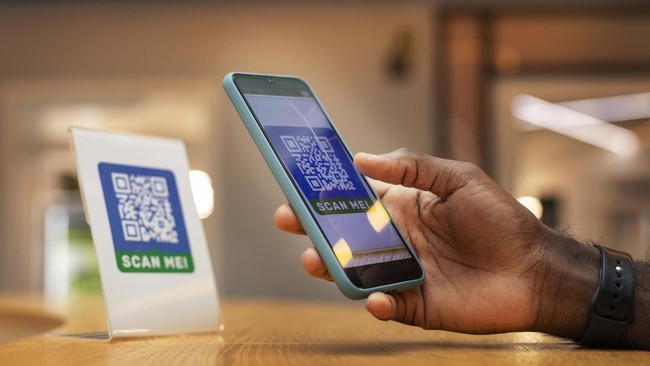
Citing the South China Morning Post (SCMP), China and Indonesia have officially launched a cross-border QR payment system that allows people in both countries to conduct retail transactions using their respective currencies.
Through this scheme, users of domestic apps such as China’s Alipay and Indonesia’s QRIS can now scan QR codes to transact directly in both countries without relying on the US dollar as an intermediary currency.
Alicia Garcia-Herrero, Head of Asia-Pacific Economics at French investment bank Natixis, stated that the cooperation represents a practical step to deepen financial relations between the two countries.
According to her, using local currencies will help reduce transaction costs and exchange rate risks for both Indonesia and China.
“For Beijing, the main driver appears to be advancing de-dollarisation efforts, promoting the international use of the yuan, and strengthening economic integration with key ASEAN partners amid broader geopolitical pushes for financial autonomy,” said Garcia-Herrero, citing SCMP on Saturday (9/5/2026).
Bank Indonesia (BI) previously announced the launch of this initiative on Thursday. The rollout of the new payment system comes amid China’s aggressive expansion of financial connectivity with ASEAN countries, which are Beijing’s largest trading partners in the region.
Previously, Chinese tourists in Thailand have been able to use domestic digital wallets to pay local merchants in yuan since last October. A similar scheme has also been implemented in Vietnam via UnionPay since December, then expanded last month to include Alipay.
Yuan-based cross-border payment services are also available in Malaysia and Singapore.
Garcia-Herrero predicts that Beijing will expand similar cooperation with more ASEAN countries and other trading partners throughout this year, as China’s digital and financial footprint widens.
Meanwhile, the push for cross-border payments aligns with China’s broader strategy to strengthen the yuan’s position in the global financial system. This move is considered crucial for Beijing to reduce dependence on dollar-dominated financial systems, especially amid rising tensions with Washington.
China is also continuing to bolster its Cross-Border Interbank Payment System (CIPS), an alternative international payment system developed as a counter to Western financial networks.
Garcia-Herrero noted that more foreign banks are now connecting directly to CIPS, thereby accelerating the efficiency of yuan-based transaction settlements.
Last Sunday, Deputy Governor of the People’s Bank of China, Zhu Hexin, also met with leaders of ASEAN central banks, Japan, and South Korea in Uzbekistan to discuss regional cross-border payment cooperation.
On the other hand, this new payment system is also expected to encourage spending by foreign tourists in China. Until now, China’s highly digital payment system, which relies heavily on domestic apps, has been cited as a challenge for international tourists.
Tourism between China and Southeast Asia surged throughout last year, supported by visa-free policies and simplified travel requirements.
Indonesia recorded 1.34 million Chinese tourists throughout 2025. This figure is the highest in the last six years and accounts for 8.7% of total foreign tourist visits to Indonesia.
China also became the fourth most popular tourist destination for Indonesians last year, contributing nearly 6.8% of total outbound trips by Indonesian citizens.