
Foreign Archaeologists Defend Leang Metanduno Cave Paintings as World's Oldest
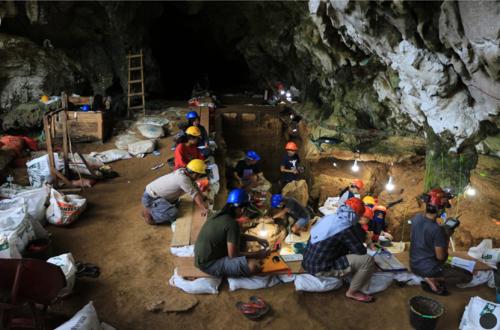
The age of cave paintings at Leang Metanduno in Maros Regency has sparked international scientific debate in recent weeks following criticism from French archaeologist Georges Sauvet regarding the dating methodology. Sauvet argued the method was biased, prone to error, and required cross-validation with other techniques. Sauvet’s argument has been countered by archaeologists from Canada, Portugal, and Australia, who assert that methodological bias is not unique to Uranium-Thorium (U/Th) dating but a challenge across all dating techniques. Moreover, they consider the sample testing process and explanations for the Leang Metanduno cave paintings detailed and robust, meaning the estimated age of 71,000 to 67,000 years remains valid. Sauvet published a scholarly article titled ‘Uranium-thorium dating: the race towards the earliest rock art’ in Aplomb Publication’s AOJ of Historarchaeology & Anthropological Exploration, Volume 2, Issue 1 (2026), on 20 May. The article’s core argument is that uranium-thorium dating can yield inaccurate ages, requiring verification through alternative methods before acceptance as valid. Among those rejecting Sauvet’s criticism is João Zilhão, a research professor at the University of Lisbon and co-author of a Spanish cave art study. Zilhão stated all dating methods are prone to error. He cited carbon-14 dating, long considered the archaeological standard, which is also susceptible to contamination affecting measurements. Similarly, optically stimulated luminescence (OSL), used to determine when a material was last exposed to light, can produce overly ancient dates if researchers fail to account for residual mineral emissions in samples.