
Forbes Claims Rupiah is One of the World's Weakest Currencies: Is This True?
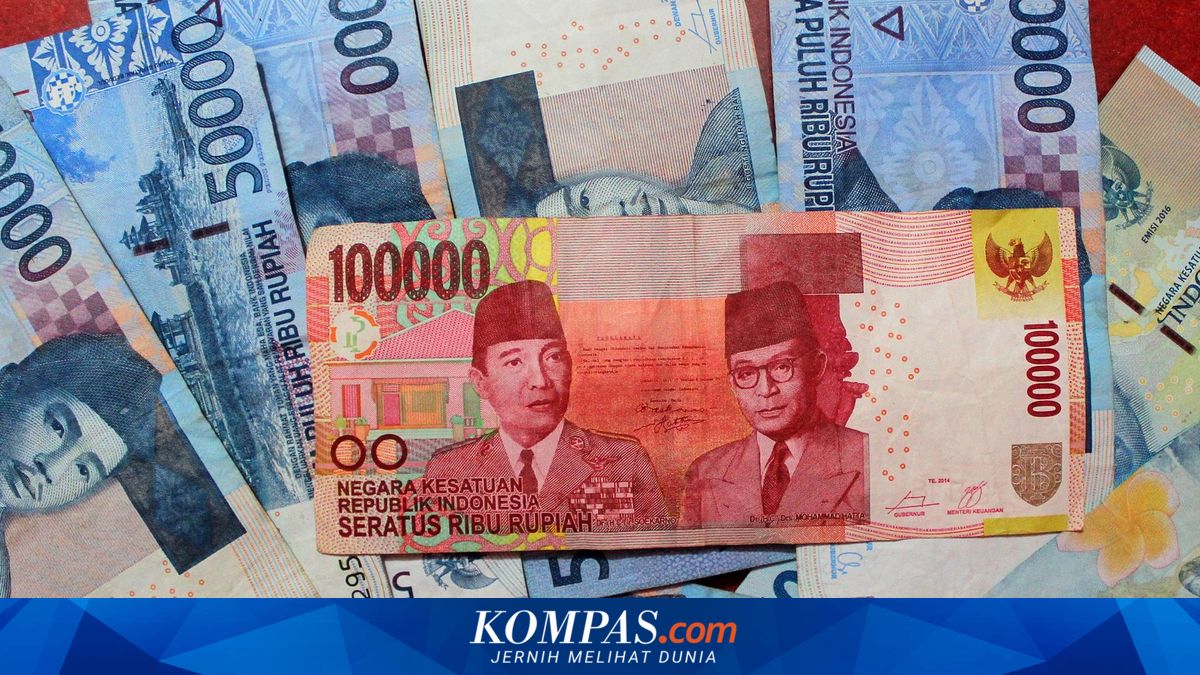
JAKARTA, KOMPAS.com - Forbes has released a list of the 10 weakest currencies in the world as of 7 April 2026. The rupiah is included in that list.
The data is taken from open exchange rates. The ranking is compiled based on the exchange rate against the US dollar, namely the number of currency units equivalent to 1 US dollar.
This approach places the rupiah in fifth position. The rupiah’s exchange rate is around Rp 17,066 per US dollar.
The first position is occupied by the Iranian rial with an exchange rate of around 1 US dollar equivalent to 1,315,800 rials.
The second and third positions are filled by the Lebanese pound and the Vietnamese dong. Their exchange rates are respectively around 89,565.64 Lebanese pounds and 26,336.58 Vietnamese dong per US dollar.
The fourth position is taken by the Laotian kip with an exchange rate of 22,065.41 per US dollar.
“In terms of GDP, this country (Indonesia) is the largest in Southeast Asia, particularly due to its services sector. Indonesia is also rich in commodities, but its national currency has depreciated compared to other countries due to a combination of high inflation and recession concerns,” wrote Forbes on Tuesday (7/4/2026).
However, the list is considered not to reflect the actual situation.
Bank Permata’s Chief Economist Josua Pardede assesses that the ranking is only accurate in a very limited context.
“In my view, Forbes’ statement is only true in a very narrow sense, namely from the nominal exchange rate per 1 US dollar, not from the perspective of the currency’s fundamental strength,” he told Kompas.com on Saturday (18/4/2026).
According to Josua, the nominal approach makes currencies with large denominations appear weak.
This assessment does not depict the overall economic strength.
He emphasised that the rupiah is not among the currencies with the deepest depreciation when viewed from exchange rate performance.
Bloomberg data shows that the rupiah’s depreciation is relatively more controlled compared to several other currencies.
“So nominally, the rupiah is a high-denomination currency, but in terms of performance and fundamentals, Forbes’ conclusion is very misleading if read without context,” he stressed.
Based on this indicator, the rupiah is below the 100 level. This condition indicates that the rupiah tends to be undervalued compared to the base year of 2020.
The current exchange rate is around 2 to 5 percent weaker than the fundamental value. This situation opens up room for strengthening if global pressures ease.
Domestic economic fundamentals are also considered to remain strong. Economic growth in 2025 was recorded at 5.11 percent.
Inflation in March 2026 was at 3.48 percent. Foreign exchange reserves reached around 148.2 billion US dollars.
Investment realisation in 2025 exceeded the target of Rp 1,931.2 trillion.
From the banking sector, credit in February 2026 grew by 9.37 percent. Deposits grew by 13.18 percent.
“So, if reading the rupiah through the lens of REER, growth, foreign reserves, investment, and financial system resilience, the rupiah is more accurately described as under pressure from global sentiment, not a fundamentally damaged currency,” he stated.