
For Safety, Public Urged Not to Migrate Using Motorcycles
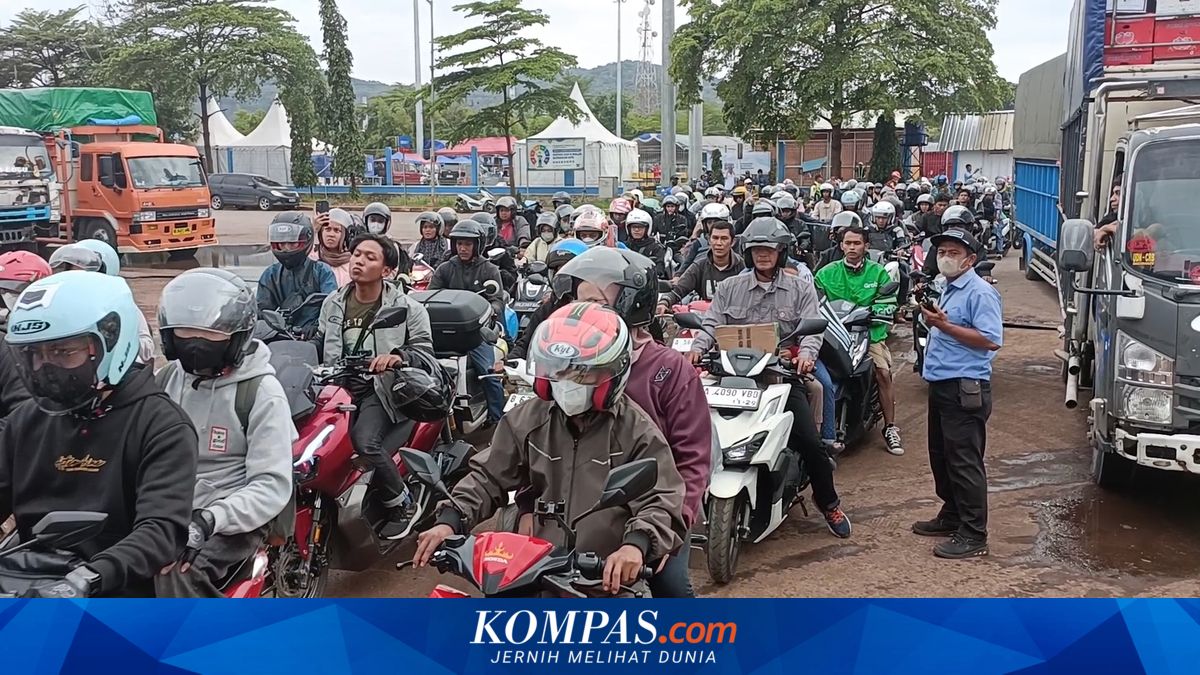
JAKARTA — As the migration season approaches for Eid 2026, road safety for migrants, particularly motorcycle users, has become a concern due to the high risk of accidents on long-distance journeys.
Syaiful Huda, deputy chairman of Commission V of the House of Representatives, has asked police to limit the number of residents travelling home for Eid 2026 using motorcycles. This follows the high number of accidents involving motorcycle-riding migrants in recent years.
“I have noted that from 2022 to 2025, there has been quite a significant percentage, where 75.9 per cent of mudik-related accidents are accidents experienced by motorcycle users. So this figure is quite substantial,” said Huda.
Meanwhile, Victor Assani, head of road safety and motorsport at the Indonesian Motorcycle Industry Association (AISI), said the remarks made by government officials were very prudent.
He believed the advisory does not entirely prohibit residents from migrating using motorcycles, but rather serves as a reminder of the risks of long-distance travel on two-wheeled vehicles.
“We must understand the various reasons migrants use to determine their choice of transport for the journey home based on their various considerations, such as practicality, time, cost, mobility once at their home villages, and pride. Who doesn’t want to travel home comfortably? I am sure all migrants want that. However, it comes down to their various reasons, so they still decide to travel home using motorcycles – this is the reality on the ground,” Assani told Kompas.com on Monday, 9 March 2026.
He added that if migrants still decide to use motorcycles, then preparations must be made very thoroughly, both in terms of vehicle condition and the rider’s physical condition.
“Even if migrants are forced to travel home using motorcycles, we urge them to prepare everything carefully, including vehicle maintenance, physical fitness, necessary equipment, and safe driving practices,” said Assani.
He also explained that as a precautionary and mitigation measure, most AISI members provide various facilities for migrants along mudik routes.
“As a precautionary and mitigation measure, most of our members also provide repair shops and emergency posts distributed along mudik routes that serve not only as emergency vehicle services but also rest, relaxation, and personal care facilities for migrants during their journey. We hope this will help improve the safety and comfort of migrants heading to their home villages,” said Assani.
Additionally, several AISI members organise group travel programmes to assist migrants travelling with motorcycles.
“Some of our members have implemented group travel schemes, where motorcycles are transported by truck, whilst the migrants themselves can comfortably use buses that have been provided,” said Assani.