
For His Family's Sake, Former Inmate Sairan Chooses to Work at Nusakambangan Eel Farm After Release
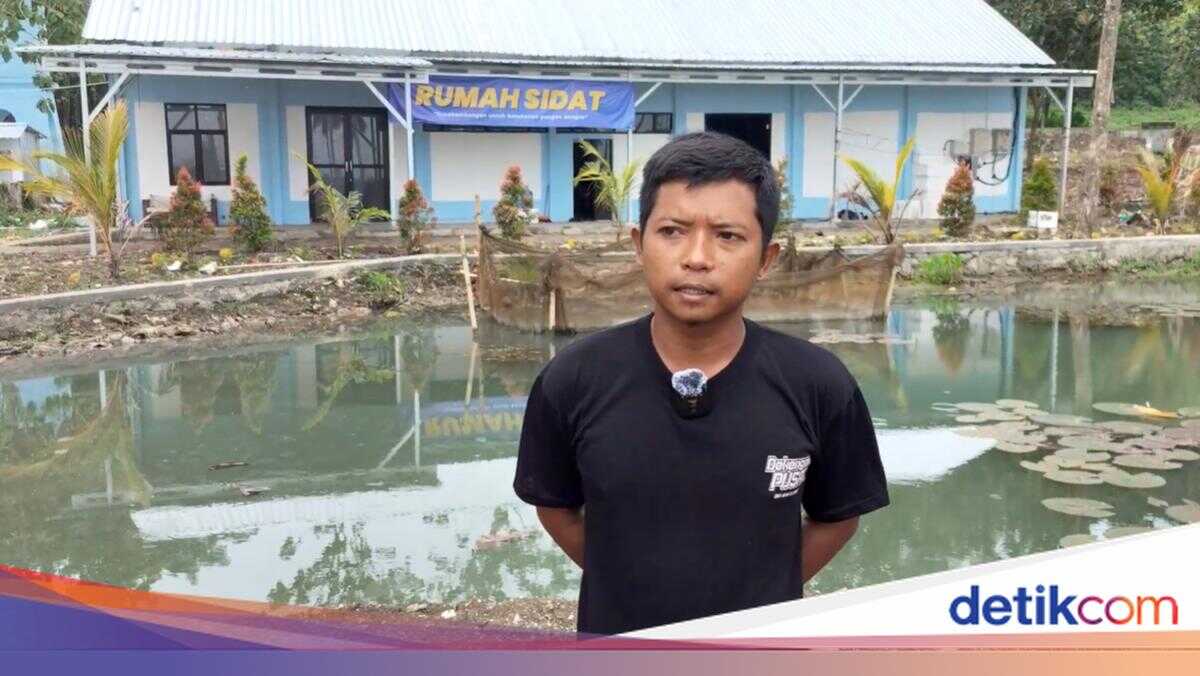
Sairan, a man from Cilacap, is a former correctional facility resident on Nusakambangan Island, Cilacap, Central Java. He chose to return to the Nusakambangan area and apply for work at an eel aquaculture pond currently being developed on the prison island.
Sairan said his reason for returning to Nusakambangan was the social stigma he faced, which made it difficult to find employment. Eel aquaculture had been part of the rehabilitation programme he participated in daily before completing his sentence.
“I came back to work at this eel farm because I would probably struggle to find work out there, due to the stigma of being a former convict. People probably view me negatively, so I decided to come back here to work. My hope is that I can work here for a long time and gain fisheries knowledge,” Sairan told detikcom on Monday (23/2/2026).
He said that as the family breadwinner, it was impossible for him to remain unemployed after serving such a long sentence at Nusakambangan. His decision to return and apply as a worker at the eel aquaculture pond was also influenced by wages he considered sufficient to meet his family’s daily needs.
“I’m the family breadwinner — I have to meet our living costs. Thank God, the wages here are enough to cover daily needs and support my family at home,” Sairan said.
So how much does Sairan earn as a worker at the eel aquaculture pond after his release from Nusakambangan? “The wage is Rp 2.5 million per month,” he answered.
Sairan did not deny the figure was attractive, though slightly below the Cilacap regional minimum wage. The Cilacap minimum wage for 2026 is approximately Rp 2.7 million.
“I’m happy that after leaving Nusakambangan, I was still accepted back here to help with eel cultivation, and I can earn wages to support my family and relatives,” he said.
Beyond Wages, Valuable Knowledge
He explained that his decision to return to Nusakambangan as a worker also had his family’s support. It was not just about the wages, Sairan added, but also the knowledge he could eventually put into independent practice.
“The knowledge I’ve gained can be applied later in my area, so I can help my local community with eel cultivation or other fish species. So I can help my area develop. The advantage of working here is gaining both knowledge and wages. My family fully supports my return as a worker at Nusakambangan,” Sairan explained.
Sairan said his hope of advancing his home area was aimed at eroding the negative image attached to former prisoners. “When I was first released, people around me certainly had negative views, but I want to prove that I can improve my image,” he added.
At the eel pond during his time as an inmate, Sairan learnt to process feed and manage pond water. Now, having been recruited to the eel aquaculture team, he is tasked with monitoring water levels and pond electrical systems each night.
“I first joined the eel cultivation programme from Batu prison. Then I learnt feed processing, water management, and eel farming at the ponds. Currently, I control the water at the eel ponds, I’m on night duty monitoring electricity. I work from 4 p.m. to 4 a.m.,” Sairan said.
Aspiring to Open His Own Eel Farm
Despite feeling content at Nusakambangan, Sairan hopes to eventually rejoin society and be treated like any ordinary citizen. He hopes the public will not view former inmates solely in a negative light.
“I hope society won’t judge us former correctional residents just by appearances. Perhaps we still have a positive side. I will prove that I’m capable — I can restore my good name. Working at this eel farm, I will prove it to society,” Sairan affirmed.
Finally, he hopes that rehabilitation programmes focused on empowerment and self-sufficiency for inmates will be expanded and continuously developed by correctional authorities. As a former prisoner, he feels greatly assisted by the food security self-sufficiency programme that has been in place since the era of the Ministry of Immigration and Correctional Services.
“I hope that in future, programmes in prisons like this food security initiative will increase and create more job opportunities. This has really helped me to be accepted back into society. I hope the eel ponds will advance further and continue to grow,” he said.
He expressed pride in contributing to the prison’s food security programme. By seriously absorbing eel aquaculture knowledge, Sairan aspires to one day open his own cultivation pond at home.
“I’m proud that I can contribute to the government’s food security programme. I hope I can absorb even more knowledge here so I can start my own cultivation at home — so I can change my fortunes for the better,” Sairan concluded.
Food Security in Prisons
Since the Directorate General of Corrections came under its “new home” — the Ministry of Immigration and Correctional Services (Imipas) — food security activities and micro, small, and medium enterprise (MSME) initiatives have been thriving in prisons and detention centres across Indonesia. This momentum stems from directives by Immigration and Correctional Services Minister Agus Andrianto, who championed both initiatives as part of inmate rehabilitation.
On Thursday, 15 January 2026, the Directorate General of Corrections held a simultaneous nationwide harvest of agricultural, plantation, livestock, and fisheries commodities. The results of the January 2026 simultaneous harvest were as follows:
- Agriculture and plantation sector: rice, maize, horticulture, cassava, coconut, and other plantation commodities — totalling 99,930 kg.
- Livestock sector: broiler chickens, laying hens, free-range chickens, ducks, goats, and sheep — totalling 4,019 kg.
- Fisheries sector: catfish, tilapia, pangasius, giant gourami, Mozambique tilapia, and vannamei shrimp.