
Food Policy Interventions
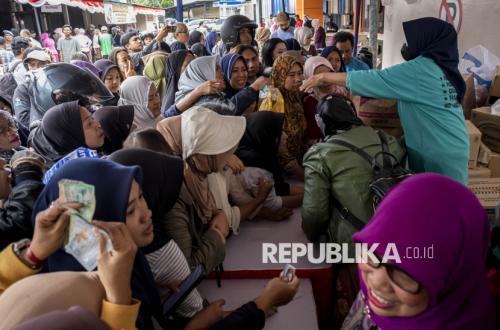
The National Food Agency (Bapanas) is strengthening various food intervention programmes alongside partners to safeguard the stability of prices for strategic staple foods from Ramadan through to Eid al-Fitr 1447 H, or Lebaran 2026. The government is ensuring that these food intervention programmes continue until Lebaran to guarantee food availability for the public. Explanations have also been provided on the food intervention programmes implemented throughout Ramadan up to Eid al-Fitr. These include the Affordable Food Movement (GPM), distribution of rice under the Food Supply and Price Stabilisation (SPHP), and mobilisation of stocks through the Food Distribution Facilitation programme (FDP). Additionally, there is the distribution of food aid in the form of rice and cooking oil targeting 33.2 million beneficiary families (KPM) across Indonesia. Food policy intervention refers to government actions to influence food production, distribution, and consumption in a country or region. The objectives are typically to enhance food availability, price stability, and public access to sufficient and nutritious food. Examples of food policy interventions include food price subsidies, regulation of food imports/exports, food aid programmes, and promotion of local food production. The government usually implements food policy interventions ahead of Ramadan and Lebaran to maintain price stability and food availability, particularly for staples such as rice, sugar, and cooking oil. This is done to anticipate increased demand during Ramadan and Lebaran, prevent excessive price hikes, and ensure public access to adequate and affordable food. Through these interventions, the government hopes to reduce the burden on the public, especially the less fortunate, and maintain economic stability during this important period. Major religious occasions such as the month of Ramadan and Lebaran often lead to price increases in essential goods. Therefore, special government policies on food interventions are required. The National Food Agency (Bapanas) plays a crucial role in Indonesia’s food policy interventions. They collaborate with the government to, first, monitor food availability and prices; second, identify potential supply disruptions; third, propose intervention policies to the government; and fourth, coordinate the implementation of food interventions, such as market operations and food distribution. Bapanas also contributes to maintaining national food stability and enhancing public food resilience. Bapanas employs several strategies to ensure food stability, including conducting market operations by selling food directly to the public at affordable prices. Next, managing food reserve stocks, meaning maintaining food reserves to anticipate supply shortages. Then, collaborating with producers to boost local food production and monitoring prices to prevent speculation. Bapanas is also essential in continuing to work with various parties, such as local governments and the private sector, to enhance the effectiveness of food interventions. It should also be noted that the main food issues ahead of major religious days and Lebaran typically involve price increases in staples such as rice, sugar, and cooking oil. Additionally, limited food availability, uneven distribution, particularly in remote areas, and declining food quality. The government and Bapanas usually monitor these situations to take appropriate actions and maintain food stability. Faced with such conditions, the government and Bapanas typically anticipate food issues ahead of Lebaran with several steps. First, increasing food reserve stocks to ensure availability. Second, conducting market operations to stabilise prices. Third, overseeing food distribution to regions, and fourth, urging the public not to engage in panic buying. Finally, it should be conveyed that the food development situation ahead of Lebaran 2026 appears quite stable and in surplus. Minister of Agriculture Andi Amran Sulaiman has assured that the majority of strategic food commodities are in surplus, such as rice, maize, cooking oil, chicken meat, and chicken eggs. The national rice stock currently stands at 3.5 million tonnes and is projected to rise to 6 million tonnes by the end of March 2026. The government has also undertaken various efforts to maintain price stability and food availability, such as escorting distribution. The Ministry of Agriculture is deploying extension workers in the field to monitor daily production and food distribution. Then, price monitoring. The government monitors market prices directly and online through the Essential Goods Market Price Monitoring System (SP2KP). Another measure is cross-ministerial coordination. The government coordinates with various ministries and agencies to ensure food and energy availability. However, it is important to note that the Food and Drug Supervisory Agency (BPOM) has identified 56,027 processed food products that do not meet requirements, including expired and damaged products. Therefore, the public needs to remain vigilant and select safe and quality food products.