
Food and Drug Authority Tightens Food Safety Oversight Ahead of Eid 2026
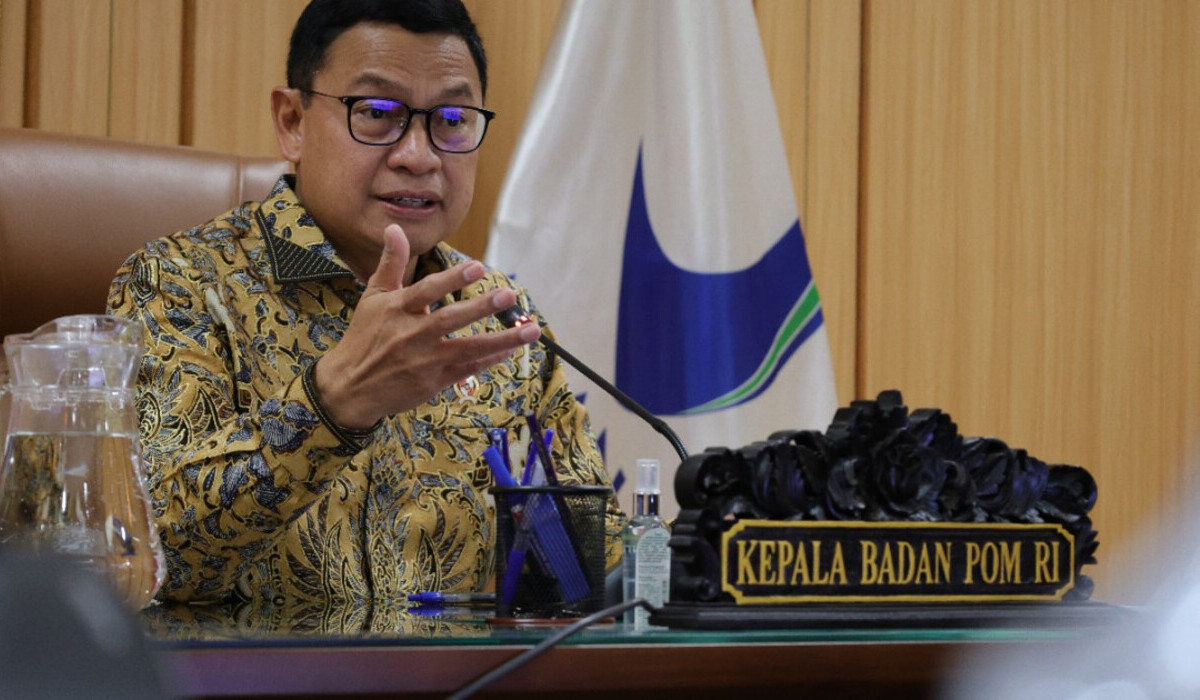
The Food and Drug Authority (BPOM) and the Jakarta provincial government are intensifying food safety oversight during Ramadan and in the lead-up to Eid al-Fitr 1447H (2026).
BPOM Head Taruna Ikrar stated that ensuring safety standards across the national food industry is critical to supporting Indonesia’s 8% economic growth target and the vision of Indonesia Emas 2045 (Golden Indonesia 2045).
“Effective oversight is conducted not only through inspections, but also through partnerships between government and industry. With transparency and a commitment to continuous improvement, we build consumer confidence whilst providing optimal protection for the public,” Taruna Ikrar said on Tuesday (10 March).
The BPOM conducted inspections at the downstream sector, including Lotte Grosir Pasar Rebo, where it discovered that frozen storage warehouses exceeded capacity (overload). Taruna Ikrar urged facility managers to carry out improvements immediately.
“We checked product permits, labels, and packaging, including expiry dates. Additionally, overloaded cold storage risks raising room temperatures, which could cause stored food to spoil more rapidly. Businesses should not overlook public health for economic motives or to clear warehouse stock,” he said.
Nationally, the 2026 food safety inspection campaign has entered its third phase, having examined 1,134 distribution facilities—a 25% increase compared with the previous year. As a result, 56,027 food products that do not meet requirements (TMK) have been found due to expiration, damage, or lack of distribution permits (TIE), a figure that has surged 83% compared with the same period last year.
In the Jakarta region, of 18 facilities inspected, nine were found non-compliant, with illegal snack foods being the dominant findings. Beyond packaged foods, BPOM also tested 222 Ramadan dish samples in Jakarta.
The Food and Drug Authority found 10 samples (4.5%) containing harmful substances—rhodamine B in cupcakes and crackers, and formalin in yellow noodles and tofu.
Jakarta’s Regional Secretary Uus Kuswanto expressed full support for BPOM’s firm measures.
“We welcome this collaboration because Jakarta residents need certainty about safe basic foodstuffs. This direct oversight provides assurance to residents that they need not worry about food consumption during Ramadan and Eid. We shall ensure that offending traders receive guidance and hazardous products are immediately destroyed,” Uus Kuswanto said.
Similarly, Elisabeth Ratu Rante Allo, Head of the Jakarta Provincial Industry, Trade, Cooperatives, and Small and Medium Enterprises Department (PPKUKM), affirmed her readiness to collaborate in ensuring food safety across Jakarta.